
Si estás investigando how to open an indoor playground in UK, a business plan and an equipment quotation are only the beginning. A workable project must connect planning, building control, fire risk assessment, soft play standards, importer responsibilities, EORI registration, commodity classification, customs, import VAT, delivery, installation, and opening inspections.
The UK is not one completely uniform operating environment. Great Britain consists of England, Scotland, and Wales, while Northern Ireland follows different procedures for some customs, EORI, and goods movements. Planning, building standards, fire safety, and food-business procedures also vary by nation and local authority. Use this guide as a project framework, then confirm the exact route for the venue address with local professionals, insurers, customs advisers, and the relevant authorities.
1. Define the Venue and Revenue Model
An indoor playground may operate as an independent soft play centre, play café, shopping-centre attraction, family entertainment centre, school facility, nursery play area, or an addition to another commercial venue. Each model changes the property, staffing, insurance, and approval requirements.
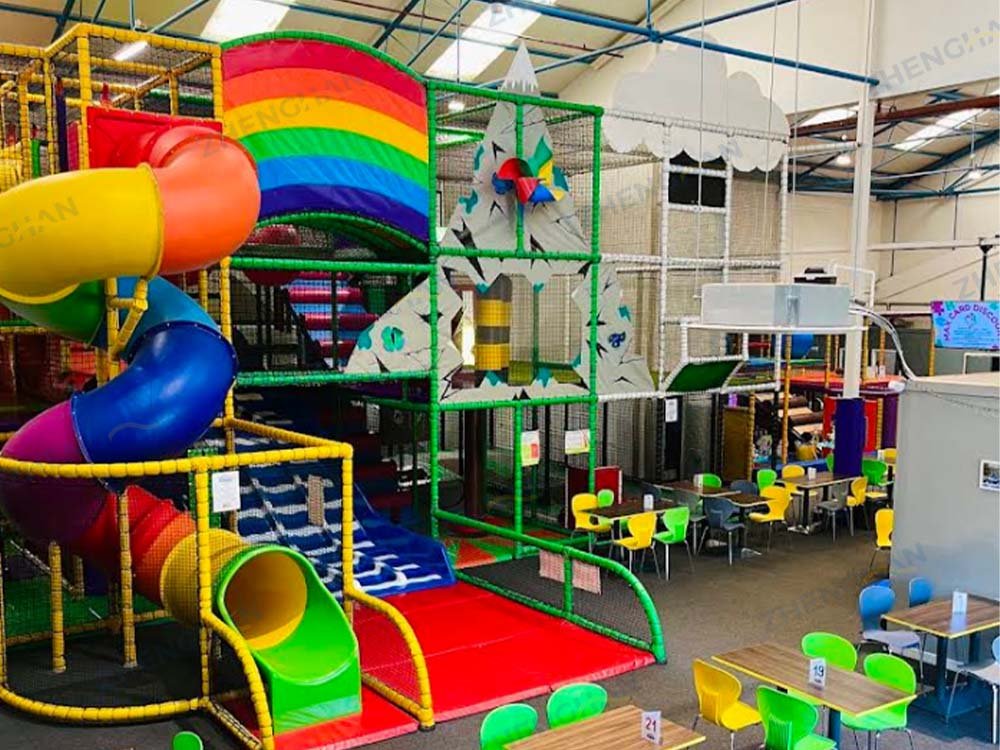
A stand-alone centre needs play zones, reception, parent seating, toilets, storage, and cleaning space. A play café also needs food preparation and staff circulation. Schools or childcare settings may face additional safeguarding requirements. An FEC should assess trampolines, climbing, mechanical, and other attractions separately.
Potential revenue streams include:
- Timed child admissions and accompanying-adult charges
- Memberships and multi-visit passes
- Birthday parties and private hire
- Group bookings and holiday activities
- Food and beverages
- Baby, toddler, or additional-needs sessions
Design around the revenue model. Parties need arrival, dining, and departure space; a café must combine parent sightlines with food service. Do not fill the property with equipment first and leave operations to the remaining space.
2. Test the Market and Build a Complete Budget
National demand for family entertainment does not prove that one address is viable. Build 15-, 20-, and 30-minute drive-time areas and review the number of children, households with children, income, housing development, schools, nurseries, and community organisations. Map direct soft play competitors and indirect alternatives such as museums, cinemas, leisure centres, and children’s classes.
Compare competitors’ ages, prices, memberships, parties, food, capacity, parking, reviews, and equipment condition. An existing operator does not automatically close the market, but a new venue needs a specific difference.
A complete startup budget should cover four groups.
Property and Professional Costs
- Deposit, rent, and legal review
- Planning, building control, architects, engineers, and fire advisers
- Carrying costs during design, approval, and construction
Building and Fit-Out
- Demolition, partitions, floors, reception, and parent areas
- Fire, HVAC, electrical, plumbing, and toilet work
- Kitchen, food storage, accessibility, signage, and parking work
Equipment Landed Cost
- Soft play equipment, design, packing, spares, freight, and insurance
- Customs Duty, import VAT, and customs-agent fees
- Destination charges, inland delivery, unloading, and installation
Opening Capital
- Insurance, recruitment, training, and pre-opening payroll
- Ticketing, booking, marketing, and opening stock
- Maintenance reserve and working capital

3. Check the Property Before Signing the Lease
A large unit is not automatically suitable for an indoor play centre. Before accepting a long-term rent obligation, ask the local planning authority and building control team whether the proposed use is permitted, whether a change of use is involved, and which applications or building work may be required.
Review:
- Existing use and approval status
- Clear height to the lowest obstruction in every area
- Columns, beams, lights, ducts, and other fixed services
- Fire exits, travel routes, alarms, and emergency lighting
- HVAC, electrical, plumbing, toilets, and accessibility
- Parking, signage, and transport access
- Lorry access, unloading space, and the route for large components
If the project includes a café, check kitchen use, extraction, storage, handwashing, and waste handling. Official UK guidance says a new food business generally needs to register with its local authority at least 28 days before trading. Confirm the requirements with the local environmental health team and use the government’s food-business registration guidance.
The lease should address approval contingencies, building responsibilities, allowances, rent-free periods, increases, renewal options, signage, parking, construction access, and equipment removal. A landlord’s informal approval is not a substitute for planning advice.
4. Complete a Venue-Specific Fire Risk Assessment
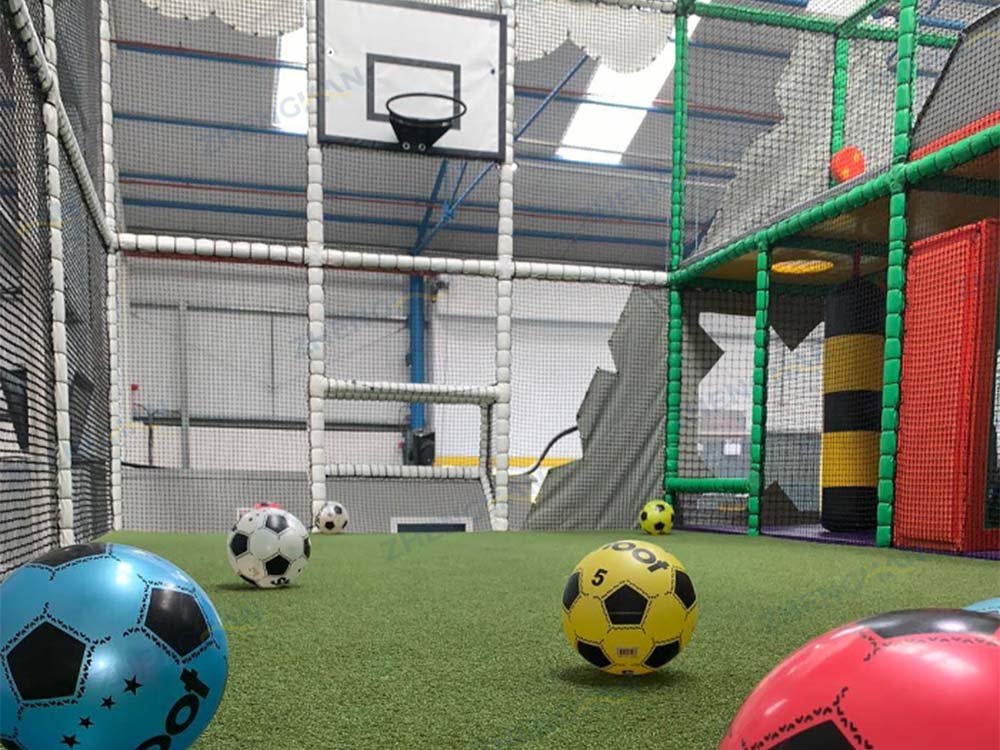
Enclosed, netted, and multi-level play requires more than a check of outer exits. The review should address internal evacuation, staff rescue access, younger children, disabled visitors, party peaks, and the café.
Official guidance for England and Wales refers to the Responsible Person, who must carry out and regularly review a fire risk assessment, maintain precautions, plan for emergencies, and train staff. Scotland and Northern Ireland use their own fire-safety frameworks and duty-holder terminology. Confirm the applicable local process rather than copying documents from another nation.
The review should cover:
- Occupancy and escape routes based on the final layout
- Clear routes, alarms, emergency lighting, and fire provisions
- Evacuation and rescue from the play structure
- Staff roles, emergency procedures, drills, and training
- Updates after changes to equipment or room layout
See the UK government’s fire risk assessment guidance. A manufacturer can supply layout and material information, but cannot replace the assessment of the completed premises.
5. Understand UK Soft Play Standards
Commercial soft play projects in the UK commonly refer to the BS EN 1176 series. Fully enclosed play equipment is associated with BS EN 1176-10, while BS 8409 provides related guidance for indoor play facilities. RoSPA notes that compliance with relevant standards is recommended, but management of the actual risks remains central.
Do not stop at “Does it have a certificate?” Ask:
- Which equipment and materials does each document cover, and do the models match?
- Has the design moved beyond the tested or documented scope?
- Are heights, openings, routes, and guarding shown, and could installation changes affect them?
- Who is responsible for inspection and maintenance?
ZHENGHAN can provide EN 1176-related support and applicable test documents based on the actual project and products. That should not be described as every product being universally certified, and it does not guarantee approval of an entire venue.
El Health and Safety Executive supports a balanced approach to children’s play: well-managed environments can include challenge, but operators must identify real hazards and apply reasonable controls. Good play value and responsible risk management should support each other.
6. Lock the Technical Package Before Production
Agree the document list before production rather than requesting missing information after arrival. The package may include:
- Final layout, 3D design, structural drawings, and installation drawings
- Equipment and component schedule
- Material specifications and applicable test documents
- Fire-review information plus age, height, and capacity zoning
- Fixing and connection requirements
- Inspection, cleaning, and maintenance manuals
- Spare-parts recommendations, packing list, and labelling system
Al comparar indoor play equipment, check that the quotation, drawings, order, and test documents cover the same product scope. If the design changes, update the document list before manufacturing.
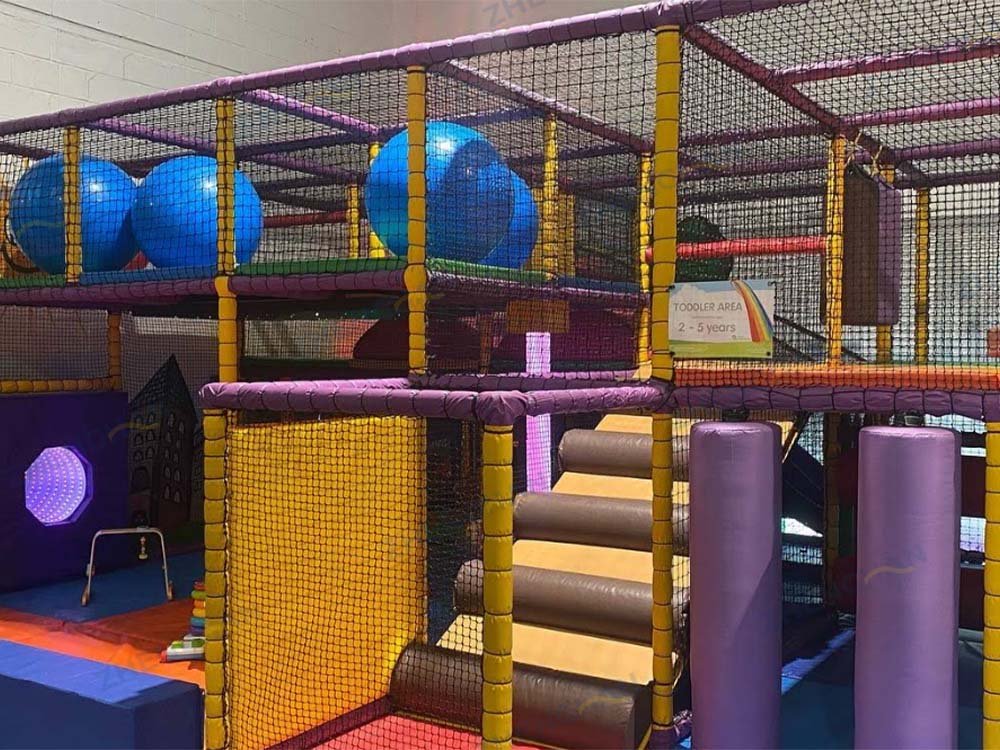
The equipment plan should also address staff sightlines, separation by age, parent seating, party circulation, emergency access, and cleaning. The manufacturer designs from the floor plan; the buyer’s local advisers connect that design to the building, fire, and operating requirements.
7. Confirm the UK Importer Before Production
“The supplier arranges shipping” does not mean the UK buyer has no import responsibilities. The contract and logistics plan must identify the importer, Importer of Record, declarant, tax payer, and parties responsible for destination charges.
Confirm in writing:
- Which business is the importer and uses the EORI number
- Who confirms the commodity code
- Who prepares documents and appoints the customs agent
- Who pays duty, import VAT, port, storage, and examination costs
- Who arranges inland delivery, unloading, and site handover
A business importing into Great Britain generally needs an EORI number beginning with GB. Northern Ireland may require an XI EORI or a different procedure in some cases. Check the project route using the government’s EORI guidance before booking freight.
Keep commercial, transport, customs, and tax records. Because equipment contains multiple materials and modules, a customs agent should classify the actual goods rather than copy another project’s code.
8. Plan Commodity Codes, Duty, and Import VAT
A practical import sequence is:
- Confirm whether the goods enter Great Britain or Northern Ireland.
- Obtain the appropriate EORI.
- Classify the equipment from its actual composition.
- Confirm how customs value will be calculated.
- Check the duty rate and any other import requirements.
- Prepare documents and submit the declaration through the importer or agent.
- Deal with duty, import VAT, and destination charges.
- Arrange inland delivery after release.
Do not rely on a fixed duty percentage in a general article. Classification, origin, declared value, and equipment scope affect the result. Follow the official UK import process and have a customs professional check the planned entry.
Import VAT also affects cash flow. Eligible VAT-registered businesses can investigate Postponed VAT Accounting, which may allow import VAT to be accounted for through the VAT return. Applicability, reporting, and recovery should be confirmed with the company’s accountant and customs agent using the government’s import VAT guidance.
Budget for documentation, terminal handling, examination, storage, demurrage or detention, inland transport, and special unloading. Comparing only ocean freight understates the cost from the UK port to the venue.

9. Compare FOB, CIF, and DDP Carefully
FOB
The supplier delivers to the named shipment port under the agreed scope. The buyer normally controls main freight, insurance, UK clearance, and destination delivery. Every responsibility still needs written confirmation.
CIF
The supplier normally arranges ocean freight and insurance to the named UK port. The buyer may still be responsible for import declarations, taxes, destination charges, inland transport, and unloading. CIF does not mean delivered to the venue.
DDP
DDP gives the seller wider responsibility, but the project must still identify the importer, EORI user, VAT treatment, destination costs, unloading, and installation.
For every quotation, compare export clearance, main freight, cargo insurance, UK import declaration, Customs Duty, import VAT, destination handling, inland transport, unloading, and installation. Incoterms provide a framework; they do not replace a detailed scope, named delivery point, and written tax arrangements.
10. Coordinate Shipping with Site Readiness
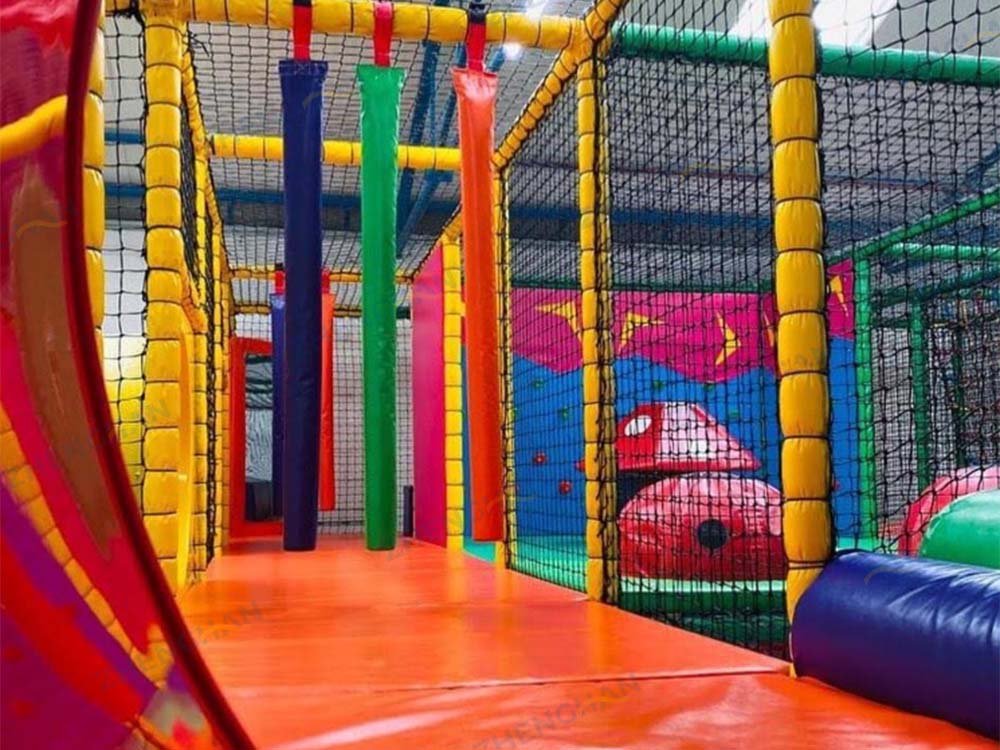
Large soft play systems are packed in modules and often travel by container. Design approval, production, packing, sea freight, customs, building works, and installation must use one coordinated programme.
Before shipment, confirm:
- Final drawings and component schedules are approved
- Packages are labelled and match the packing list
- Shipping documents show the correct parties and addresses
- Arrival timing matches site handover
- Building, fire, electrical, and HVAC work is ready
- Lorry access, unloading equipment, labour, tools, and storage are arranged
Early arrival can create storage and container charges; poor unloading plans can cause waiting or redelivery. Check doors, corridors, turns, floors, and lifts before packing.
11. UK Example: Playtopia Play Centre
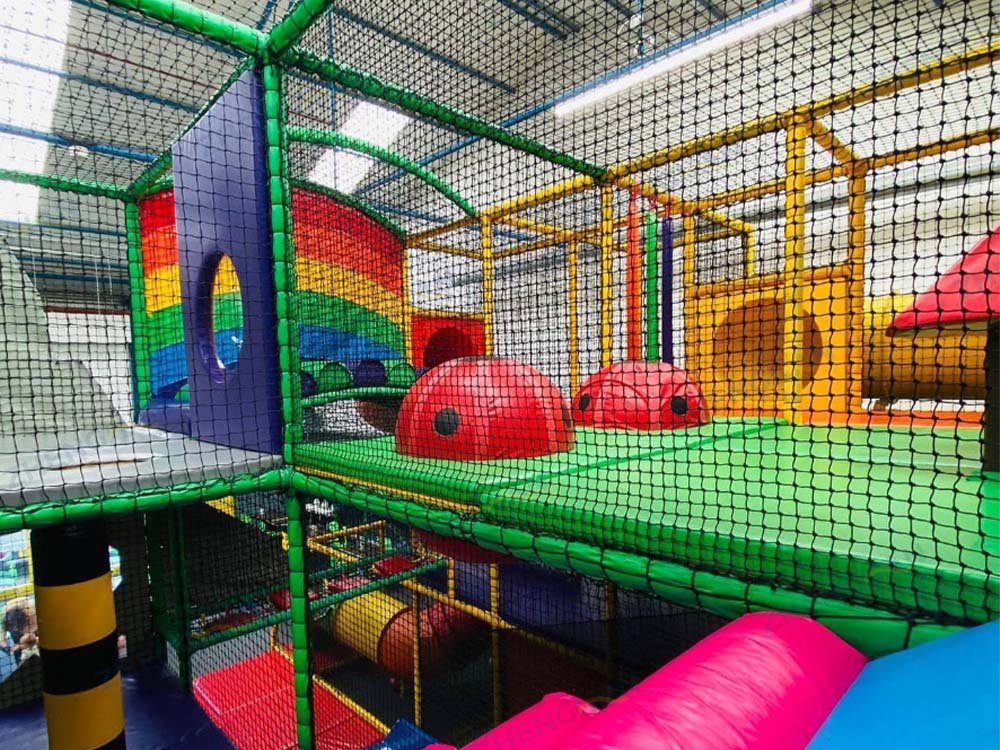
Playtopia Play Centre operates at 17 Moderna Way, Mytholmroyd, Halifax HX7 5QQ, UK. Public information describes three age-specific play areas for babies through children aged 12, with slides, climbing frames, a sports arena, and a ride-on track. The venue also offers timed admission, parties, memberships, and food service.
The example shows why ages need separation, parents need seating and sightlines, and parties and food need their own flows. Preparation, washing, storage, fire review, and food registration belong in property planning.
This article does not assign an unverified area, investment, import method, equipment price, or financial result to Playtopia, and it does not state that ZHENGHAN supplied the project. The case is used only to illustrate integrated UK soft play planning.
12. Install, Inspect, and Prepare to Open
Install from the final drawings. Record and approve site adjustments; installers should not alter structure, guarding, routes, or protection simply to avoid an obstruction.
Check frames, anchors, platforms, padding, netting, openings, slides, signs, sightlines, emergency access, cleaning routes, exits, and nearby services.
Before opening, complete the applicable independent or professional inspection, fire risk assessment, insurance confirmation, and staff training. Establish opening checks, scheduled maintenance, periodic inspections, cleaning, accident records, equipment isolation, and return-to-service procedures.
Waivers, venue rules, and parental supervision do not replace the operator’s responsibilities. Staff need to know when to limit numbers, close damaged equipment, respond to an incident, and preserve records. A soft opening can test reception, sessions, parties, food service, cleaning, and closing checks.
13. Select the Soft Play Manufacturer
When comparing a soft play manufacturer, look beyond renderings and the equipment total. Ask:
- Is the layout based on the actual floor plan, height, columns, and exits?
- Which equipment and materials are covered by documents for the UK destination?
- Do the drawings, quotation, order, and documents match?
- Are packing and labels suitable, and what is included under FOB, CIF, or DDP?
- Who coordinates customs, inland delivery, unloading, and installation?
- How are spare parts, maintenance, warranty, and after-sales support handled?
ZHENGHAN is a factory-direct manufacturer of commercial indoor playground and trampoline park equipment. Project support can include planning advice, custom layouts, production, packing, international shipping support, installation guidance, and after-sales assistance. Standards, test documents, trade terms, and services must be confirmed for the final contract.
A suitable supplier does not pretend to replace every local professional. It clearly defines the equipment, documents, delivery scope, and responsibility boundaries, then coordinates with the buyer’s UK advisers, customs agent, and installation team.
Envía tu plano para recibir asesoría sobre el proyecto
Share the UK nation, floor plan, length and width, clear heights, columns, entrances, fire routes, target ages, preferred attractions, destination port or project city, and expected opening date. Envía tu plano para recibir asesoría sobre el proyecto and ZHENGHAN can provide initial layout and equipment-planning suggestions for the actual space.
Preguntas frecuentes
How much does it cost to open an indoor playground in UK?
Total investment depends on location, rent, building work, equipment scale, fire and building requirements, freight, duty, import VAT, customs, inland delivery, installation, insurance, and working capital. Build the budget from the actual property and import route rather than applying one general cost range.
What standards apply to indoor soft play equipment in the UK?
Commercial soft play projects commonly refer to the BS EN 1176 series. Fully enclosed play equipment is associated with BS EN 1176-10, and BS 8409 provides related guidance. Confirm the applicable scope, edition, inspections, and risk assessment for the actual facility.
Do I need an EORI number to import indoor playground equipment?
A business importing commercial goods into Great Britain generally needs a GB EORI. Northern Ireland may require an XI EORI or a different procedure. Confirm the importer, declaration route, and agent arrangements before shipment.
What is the difference between FOB, CIF, and DDP?
FOB normally gives the buyer control of main freight and UK import arrangements. CIF normally includes freight and insurance to a named port, not delivery to the venue. DDP gives the seller a wider scope, but the importer, EORI, VAT, destination costs, unloading, and installation still need written confirmation.
What documents should a soft play manufacturer provide?
The package normally includes final layouts, structural and installation drawings, equipment and component schedules, material specifications, applicable test documents, inspection and maintenance instructions, spare-parts recommendations, packing lists, and labels. The documents should match the final design and order.
 English
  Spanish
  Arabic