
The question “is a trampoline park profitable?” cannot be answered by looking only at ticket prices or a busy Saturday. Profitability depends on how much of the building generates revenue, how many sessions the park can sell, the average spend per guest, party and membership sales, rent, staffing, insurance, maintenance, and the total opening investment.
A well-planned park can combine admissions, memberships, parties, group events, grip socks, food, beverages, and retail. However, expensive rent, weak weekday attendance, inefficient staffing, or the wrong attraction mix can leave even a busy venue with little operating profit.
This guide uses one complete 800-square-meter commercial trampoline park model to calculate monthly sales, annual revenue, operating profit, break-even revenue, simple ROI, and payback. The method can be adapted to projects worldwide by replacing the sample figures with local prices and costs.
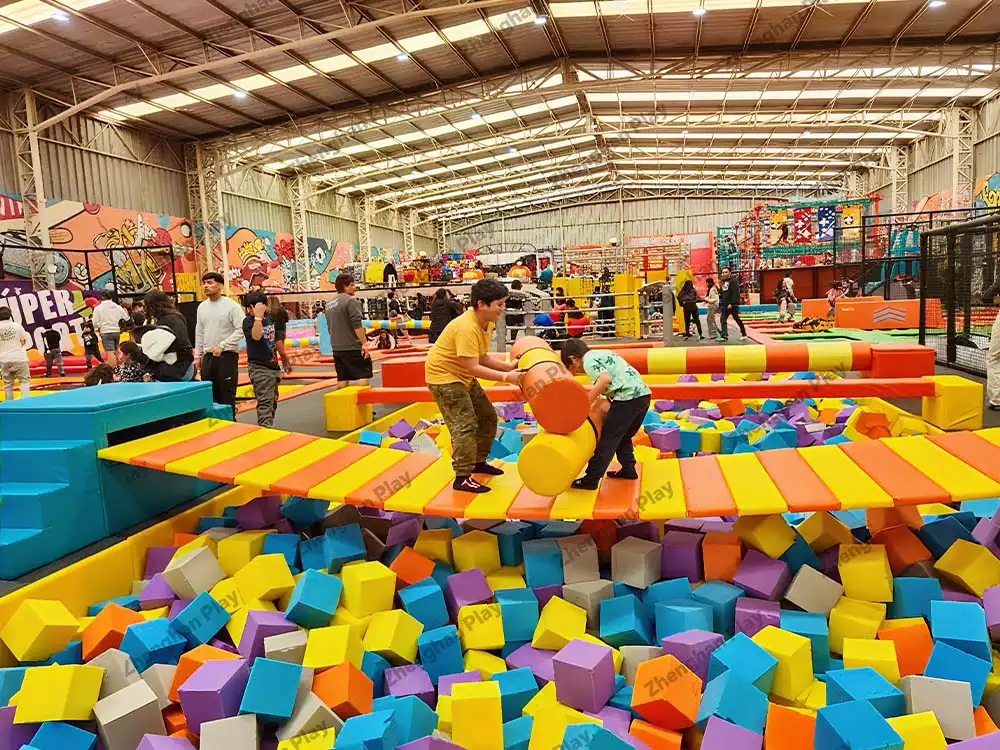
1. Can a Trampoline Park Be a Profitable Business?
A trampoline park has real profit potential because the same activity space can be sold through multiple timed sessions every day. The business can also increase the value of each visit through parties, memberships, group bookings, socks, and refreshments. Its commercial strength comes from using the venue for different customers at different times, not from selling one admission product.
Weekends may focus on families and parties, while weekdays serve students, schools, members, training sessions, companies, or private groups. A balanced schedule reduces dependence on weekend walk-in traffic.
Before investing, answer four connected questions:
- How much revenue can the park realistically generate each month?
- How many admissions, parties, memberships, and group bookings are required?
- What are the fixed, semi-fixed, and variable operating costs?
- Can the resulting profit recover the investment and fund future maintenance?
These figures must appear in one model. Using an industry revenue claim without matching it to the local building, ticket price, capacity, and cost structure can create a misleading result.
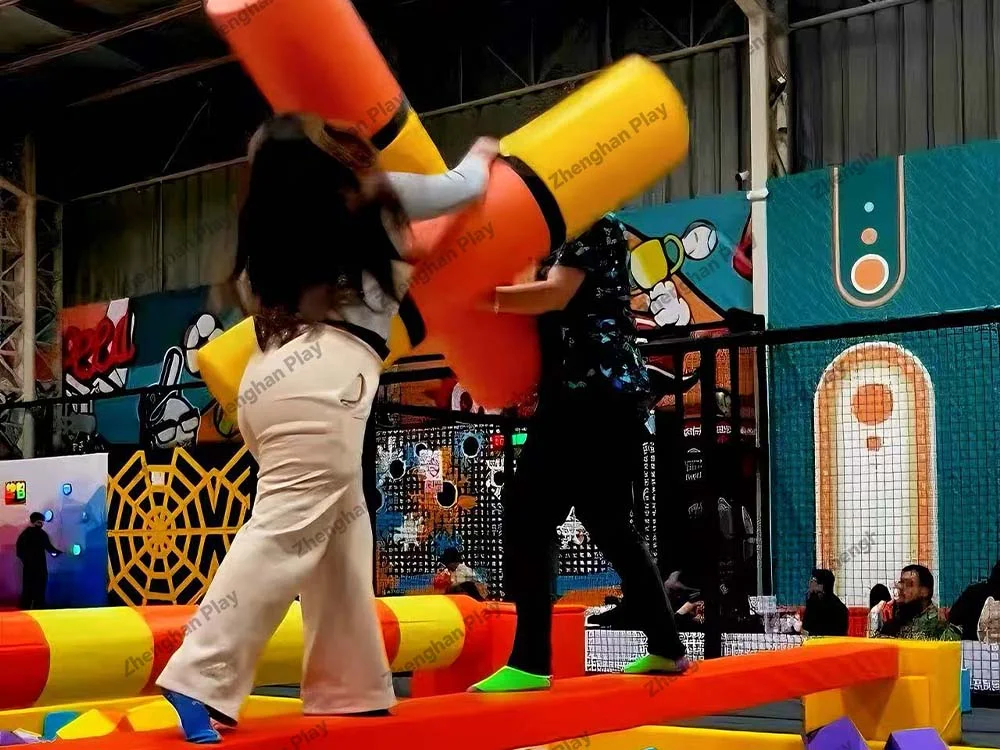
2. Revenue, Operating Profit, and Owner Income
Revenue is the total value of sales during a period. It includes admissions, parties, memberships, group events, and secondary spending before expenses are deducted. A park reporting $300,000 in annual revenue has not earned $300,000 for its owner.
Operating profit is revenue minus the normal costs required to run the venue. These may include rent, payroll, insurance, utilities, marketing, cleaning, maintenance, software, payment fees, party supplies, and product costs. This article uses a simplified operating profit before tax, interest, and depreciation so investors can compare the performance of the core business.
Owner income depends on the management structure. An owner-manager’s market-based salary should be included in payroll. A passive investor normally receives distributions after operating obligations, taxes, debt, and reserves. Excluding manager pay makes projected profit look stronger but does not represent a professionally managed venue.
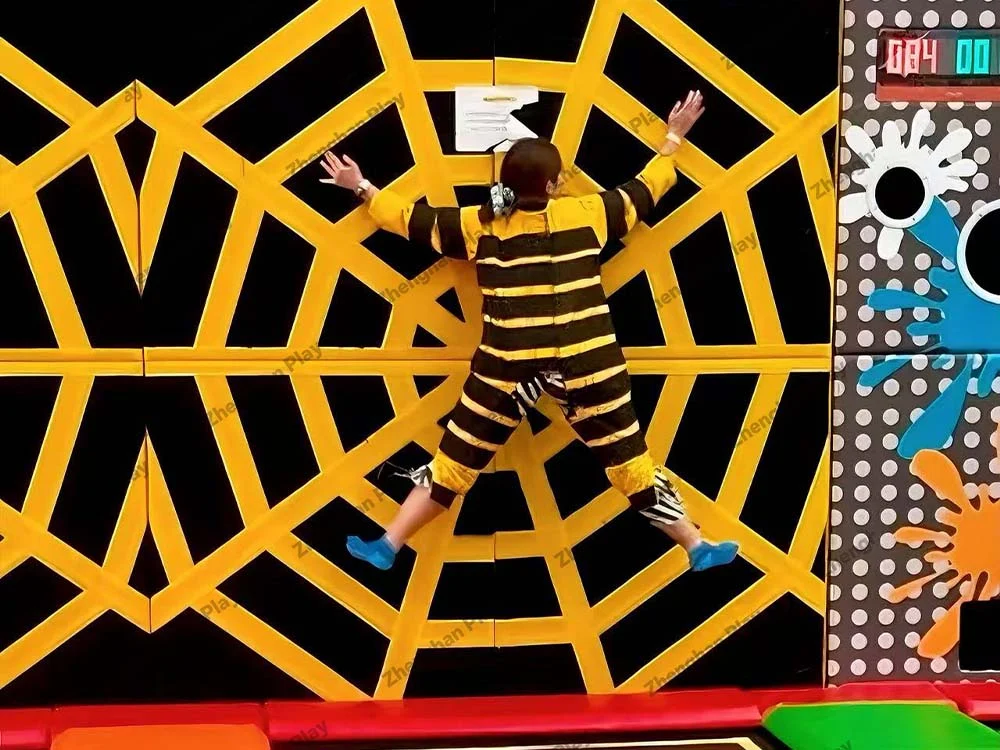
3. Main Trampoline Park Revenue Streams
Timed Admissions
Timed entry is usually the most visible revenue source. A park may offer 60-, 90-, or 120-minute sessions and use different prices for weekdays, weekends, age groups, or special events. Revenue should be calculated with the average price actually collected, not the highest price on the menu. Discounts, online promotions, taxes, and package inclusions can all change the realized ticket value.
Memberships and Multi-Visit Passes
Memberships and multi-visit cards can improve repeat attendance and cash flow. Pricing must be coordinated with peak capacity because heavily used plans can reduce revenue per available space.
Birthday Parties
A party package can combine activity time, a room, grip socks, food, hosting, or decorations. Party capacity, turnaround time, preparation, and staffing determine how many events can be delivered without disrupting admissions.
Schools, Companies, and Group Events
Schools, camps, clubs, companies, and private groups can fill quiet periods. These bookings improve weekday utilization and spread fixed building costs across more paid visits.
Grip Socks, Food, Beverages, and Retail
Grip socks provide a repeatable secondary sale, while snacks, drinks, simple meals, and branded products can increase average guest spending. Food and beverage revenue should be analyzed with its own product cost, waste, labor, equipment, and permit requirements. Total sales are not the same as gross profit.
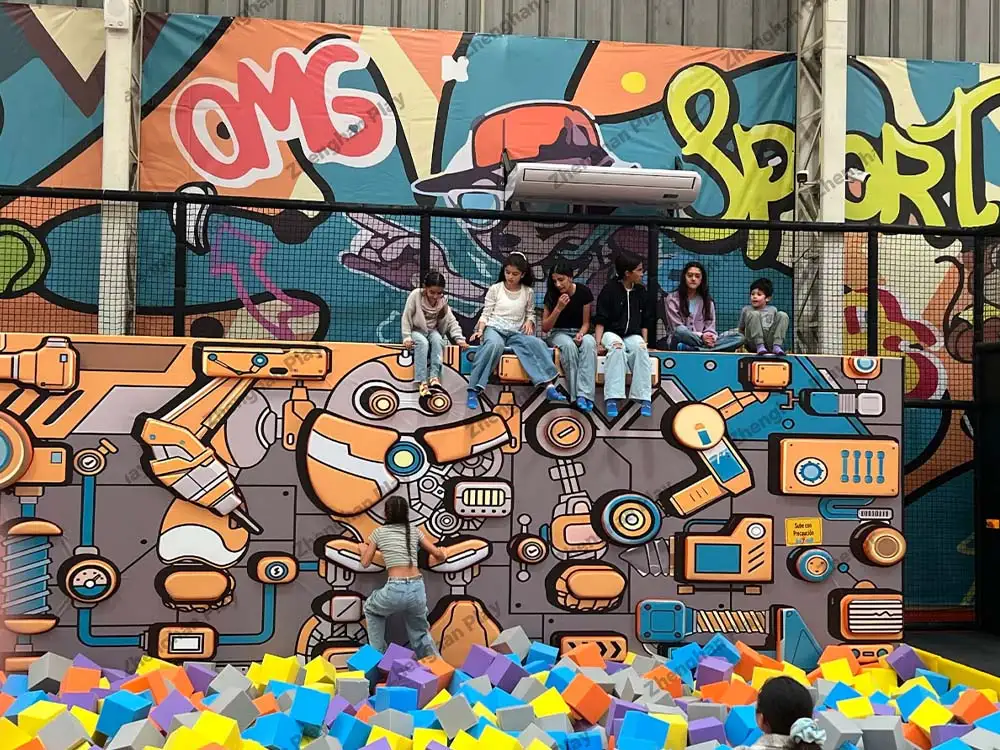
4. Monthly Revenue Model for an 800 m² Park
The following 800-square-meter model gives investors a practical structure that can be edited for a specific city. It is not a universal industry average. Ticket prices, wages, rent, school calendars, competition, and household spending vary widely between markets.
| Monthly Revenue Source | Sample Amount (USD) |
|---|---|
| General admissions | $15,000 |
| Birthday parties | $4,000 |
| Memberships and multi-visit passes | $2,500 |
| Schools, groups, and private bookings | $1,500 |
| Grip socks, food, beverages, and retail | $2,000 |
| Total monthly revenue | $25,000 |
| Annual revenue | $300,000 |
Test each line from the bottom up. Convert the $15,000 admission target into average collected ticket price multiplied by paid visits, and the $4,000 party target into monthly bookings multiplied by average order value. Membership revenue should count active paying members.
This calculation reveals whether the target is operationally possible and which revenue stream needs the most sales attention. Strong parties, groups, and memberships can reduce dependence on walk-in traffic.
5. Fixed and Variable Operating Costs
Fixed costs continue when attendance changes and include rent, base payroll, insurance, software, accounting, core marketing, and part of utilities. Semi-fixed costs may rise when weekends or holidays require more staff and longer opening hours.
Variable costs rise with sales and may include payment fees, party supplies, food, grip socks, extra cleaning, and event labor. The model uses a 20% variable cost rate.
| Monthly Profit and Loss Item | Sample Amount (USD) |
|---|---|
| Monthly revenue | $25,000 |
| Fixed and semi-fixed costs | $12,000 |
| Variable costs at 20% of revenue | $5,000 |
| Total monthly operating costs | $17,000 |
| Monthly operating profit | $8,000 |
| Operating margin | 32% |
At this performance level, the park produces $96,000 in annual operating profit. Taxes, loan interest, depreciation, and owner distributions must still be handled according to the project structure, but the 32% operating margin clearly shows whether the core venue is generating enough value.
6. How Much Can a Trampoline Park Earn Per Year?
In this model, annual revenue is $300,000 and annual operating profit is $96,000. Those figures come from a full monthly schedule, not from multiplying one exceptional holiday month by twelve.
Weather, school holidays, tourism, and local events can create seasonal changes. Estimate ordinary, peak, and slower months separately, and reflect rent, insurance renewals, replacement parts, and planned maintenance in cash flow.
7. Calculating the Break-Even Point
Break-even revenue is the monthly sales level needed to cover fixed costs and the variable expenses linked to those sales. The model uses:
- Fixed and semi-fixed costs: $12,000 per month
- Variable cost rate: 20%
- Contribution margin: 80%
Monthly break-even revenue = Fixed costs ÷ Contribution margin
$12,000 ÷ 80% = $15,000
At $15,000 in monthly revenue, the venue covers the operating costs included in the model. With a $25,000 monthly target, it has a $10,000 revenue cushion above break-even. Every additional dollar of sales contributes approximately $0.80 before any change in fixed or semi-fixed capacity.
Break-even should also be converted into customer activity. If the blended spend per paid visit is $20, then $15,000 is equivalent to about 750 paid visits per month. Stable party, membership, and group sales reduce the number of ordinary walk-in admissions needed to reach that point.
8. Investment Budget, ROI, and Payback
The same 800-square-meter project uses the following opening budget:
| Investment Item | Sample Amount (USD) |
|---|---|
| Commercial trampoline equipment | $80,000 |
| Lease deposit and pre-opening rent | $4,000 |
| Design, consultants, and permits | $2,000 |
| Venue work and building-system adjustments | $10,000 |
| International freight, import, and inland transport | $12,000 |
| Unloading and installation | $5,000 |
| Reception, furniture, and operating systems | $3,000 |
| Recruitment, training, marketing, and working capital | $6,000 |
| Contingency | $3,000 |
| Total project investment | $125,000 |
Commercial trampoline equipment can be estimated at approximately $90 to $110 per square meter during concept budgeting. This example uses the midpoint of $100 per square meter, creating an $80,000 equipment budget. The final price will depend on the building dimensions, clear height, steel structure, padding, trampoline beds, platforms, interactive systems, packaging, and transport conditions.
Simple annual ROI = Annual operating profit ÷ Total investment × 100%
$96,000 ÷ $125,000 × 100% = 76.8%
Simple payback = Total investment ÷ Annual operating profit × 12 months
$125,000 ÷ $96,000 × 12 = approximately 15.6 months
ROI does not replace a cash-flow forecast. Opening ramp-up, financing, taxes, and major replacements may change the recovery period. Replace every sample amount with local quotations and sales assumptions supported by admissions, orders, prices, and operating hours.
9. Why a Busy Park Can Still Lose Money
Rent may be too high for the productive area. Columns, low-clearance sections, fire routes, reception, storage, and back-of-house space can reduce the area capable of generating activity revenue.
Peak and off-peak demand may be unbalanced. Weekend queues do not prove that the full week is profitable. Rent, insurance, and base payroll continue while the building is quiet.
Packages may be priced without their service costs. A party can create impressive sales but weak profit if food, decorations, supplies, hosting, cleanup, and room time have not been costed correctly.
Maintenance may be underfunded. Trampoline beds, springs, padding, nets, and frequently used components require inspection and replacement. Deferred maintenance can create downtime and larger future expenses.
The project may be changed too late. Late additions can alter structure, clear height, electrical work, installation, supervision, and budget. Plan the park as one integrated operating system, not as unrelated zones.
10. How Layout and Equipment Design Affect Profit
Layout determines capacity, staff visibility, circulation, and separation between age or activity levels. Efficient use does not mean filling every corner; activities, waiting, parties, reception, storage, emergency access, and exits must work together.
Before requesting a quotation, provide an accurate plan showing dimensions, clear heights, columns, entrances, exits, fire routes, and building services. A layout for customized trampoline park equipment based on the actual building can reduce redesign and ensure that the equipment budget, capacity forecast, and revenue model use the same floor area.
Staff observation positions and emergency access should also be established during design. If an attraction requires excessive staffing because sightlines are poor, payroll will directly reduce its contribution. Designing for operations is usually more economical than solving supervision problems by adding shifts after opening.
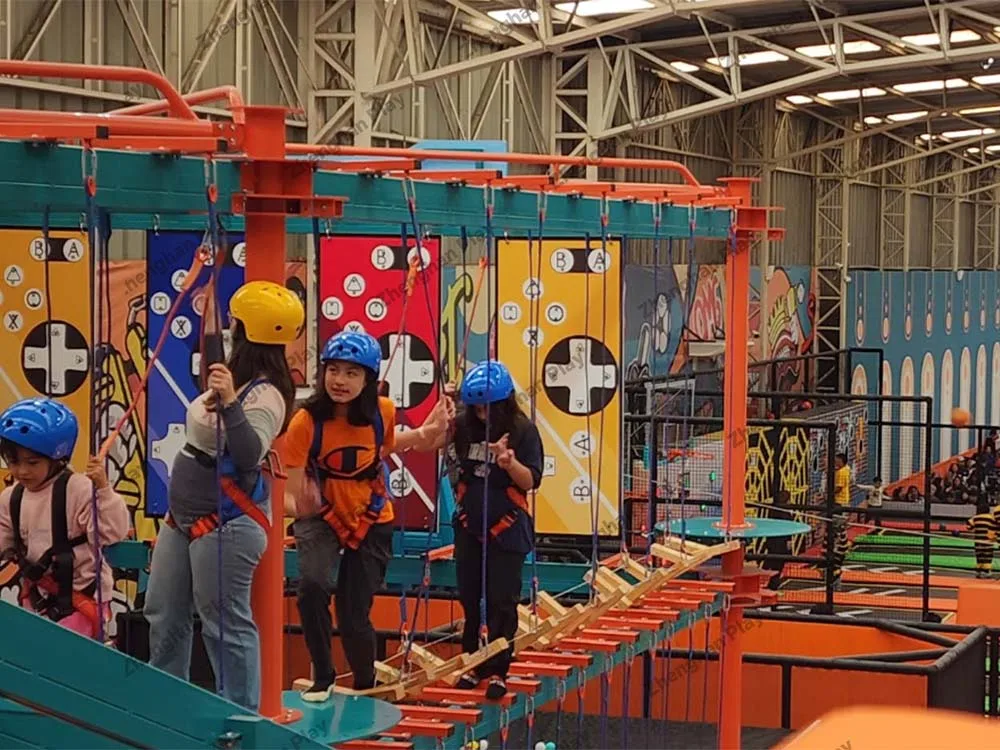
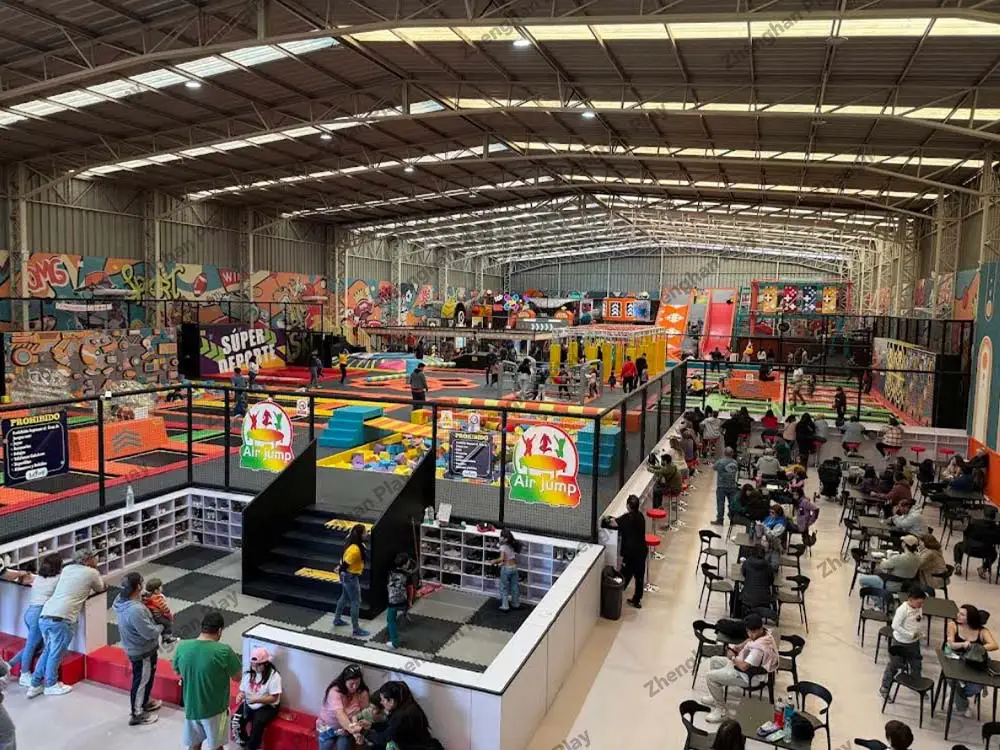
11. AIR JUMP in Coquimbo, Chile
AIR JUMP is a commercial indoor trampoline park located at La Cantera 2275, 1802194 Coquimbo, Chile. The project illustrates why a trampoline park financial model must begin with a real city and a real building. The local family market, school calendar, rent, wages, accepted ticket prices, and transport access all influence revenue and costs.
Investors should confirm productive area and safe session capacity, forecast admissions, parties, memberships, and groups, then compare those sales with rent, payroll, insurance, maintenance, utilities, and marketing.
Currencies, taxes, and consumer spending vary worldwide, but the calculation remains consistent: attendance multiplied by realized customer spending creates revenue; revenue minus operating costs creates operating profit; and annual operating profit divided by total investment produces simple ROI.
12. How the Manufacturer Affects ROI
Equipment price is only one part of project cost. Design errors, missing parts, site rework, and opening delays reduce returns. An indoor playground factory that coordinates design, production, quality control, packaging, installation guidance, and service can align delivery with construction.
Before placing an order, confirm:
- The equipment area and complete configuration covered by the quotation
- The scope of plan, elevation, structural, and installation information
- Main materials, wear parts, and recommended spare parts
- Packaging labels, container planning, and shipping volume
- Installation responsibility, tools, and site requirements
- Inspection, maintenance, and component-replacement guidance
- How design changes affect price and delivery time
A quotation with clear boundaries reduces missing costs and helps the investor calculate pre-opening cash requirements and payback more accurately.
13. Data to Collect Before Investing
- Total building area, productive activity area, and clear height by zone
- Monthly rent, service charges, deposit, and rent escalation
- Local prices, competing venues, population, and family market
- Weekday, weekend, holiday, and low-season attendance assumptions
- Admissions, parties, memberships, group events, and secondary spending
- Full-time and part-time headcount, wages, and shift plans
- Insurance, permits, utilities, marketing, cleaning, and maintenance
- Equipment, freight, import, installation, and building-work quotations
- Working capital required during the opening ramp-up
- Monthly profit and loss, break-even revenue, ROI, and cash payback
When these figures support one another, the investor can judge whether the project has enough margin instead of relying on weekend traffic or a competitor’s ticket price.
Conclusion
A trampoline park can be profitable, but the return comes from a complete operating model rather than one attraction or a high ticket price. In this 800-square-meter example, monthly revenue of $25,000 and operating costs of $17,000 produce an $8,000 monthly operating profit, a 32% operating margin, and $96,000 in annual operating profit. With a total investment of $125,000, the simple annual ROI is 76.8% and the simple payback period is approximately 15.6 months.
A real project should replace the example with local rent, wages, prices, attendance, insurance, and equipment quotations, then test how results change if sales are lower or costs are higher. The earlier the site, layout, attraction mix, capacity, and operating plan are coordinated, the more reliable the investment forecast becomes.
Send Your Floor Plan for Project Advice
For layout and equipment budget advice, prepare your country and city, floor plan, dimensions, clear heights, column positions, entrances, fire routes, target age groups, planned attractions, investment range, and expected opening date.
Send Your Floor Plan for Project Advice
Frequently Asked Questions
1. Is a trampoline park profitable?
It can be. Profitability depends on attendance, realized customer spending, party and membership sales, rent, payroll, insurance, and maintenance. Use a monthly profit-and-loss statement and break-even calculation instead of judging the project only by ticket price.
2. How much revenue can a trampoline park make in a year?
Revenue varies by country, city, size, pricing, and operating model. The 800-square-meter example in this article produces $25,000 per month and $300,000 per year. A real forecast should build every income line from local prices, paid visits, and confirmed order targets.
3. What is a good profit margin for a trampoline park?
There is no single worldwide target. This model produces a 32% operating margin. When comparing figures, check whether manager salary, insurance, maintenance, marketing, payment fees, and variable costs are included.
4. How do you calculate trampoline park ROI?
Simple annual ROI equals annual operating profit divided by total project investment. With $96,000 in annual operating profit and $125,000 invested, the model produces a simple annual ROI of 76.8%.
5. What is the break-even point for a trampoline park?
Break-even revenue equals fixed costs divided by the contribution margin. With $12,000 in monthly fixed and semi-fixed costs and a 20% variable cost rate, the monthly break-even revenue in this model is $15,000.
 English
 Spanish
 Arabic
