
Importing trampoline park from China is a complete project that connects venue design, steel-frame production, quality control, packing, export documentation, international freight, import clearance, unloading, installation, and after-sales support. A buyer should evaluate more than the equipment price. The design must fit the building, the production records must match the order, packages must be traceable, and shipping and customs responsibilities must be agreed before the equipment leaves the factory.
ZHENGHAN is a commercial trampoline and indoor playground equipment factory. Its team can coordinate design, manufacturing, inspection, packing, spares, China transport, booking, export documents, international freight, and destination delivery under the agreed contract.
1. Import a Complete Trampoline Park System
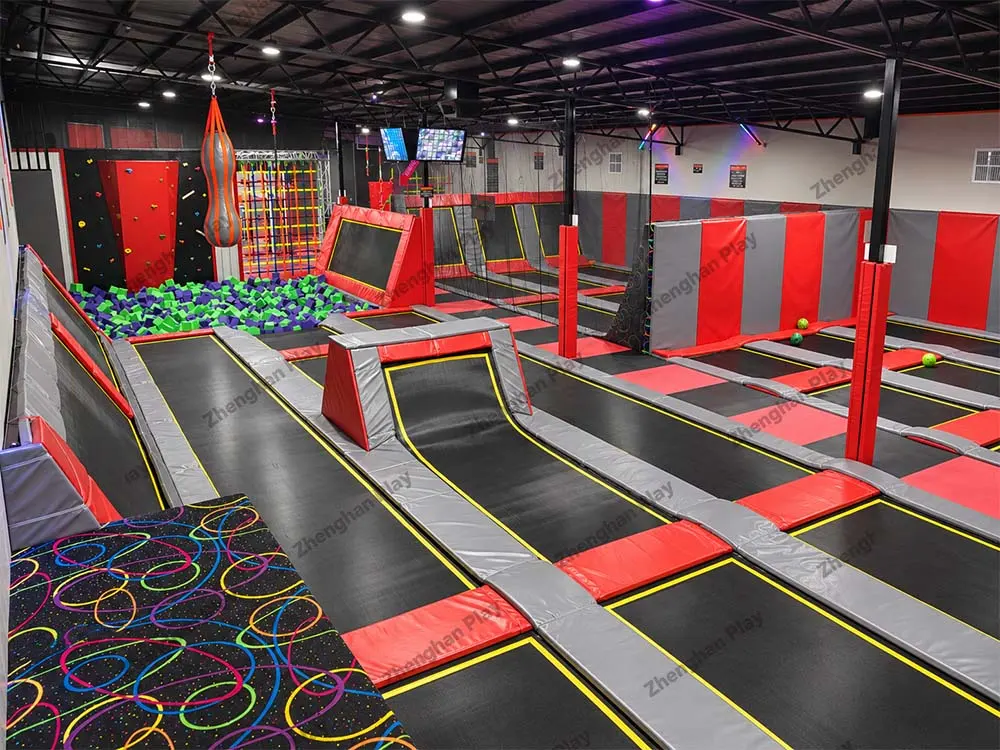
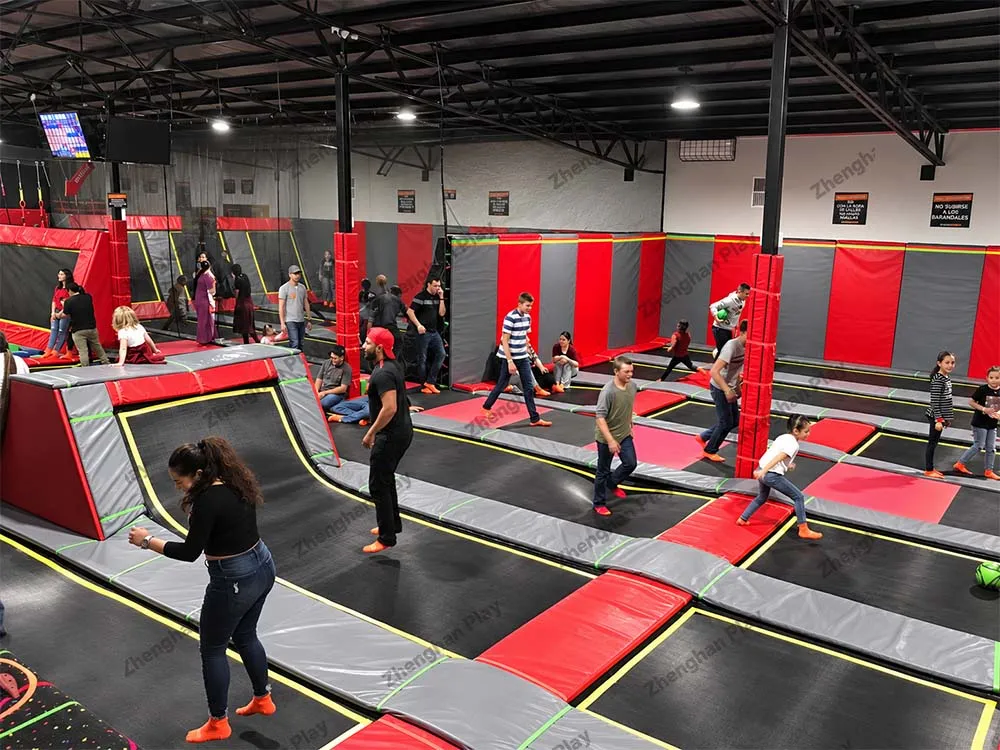
A commercial trampoline park is not simply a shipment of steel pipes. It may include frames, springs, beds, padding, nets, platforms, stairs, entrances, sports zones, wall-running areas, and other attractions. Every component must follow the same design, equipment schedule, numbering plan, and installation sequence.
The contract should identify every zone, material, document, and service. Frames, beds, springs, padding, nets, fasteners, tools, and spares should appear in the equipment schedule.
Confirm packing, CBM, weight, shipping method, port, documents, unloading, and installers early. Design and logistics are connected: a long member may be difficult to load or move through the building if access was ignored.
2. Select a Factory with Manufacturing and Export Capability
When evaluating indoor trampoline park manufacturers, review the company, factory, people, machinery, export experience, and order records together. Useful checks include:
- Business registration and manufacturing scope
- Registered address and actual production address
- Contract, payment, and export arrangements
- A live video tour showing current production
- Steel cutting, drilling, welding, and surface-treatment areas
- Padding, trampoline-bed, netting, and component inspection areas
- Order-specific drawings, material lists, and inspection records
- Packing, labeling, container loading, and export-document procedures
- Options for customer visits or independent factory inspection
A factory may use an affiliated exporter or forwarder. Explain these relationships in advance and keep the contract, invoice, payment route, documents, and transport responsibilities consistent.
3. Why Steel-Frame Production Must Be Transparent
The structural frame must connect accurately with springs, beds, padding, nets, platforms, and attraction-specific components. Errors in length, hole position, connection plates, orientation, or labeling can stop installation.
Production normally includes dividing the layout into modules, confirming material specifications, calculating cut lengths, processing holes and connectors, controlling welding and tolerances, applying the agreed surface treatment, and numbering parts by installation area.
Sales, design, production, packing, and logistics teams should use the same final order. Any change must update the drawings, material list, packages, weight, and freight estimate.
4. Freeze the Design Before Confirming Freight
Container requirements cannot be calculated reliably from venue area alone. The manufacturer must complete the real-site layout and confirm all trampoline zones and added attractions before finalizing frame quantity, longest member, packed volume, net weight, and gross weight.
Provide:
- Venue length, width, and clear height by area
- Columns, walls, beams, and fixed obstructions
- Entrances, emergency exits, and circulation routes
- Sprinklers, lights, ducts, and building services
- Unloading access, corridors, lifts, and installation entrances
- Every trampoline zone, platform, and additional attraction
- Target ages, capacity, and operating zones
Added platforms or attractions can change steel, package dimensions, and freight. Shipping data remains an estimate until design is frozen.
5. Compare the Full Quotation Scope
Suppliers may quote different materials, attractions, packing, documents, and transport services. When reviewing commercial playground equipment for sale, use the same venue drawing and attraction list for every quotation.
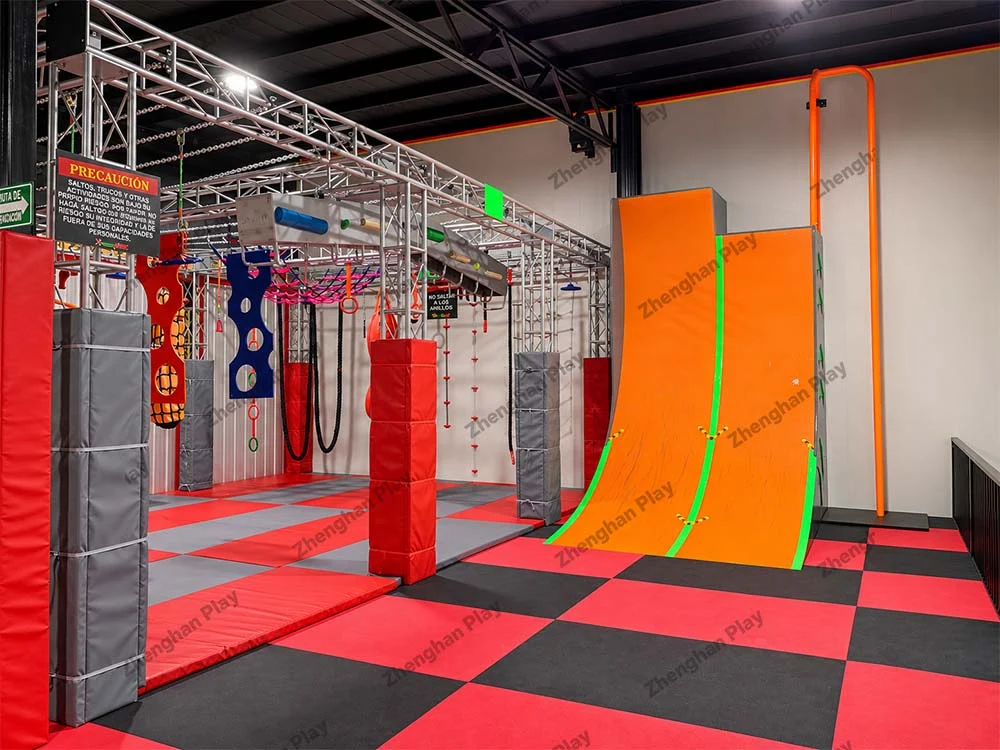
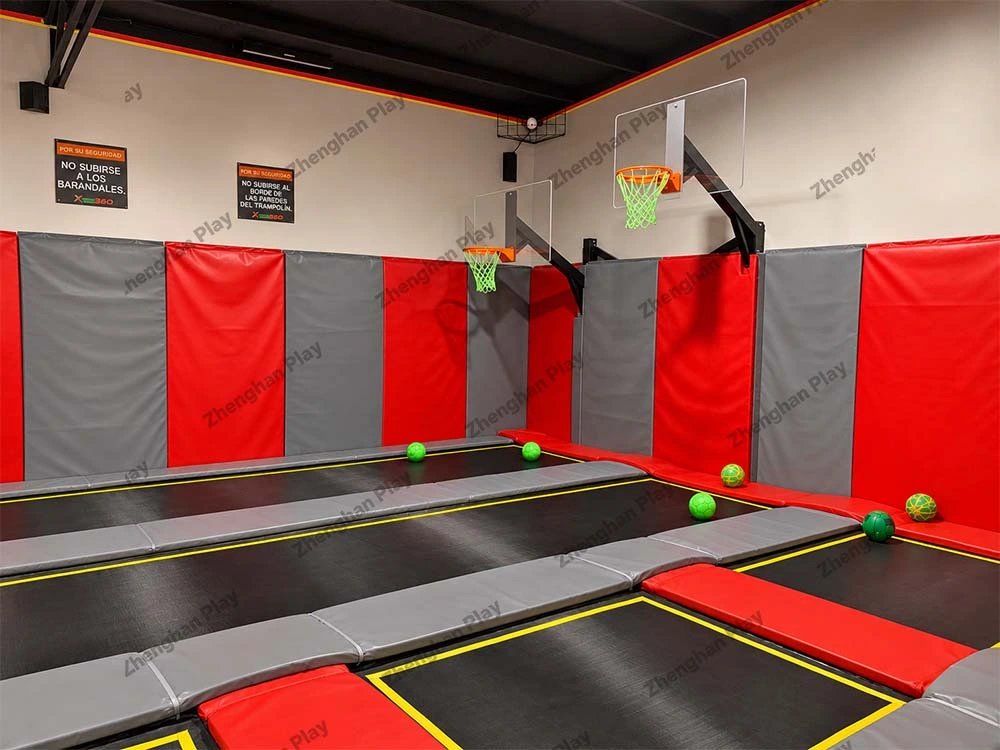
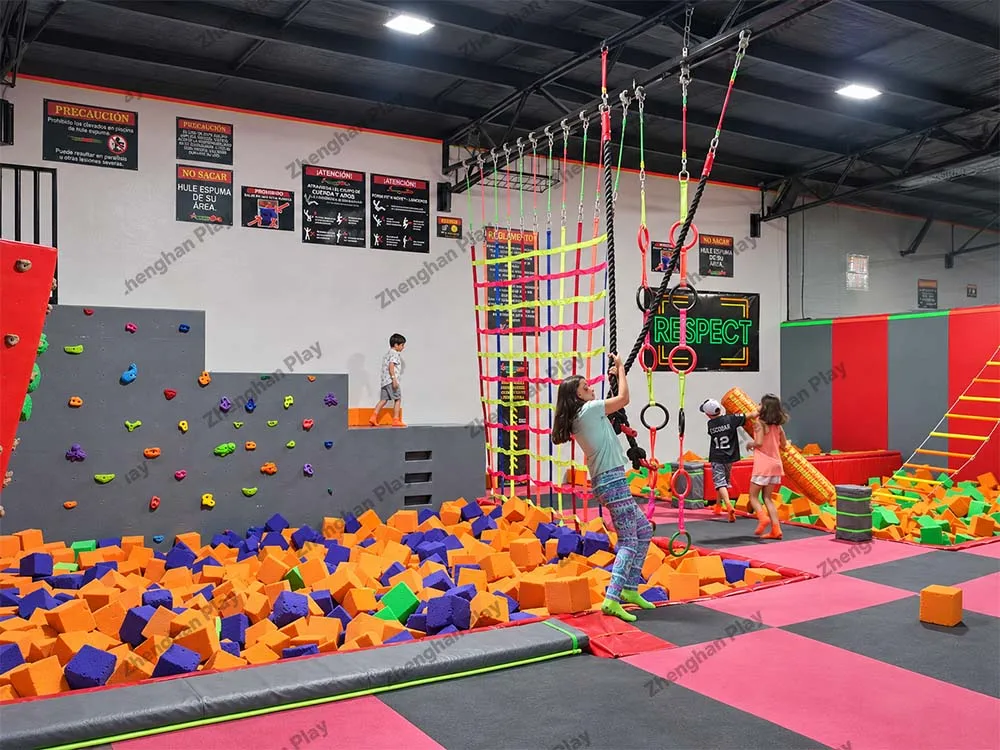
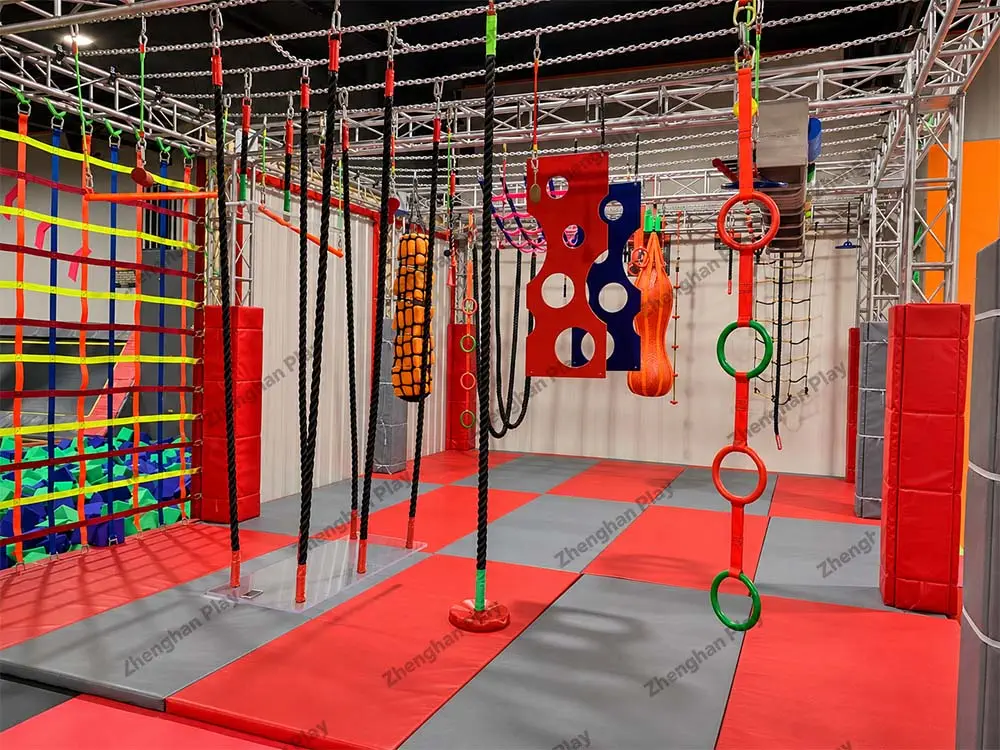
Confirm the structural frame, connectors, springs, beds, padding, nets, platforms, stairs, entrances, basketball or dodgeball features, wall-running structures, ninja or climbing elements, electrical items, tools, fasteners, spares, drawings, packing, loading, export information, installation guidance, warranty, and exclusions.
A low total may omit padding, platforms, spares, packing, or documents. Compare quotations line by line.
6. What Can the Factory Provide?
| Project Stage | Factory Support |
|---|---|
| Venue planning | Customize the layout from dimensions, clear heights, columns, and attractions |
| Manufacturing | Manage steel, cutting, drilling, welding, surface treatment, and components |
| Quality control | Check dimensions, quantities, labels, surfaces, and order configuration |
| Pre-shipment inspection | Support customer, independent, or video inspection |
| Packing and loading | Prepare package numbers, CBM, weights, and loading information |
| Export documents | Provide contracted invoice, packing list, and product information |
| International freight | Coordinate pickup, booking, export documents, freight, and insurance |
| Destination delivery | Assist with delivery arrangements under the agreed trade term |
| After-sales support | Use drawings and production records to identify spares or replacements |
Service scope varies by contract. Factory-arranged freight does not automatically mean that destination handling, import duty, clearance, unloading, or installation is included. Every responsibility and delivery point must be written into the quotation and contract.
7. Define the Contracting and Export Parties
The contract company, payment account, manufacturer, and export provider may be connected parties. Before payment, confirm who is responsible for quality, delivery, documents, replacements, and warranty.
The contract should reference final drawings, equipment, materials, surface treatment, production, inspection, packing, Incoterm, named place, documents, shortages, warranty, and changes.
8. Control Steel-Frame Quality During Production
Order-specific checks should cover:
- Material and specification verification
- Cut length and hole-position checks
- Welding, connection plates, and fastening method
- Surface treatment and corrosion condition
- Critical dimensions or trial fitting
- Zone numbering and installation direction
- Fasteners, tools, and spare-part quantities
- Final comparison with the bill of materials before packing
There is no one pipe size, wall thickness, or coating specification for every park. Final requirements depend on the design, use, applicable requirements, and supply contract. Avoid relying only on general claims such as “heavy duty.”
9. Inspect Before Loading
Arrange factory, independent, or video inspection before loading and compare the equipment with approved drawings, the material list, and packing plan.
Check dimensions, labels, connectors, surfaces, springs, beds, padding, nets, platforms, electrical items, fasteners, tools, spares, packages, weights, CBM, and documents.
Close written issues before loading. A missing frame sent later may require special packing, air freight, another import entry, and schedule changes.
10. Split and Pack Large Steel Frames Correctly
Frames should be divided by installation area, module, and assembly sequence. Long members, heavy pieces, and small hardware require different packing and securing methods.
- Use consistent labels for each installation zone
- Secure bundles against movement and metal-to-metal abrasion
- Protect corners and finished surfaces
- Bag or box fasteners by type, quantity, and area
- Keep beds, padding, and nets dry and clean
- Protect electrical parts separately against impact and moisture
- Identify spares separately from normal installation parts
- Match package labels to the packing list and installation drawings
If wood cases, pallets, or braces are used, check destination treatment, marking, and quarantine requirements. Replace estimated dimensions and weights with actual packing data before booking.
11. Select the Container and Transport Method
Select transport from the final packing data and route, not from venue square meters. Options may include 20GP, 40GP, 40HQ, open-top, flat-rack, less-than-container-load, or another multimodal service.
Review the longest package, maximum width and height, door opening, internal dimensions, CBM, net and gross weight, dunnage and securing weight, the carrier’s actual equipment, road-weight limits, port handling, site unloading capability, and any member that cannot be shortened.
Chassis, axle, highway, and national rules may set a lower practical limit than the container rating. The factory, forwarder, and destination carrier must confirm each shipment. Park area does not determine a fixed container quantity.
12. Control Weight Distribution and Cargo Damage
Long and heavy frames require a loading sequence, balanced weight, securing, abrasion protection, moisture control, and practical unloading order.
The load plan should show packages, dimensions, weights, heavy-item positions, securing, separation of soft or electrical parts, and unloading needs. Packaging and securing materials count toward cargo weight.
Keep loading photographs, container number, and seal number. Update the packing list from the actual loaded cargo rather than submitting early estimates.
13. Prepare the Commercial Invoice and Packing List
The commercial invoice should identify the buyer and seller, invoice number, clear product descriptions, quantities, units, prices, total value, currency, origin, Incoterm, and named place.
The packing list should show package numbers, contents, weights, dimensions, CBM, and installation zones. Generic descriptions may be too vague, but documents must always match the loaded goods.
14. Confirm the HS Classification
There is no worldwide code for every commercial trampoline shipment. Classification may depend on a complete system versus parts, assembled or unassembled condition, frame function, accompanying components, and separately treated attractions.
The factory should provide drawings, photos, materials, functions, quantities, and values. The importer and broker confirm destination classification. Do not automatically declare the system as ordinary steel articles or copy a ruling for another product or country.
15. Calculate Duty, Import Tax, and Customs Value
Review the final classification, Chinese origin, invoice value, customs valuation method, freight and insurance treatment, ordinary duty, preferential rates when applicable, VAT, GST, sales tax, additional trade measures, brokerage, inspection, and destination-port charges.
The factory can provide the commercial invoice, packing list, origin documents when applicable, and supporting product information. Final classification, declared value, tax rate, and import entry remain subject to the importer, customs broker, and destination authorities. Review the proposed descriptions and method before production ends.
16. Define Shipping Responsibilities with Incoterms
FOB
The seller generally delivers the shipment on board at the named Chinese port under the agreed rule. The buyer arranges main freight, insurance, import clearance, destination charges, and inland delivery.
CIF
The seller arranges the agreed ocean freight and insurance to the destination port. CIF normally does not include all destination handling, import duty, customs clearance, inland delivery, unloading, or installation.
DAP
The seller arranges transport to the named destination, while the buyer normally handles import clearance and taxes. The contract must identify the delivery point and unloading responsibility.
DDP
The seller assumes wider responsibility, including import clearance and duties. Confirm who can legally act in the import process, how taxes are documented, and whether inspection, storage, or exceptional charges are included.
ZHENGHAN can coordinate booking, export and transport documents, international freight, and destination delivery, or work with a forwarder nominated by the buyer. The contract should state who pays for freight, insurance, destination handling, clearance, inland delivery, unloading, and installation.
17. Prepare Destination Delivery, Unloading, and Storage
Before arrival, confirm customs clearance, container pickup, truck booking, unloading equipment, and storage. Check road width, turning space, height limits, landlord rules, delivery hours, forklift or crane needs, the longest frame entering the building, and whether a warehouse transfer is required.
Store packages in a dry, secure area by installation sequence. Photograph external damage before signing receipt and retain records needed for a freight claim. Do not separate labeled bundles and hardware boxes without updating the site inventory.
18. Handle Missing Parts After Delivery
First use the packing list, package labels, opening records, and photographs to determine whether a part was omitted in production, lost in transport, damaged, or not yet located by installers.
Provide the drawing reference, location, photograph, and required quantity. The factory can use the bill of materials and production records to identify the correct part and arrange replacement. The contract should determine responsibility for production, express freight, import charges, and site labor.
19. Pre-Order Checklist
- Does the manufacturer operate a real production site and technical team?
- Are the contract, payment, manufacturing, and export arrangements clear?
- Who controls materials, processing, and quality checks?
- Who retains the final drawings and bill of materials?
- Who provides net weight, gross weight, CBM, and package data?
- Who prepares the invoice and packing list?
- Who arranges the pre-shipment inspection?
- Who manages design changes and production delays?
- Who handles missing parts, transport damage, and replacements?
- Which freight, clearance, delivery, installation, and warranty services are included?
20. Recommended Import Sequence
- Confirm the venue and complete attraction scope.
- Verify the manufacturer’s production and export capability.
- Submit the site plan and complete the layout.
- Compare quotations based on the same configuration.
- Confirm materials, documents, services, and Incoterm.
- Sign the contract and freeze the final design.
- Produce the equipment and complete in-process checks.
- Inspect before shipment.
- Confirm packages, weights, CBM, and transport method.
- Check the invoice, packing list, and shipping data.
- Export, insure, and transport the cargo.
- Complete import clearance and confirmed tax payments.
- Arrange inland delivery, unloading, storage, and installation.
- Resolve shortages, complete inspections, and hand over the project.
Conclusion
Importing a large commercial trampoline system from China requires more than comparing the factory price. The manufacturer must control design and production, provide accurate packing and customs information, and support problems with direct access to drawings and production records.
An experienced factory can also coordinate booking, export documents, international transport, and destination delivery. Buyers do not need to choose between manufacturing control and shipping support. They do need a contract that clearly identifies the product scope, trade term, delivery point, import responsibilities, and after-sales process.
Container quantity, cargo weight, and classification must be confirmed for the final order and route. Do not estimate containers only from park area or copy a customs code from another country. Accurate drawings, material lists, package records, and declarations are the foundation of reliable freight, clearance, and installation.
Send Your Floor Plan for Project Advice
Prepare your country and city, venue plan, dimensions, clear heights, columns, building entrances, attraction list, target ages, investment range, and expected opening date.
Send Your Floor Plan for Project Advice
Frequently Asked Questions
1. What is included when importing a trampoline park from China?
A complete order may include venue design, steel frames, springs, beds, padding, nets, platforms, connectors, packing, export documents, and contracted freight services. The final scope must follow the contract, drawings, and equipment schedule.
2. Can a trampoline park factory arrange international shipping?
Yes. ZHENGHAN can help arrange China pickup, booking, export documents, international freight, and destination delivery according to the agreed Incoterm. Confirm whether import clearance, duty, unloading, and installation are included.
3. What documents are needed to import trampoline steel frames?
Common documents include the contract, commercial invoice, packing list, bill of lading, origin documents when applicable, cargo insurance information, product drawings, material descriptions, and destination-specific import information.
4. How are trampoline steel frames classified for customs?
Classification depends on construction, function, assembled or unassembled condition, accompanying components, and the destination tariff. The manufacturer supplies product details, while the importer and local broker confirm the final classification.
5. How many containers are needed for a commercial trampoline park?
Venue area alone is not enough. The result depends on the final layout, frame segmentation, longest package, packing method, CBM, gross weight, container specifications, road limits, and route.
6. Who is responsible when parts are missing after delivery?
Responsibility depends on the contract, packing records, and cause. Check package numbers and opening records first, then determine whether the issue resulted from production, transport, or site handling and allocate replacement, freight, tax, and labor costs accordingly.
 English
 Spanish
 Arabic
