
A direct trampoline manufacturer is usually the strongest sourcing choice for a commercial trampoline park because the factory can connect venue design, structural frames, springs, trampoline beds, padding, safety nets, platforms, packing, international freight, and long-term support as one project. Direct manufacturing reduces the number of communication layers between the buyer, designers, production workers, inspectors, and after-sales team.
Commercial trampoline equipment is not simply an enlarged backyard trampoline or a collection of standard catalog modules. Every building has different clear heights, columns, exits, activity zones, and service systems. A source factory can design for the real venue and convert the approved plan directly into purchasing, production, quality-control, packing, and installation information.
ZHENGHAN is a commercial trampoline and indoor playground equipment factory. It handles design, manufacturing, inspection, and export packing and can also help buyers arrange booking, export documents, international transport, and destination delivery according to the project contract.
1. What Is a Direct Trampoline Manufacturer?
A genuine commercial trampoline factory does more than sell components. It owns or directly manages the capabilities required to deliver a complete project:
- Venue layout and elevation design
- Structural frames and platforms
- Springs, trampoline beds, and connectors
- Padding and safety nets
- Stairs, entrances, and barriers
- Basketball, dodgeball, and wall-running areas
- Ninja, climbing, and interactive activities
- Production inspection and quality control
- Packing, labeling, and container coordination
- Installation information and technical support
- Spare parts, warranty, and replacements
- Export and international freight coordination
The words manufacturer or factory on a website do not prove production capability. Buyers should still verify the physical facility, machinery, technical staff, current orders, inspection records, and packing area.
2. Why a Commercial Project Needs Factory Access
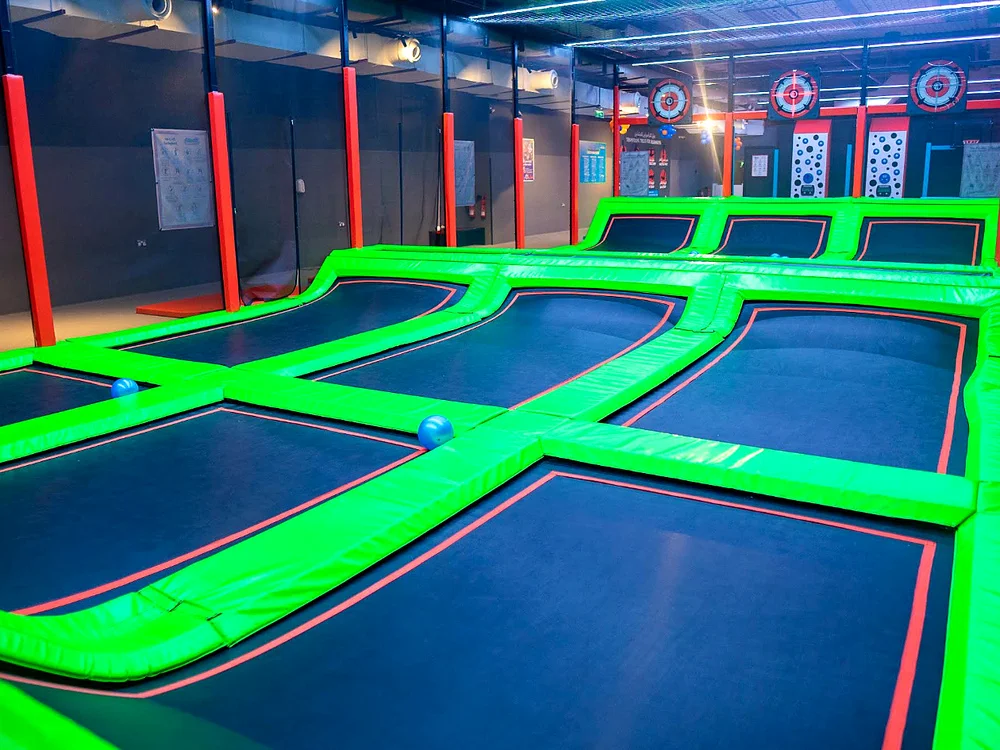
A commercial trampoline park must be designed for its building. The design team needs accurate information about:
- Venue length, width, and clear height by zone
- Columns, walls, beams, and fixed obstructions
- Main entrances, emergency exits, and escape routes
- Sprinklers, lights, ducts, and building services
- Customer circulation and staff observation positions
- Age, ability, and activity-intensity zones
- Reception, waiting, party, and parent areas
- Unloading access and installation entrances
A design change may affect steel quantity, trampoline-bed dimensions, padding boundaries, platforms, packaging, and price. A direct factory can let sales, design, production, packing, and support teams work from the same approved drawings. When the venue changes, the factory can review manufacturability and update the material list and shipping data without passing instructions through several organizations.
3. How to Verify the Source Factory
When assessing a trampoline area manufacturer, verify the business identity, actual facility, people, equipment, and order records together.
Request:
- Business registration and manufacturing scope
- Registered address and actual factory address
- A live, dated video tour of production
- Steel cutting, drilling, welding, and surface-treatment areas
- Padding, trampoline-bed, and netting work or inspection areas
- Raw-material and finished-product storage
- Current project drawings, labels, and production records
- Quality-control personnel and inspection forms
- Packing, labeling, and loading areas
- Customer visits or independent factory-audit options
A live walkthrough is more useful than a reused promotional video. Ask the salesperson to show a current project number, workstations, materials, and packing area, with technical staff explaining the production process.
A factory may use an affiliated exporter or freight forwarder for international transport without losing its identity as the manufacturer. The contract, payment route, production party, export documents, and logistics responsibilities should be transparent.
4. Factory-Direct Value Is More Than Price
Direct sourcing reduces purchasing layers, but no factory should promise that every project is automatically the cheapest. Final price depends on area, attraction mix, materials, theme, production difficulty, technical information, packing, freight, and service scope.
The real advantages are:
- Equipment scope can be checked line by line.
- Material and manufacturing costs are easier to explain.
- Design changes can be evaluated by production staff.
- Quality problems can be corrected directly.
- Packing information comes from the actual order.
- Shortages and warranty issues do not require locating another factory.
- Future parts can be matched to original drawings.
Compare complete delivered scope rather than a single price per square meter or one equipment total.
5. How to Compare Trampoline Park Quotations
When purchasing a custom trampoline park, every quotation should use the same venue plan, attraction list, and material requirements.
Confirm:
- Total equipment area and activity zones
- Structural frames and connectors
- Springs, beds, padding, and nets
- Platforms, stairs, entrances, and barriers
- Basketball, dodgeball, and wall-running features
- Ninja, climbing, and interactive equipment
- Electrical components
- Tools and recommended spare parts
- Plans, elevations, and installation information
- Export packing and package labels
- International freight services
- Installation guidance, warranty, and after-sales support
- All exclusions
A quotation is comparable only when the scope is consistent. Missing platforms, padding, spares, packing, or documents can make an early price appear lower while increasing cost later.
6. From Venue Design to Production
A source factory design process should go beyond a visual rendering:
- Review the floor plan and dimensions.
- Confirm clear heights, columns, exits, and building services.
- Plan jump zones and additional attractions.
- Plan customer circulation and staff sightlines.
- Prepare plans and elevations.
- Check structural and production feasibility.
- Generate the equipment and material schedule.
- Obtain final customer approval.
- Freeze the drawings and start production.
A rendering communicates appearance and theme. Production drawings must define structure, dimensions, connections, and components. Direct factory access allows designers and workshop staff to confirm whether each revision can be manufactured and installed.
7. Direct Material Control
A commercial system may use steel tubes, connectors, springs, trampoline beds, deck panels, foam, covers, safety nets, ropes, plastic or themed parts, motors, sensors, electronic games, fasteners, and tools.
The factory can place order requirements into purchasing and production files and inspect materials during receiving, processing, and packing. When a problem appears, it can trace the batch, record, and installation area.
Ask for material descriptions connected to the final order rather than accepting only general terms such as commercial grade or heavy duty. Specifications should suit the design, intended use, and destination requirements.
8. Why the Factory Must Control Steel Production
The structural frame must connect accurately with springs, beds, padding, platforms, and safety nets. Manufacturing may include dividing the layout into modules, confirming materials, calculating cut lengths, processing holes and connection plates, controlling welding and tolerances, applying the agreed finish, labeling installation direction, and planning member lengths for packing and site access.
There is no one pipe dimension, wall thickness, or finish for every project worldwide. Final specifications depend on the design, attraction type, use, applicable requirements, and supply contract.
Direct control allows the factory to correct dimensional, hole-position, or surface problems before packing.
9. Produce the Park as One Integrated System
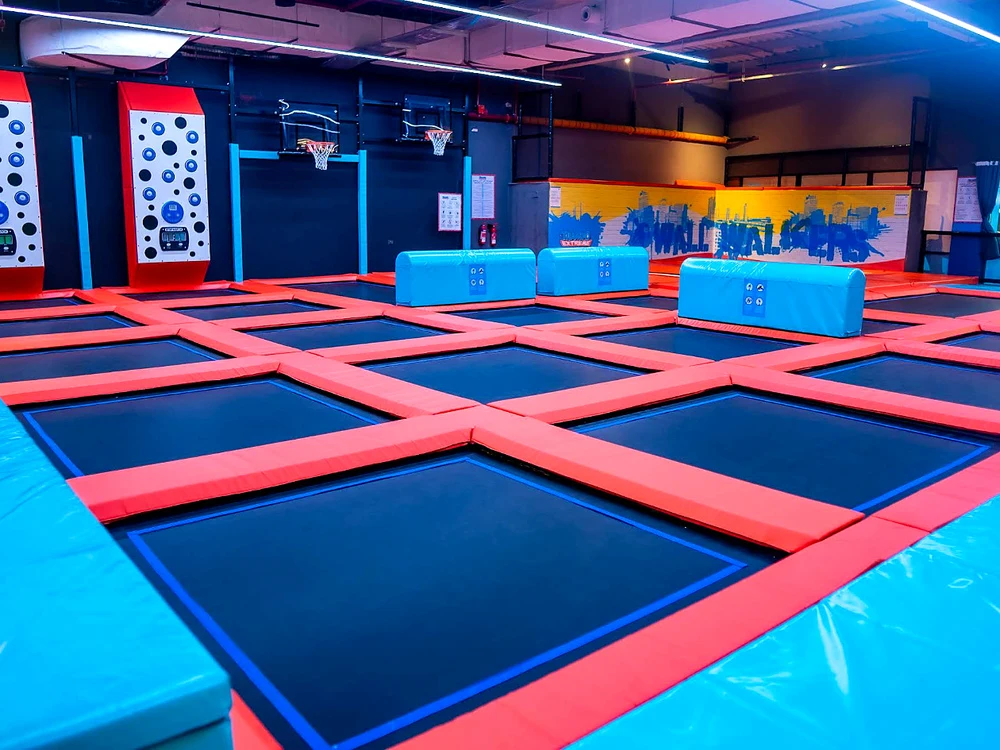
A commercial park may combine open jump, dodgeball, basketball, wall running, foam pits or airbags, ninja activities, climbing, interactive games, toddler areas, viewing space, and circulation.
These are not unrelated products. The factory must coordinate frame interfaces, platform heights, padding boundaries, nets, entrances, staff access, and maintenance space. Adding an attraction after design approval may change structure, clear height, electrical work, packing, insurance, and operations, so confirm the complete scope before production.
10. Order-Specific Quality Control
A direct factory can establish a process covering:
- Incoming materials
- Steel dimensions, cutting, and drilling
- Welding and connectors
- Surface treatment
- Platforms and structural parts
- Springs and trampoline beds
- Padding and safety nets
- Electrical and interactive components
- Critical-module fitting or dimensional checks
- Quantity, tools, and spare parts
- Final inspection before packing
If an issue is found, the factory can stop the process, rework the item, and inspect it again. Direct access to the workshop, drawings, and bill of materials shortens corrective action.
11. Technical Documents Must Match the Order
Depending on the project, the factory may provide final plans and elevations, equipment lists, material descriptions, installation drawings, package labels, product information, applicable test or conformity documents, inspection and maintenance guidance, spare-part lists, and electrical information.
Documents must correspond to the actual model, configuration, and order scope. A general report unrelated to the supplied product does not replace order-specific information.
Countries apply different product, building, fire, customs, and operating requirements. A manufacturer can provide equipment information and project support but cannot replace local architects, engineers, brokers, insurers, or authorities.
12. Inspect Before Shipment
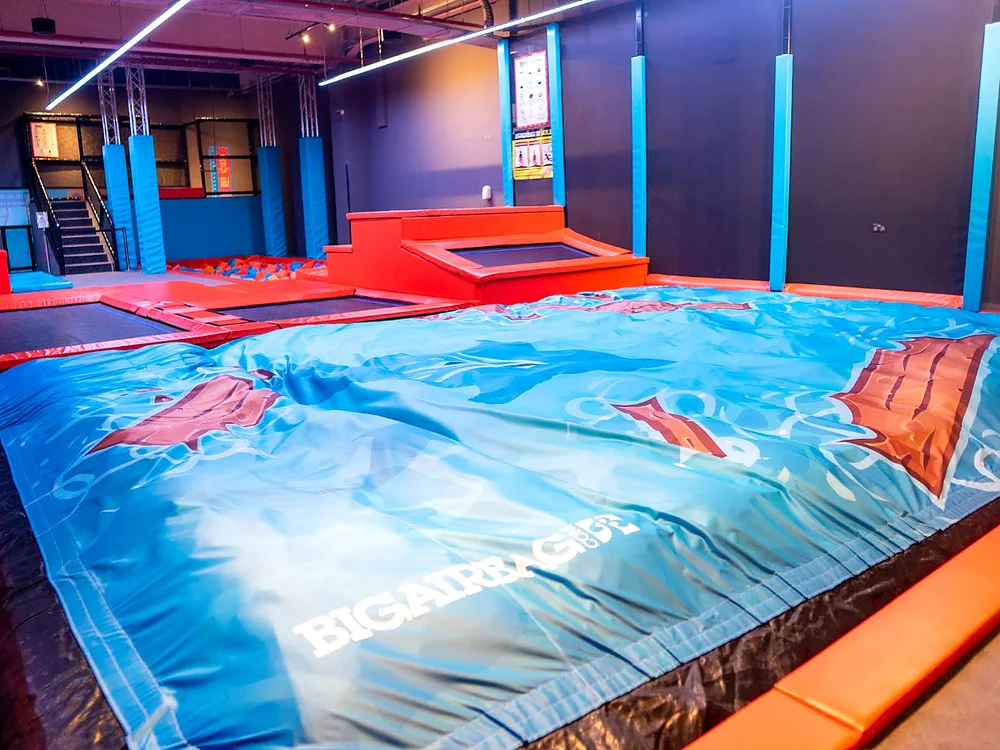
Arrange factory inspection, customer inspection, independent inspection, or detailed video review before loading. Verify approved drawings, colors, dimensions, quantities, frames, connectors, surfaces, springs, beds, padding, nets, platforms, stairs, attractions, electrical specifications, tools, spares, package labels, weights, CBM, invoice, and packing list.
Record issues and close them before loading. Shipping a large missing frame later can create additional packing, freight, import, and installation costs.
13. Packing and Installation Labels
The factory should pack by area, module, and installation sequence:
- Use consistent labels within each zone.
- Secure long and heavy members.
- Prevent movement and metal-to-metal abrasion.
- Protect corners and finished surfaces.
- Keep padding, beds, and nets dry.
- Pack electrical parts separately against shock.
- Sort fasteners by type and zone.
- Identify spares separately.
- Match labels with drawings and the packing list.
Accurate labels reduce installation time and help the factory investigate shortages, freight damage, or site issues.
14. A Source Factory Can Arrange International Freight
A manufacturer is not limited to production. ZHENGHAN can help coordinate:
- Factory pickup and China inland transport
- Export packing and container loading
- Freight booking
- Commercial invoice and packing list
- Export customs information
- Ocean, rail, or other international transport
- Cargo insurance
- Delivery from the destination port to the venue
- Coordination with a buyer-nominated forwarder
Connecting production and logistics helps keep the equipment schedule, package count, weight, CBM, invoice, packing list, and installation information consistent.
FOB, CIF, DAP, and DDP allocate different responsibilities. The formal quotation and contract must confirm whether freight, clearance, duty, destination handling, inland delivery, unloading, and installation are included.
Buyers do not need to give up factory-direct control to receive freight support. An export-experienced manufacturer can provide both production control and international logistics coordination.
15. Why Manufacturing and Logistics Should Connect
One project team can keep the final equipment list, package count, net and gross weight, CBM, package labels, invoice, packing list, and installation-zone references aligned.
If dimensions or weights change before loading, the factory can check production and packing records and update transport information. If freight damage occurs, loading photographs, package labels, and order records make the affected component easier to identify.
16. Installation Support
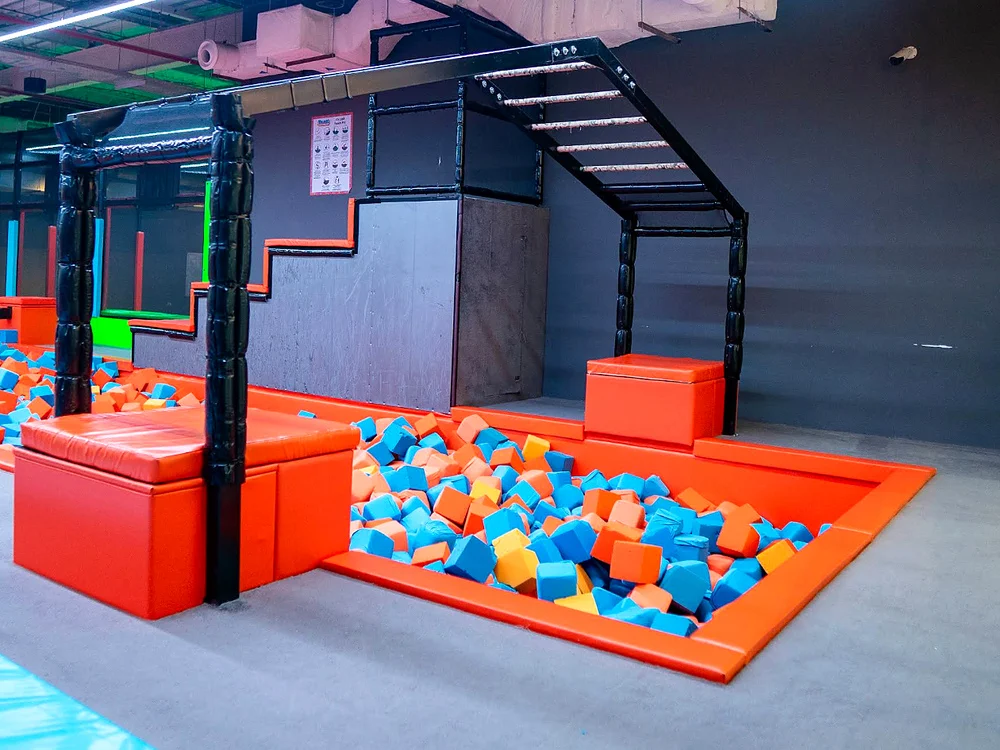
A direct factory can provide installation plans, structural drawings, package-zone references, component and fastener lists, video or remote guidance, agreed site technicians, issue tracking, shortage verification, and completion recommendations.
If installers find a dimensional or connection problem, the factory can review original drawings, material lists, and production records and propose an adjustment or replacement.
17. Missing Parts and Replacements
First determine whether a part was omitted in production, lost or damaged in transit, or not yet located on site.
- Check package numbers and opening records.
- Provide the drawing location and photographs.
- Ask the factory to review the bill of materials.
- Confirm the component model and quantity.
- Produce the replacement.
- Select express, air, or another freight method.
- Apply contract terms for production, freight, import, and site costs.
Direct access to production data allows the factory to identify and reproduce the correct component quickly.
18. Warranty and Long-Term Spare Parts
Padding, trampoline beds, springs, nets, fasteners, and interactive components may require maintenance or replacement after opening. Original drawings, dimensions, materials, and part models allow the factory to support future supply.
Before ordering, confirm who diagnoses problems, identifies parts, manufactures replacements, decides warranty coverage, pays freight, provides maintenance guidance, and supplies wear parts. For a commercial venue, reliable long-term parts access is more valuable than a small one-time price reduction.
19. Warning Signs
- No verifiable production address
- Refusal to provide a live factory video
- No design or technical team
- No order-specific drawings
- A quotation without equipment details
- Materials described only as high quality
- No clear production or inspection procedure
- No pre-shipment inspection allowed
- No packing weight or CBM information
- Freight scope is unclear
- Only verbal after-sales promises
- No explanation of who produces replacements
- Technical documents do not match the final model
20. Direct Manufacturer Checklist
- Does it operate a real factory?
- Does it have a venue-design team?
- Does it purchase and inspect materials directly?
- Does it control frame and component production?
- Can it provide order-specific quality records?
- Does it allow pre-shipment inspection?
- Does it produce actual packing data?
- Can it arrange international freight?
- Does it provide installation support?
- Can it manufacture replacement parts directly?
- Does it offer long-term spare parts?
- Are warranty terms written clearly?
Conclusion
A large commercial trampoline park requires design, materials, production, packing, installation, and operations to work together. A direct factory is usually the more reliable choice because it controls the structure and related components, can correct production issues, and uses original drawings and material lists for replacements and future parts.
Choosing a factory does not mean managing all logistics alone. ZHENGHAN manufactures the equipment and can help arrange booking, export documents, international transport, and destination delivery, keeping production control and freight support within one coordinated project.
Do not choose only by the lowest quotation. Verified manufacturing capability, customized design, order-specific quality control, complete scope, freight capability, installation support, and long-term after-sales service determine whether a commercial trampoline park can be delivered and operated successfully.
Send Your Floor Plan for Project Advice
Prepare your country and city, venue plan, dimensions, clear heights, columns, entrances, target ages, attraction list, investment range, and expected opening date.
Send Your Floor Plan for Project Advice
Frequently Asked Questions
1. What is a direct trampoline manufacturer?
A direct manufacturer owns or manages design, materials, production, inspection, packing, and after-sales processes and can customize a commercial system for the real venue rather than only selling standard modules.
2. Why buy trampoline park equipment directly from a factory?
A factory controls design, materials, production, and quality, reduces communication layers, and can use original drawings and production records when designs change or replacements are required.
3. Can a trampoline manufacturer arrange international shipping?
Yes. ZHENGHAN can help arrange China transport, loading, booking, export documents, international freight, and destination delivery. Confirm clearance, duty, unloading, and installation scope in the contract.
4. What documents should a trampoline manufacturer provide?
Common information includes final drawings, equipment lists, material descriptions, installation details, commercial invoice, packing list, applicable test documents, maintenance guidance, and spare-part lists. Requirements depend on the products and destination.
5. How can I verify a real trampoline equipment factory?
Check business registration, the actual production address, live factory video, machinery, technical staff, current orders, inspection records, packing areas, and independent audit options.
6. Who handles missing parts and replacement components?
The contract should define responsibility. A direct factory can use original drawings and material lists to identify shortages, manufacture replacements, and apply the agreed rules for freight, import charges, and warranty.
 English
 Spanish
 Arabic
