
Requirements for trampoline park projects are not defined by one certificate, one technical standard, or one permit that works in every country. A successful project has to connect several layers: the standards applicable to each attraction, the building and fire rules at the project address, any local inspection or registration process, insurance conditions, and the operator’s ongoing safety responsibilities.
This distinction matters for international buyers. A document accepted for one trampoline park may not satisfy an authority, inspector, landlord, or insurer in another market. Even two parks with similar equipment can face different submission requirements because their buildings, attraction mixes, operating models, and national adoption of standards are different.
1. Why Trampoline Parks Need a Separate Compliance Plan
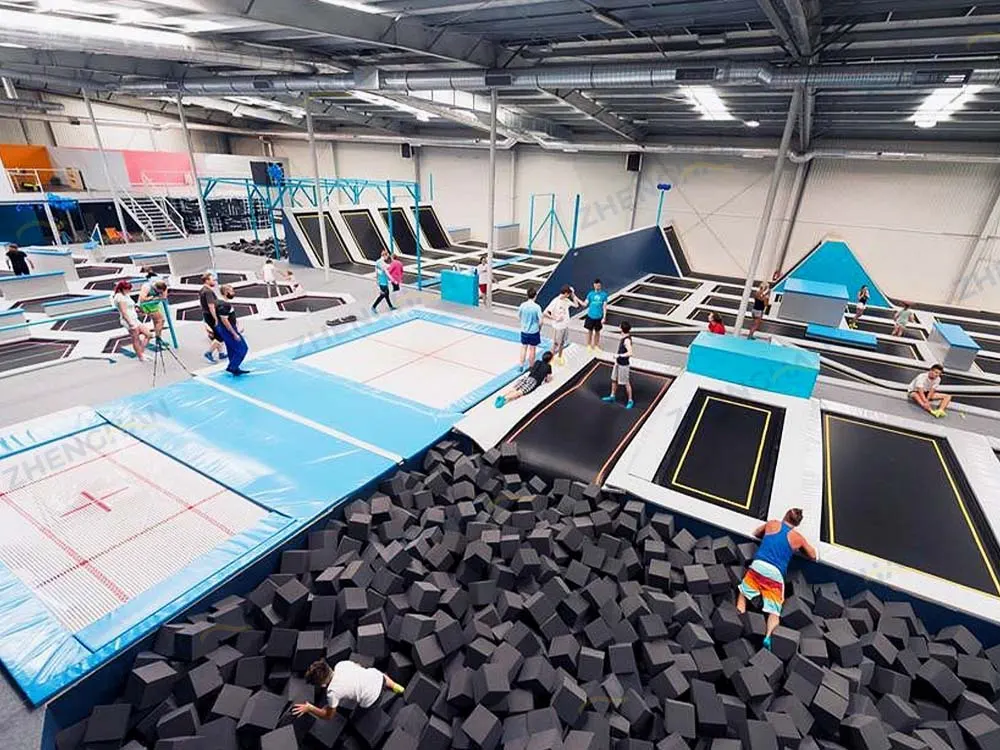
A commercial trampoline park normally uses connected frames, trampoline beds, elastic components, pads, nets, platforms, entry points, and landing systems. Guests of different ages, weights, and abilities may use adjacent zones simultaneously.
That operating environment creates responsibilities in four connected areas:
- The equipment must be designed and manufactured for its intended commercial use.
- The layout must fit the actual building, including clear height, columns, exits, fire systems, and service access.
- The owner must complete the permits, inspections, insurance review, and opening approvals required at the project location.
- The operator must maintain the equipment, supervise guests, train staff, record incidents, and remove unsafe areas from service.
A standard indoor playground process cannot automatically be copied. Open jump, dodgeball, basketball, airbags, and foam pits have different movement patterns and supervision needs. Climbing, ninja, soft play, inflatables, zip lines, and powered attractions require further classification.
2. There Is No Single Worldwide Trampoline Park Standard
International projects may encounter ASTM, ISO, EN, EN ISO, and national versions adopted by individual standards bodies. These documents do not all cover the same equipment, and their status can differ by country. A standard may be referenced by law in one market, requested by an inspector in another, required by an insurance policy, or used as a voluntary technical framework elsewhere.
For trampoline parks, ISO 23659:2022 addresses the design, construction, inspection, and maintenance of trampoline parks and their components. It also includes minimum operational requirements and applies to trampoline areas within multi-activity parks, including landing areas such as airbags and foam pits.
ASTM F2970 is another framework covering commercial or institutional trampoline courts from design and manufacture through operation, inspection, and major modification. It may be relevant where a contract, inspector, or insurer requests it, but it is not the automatic starting point for every country.
The EN 1176 series primarily concerns public playground equipment and surfacing. EN 1176-1 provides general requirements, while EN 1176-10 addresses fully enclosed play equipment. They are relevant to soft play areas but should not label an entire trampoline park.
An ISO standard may be adopted at European or national level with an additional prefix. Its edition, annexes, and status must be checked locally, together with whether it covers the ordered equipment and is accepted by the relevant parties.
3. Determine the Applicable Standard by Attraction
The safest way to plan a multi-activity venue is to classify every attraction before detailed design. Being installed under the same roof does not place all equipment under the same standard.
- Open jump and angled trampoline zones: Review the connected court structure, pads, adjacent-user interaction, clearance, access, and supervision positions.
- Dodgeball and basketball lanes: Consider the trampoline system together with ball play, queues, court entry, separation, and user ability.
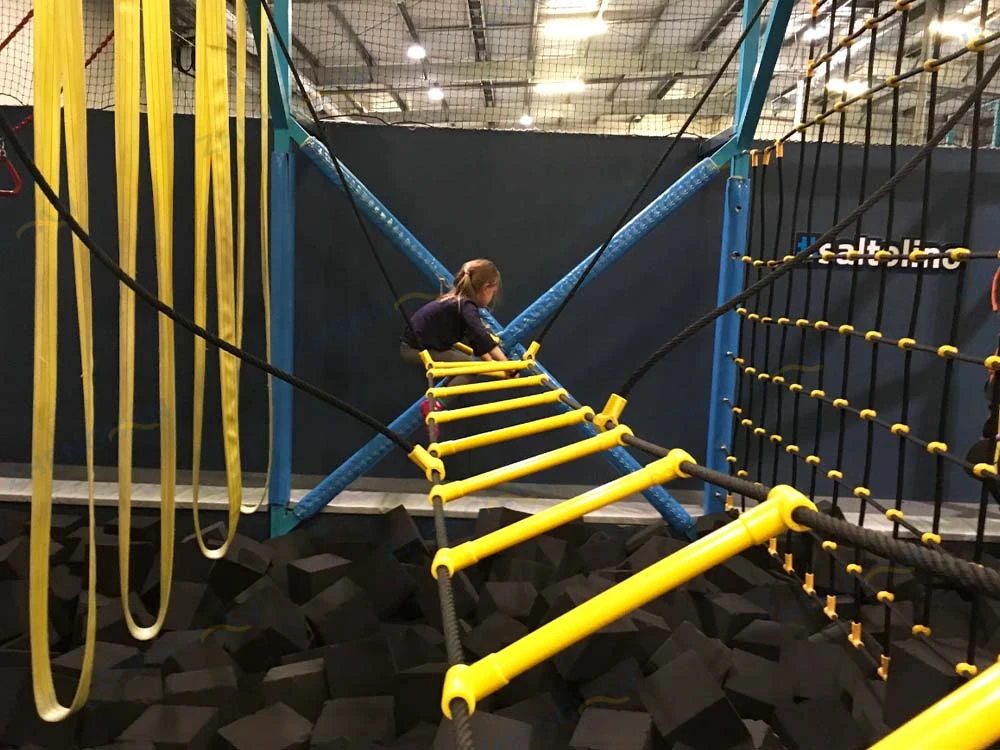
- Airbags and foam pits: Confirm whether the landing system falls within the applicable document, as well as entry, exit, fill condition, inspection, cleaning, and prohibited-use rules.
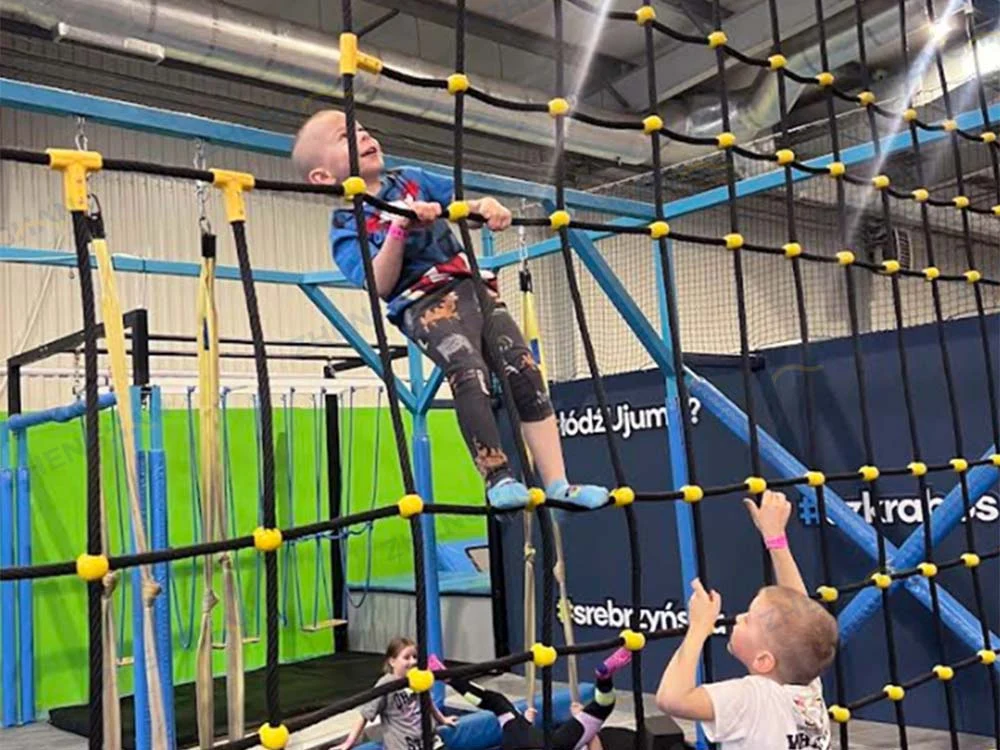
- Ninja courses: Assess suspended obstacles, grip components, fall height, landing surfaces, ability levels, and staff access.
- Climbing walls and zip lines: These can fall under separate climbing, aerial-adventure, inspection, rescue, and staff-competence requirements.
- Soft play: In European markets, review the relevant EN 1176 provisions, especially the general requirements and the part for fully enclosed play equipment. Do not assume trampoline documents cover it.
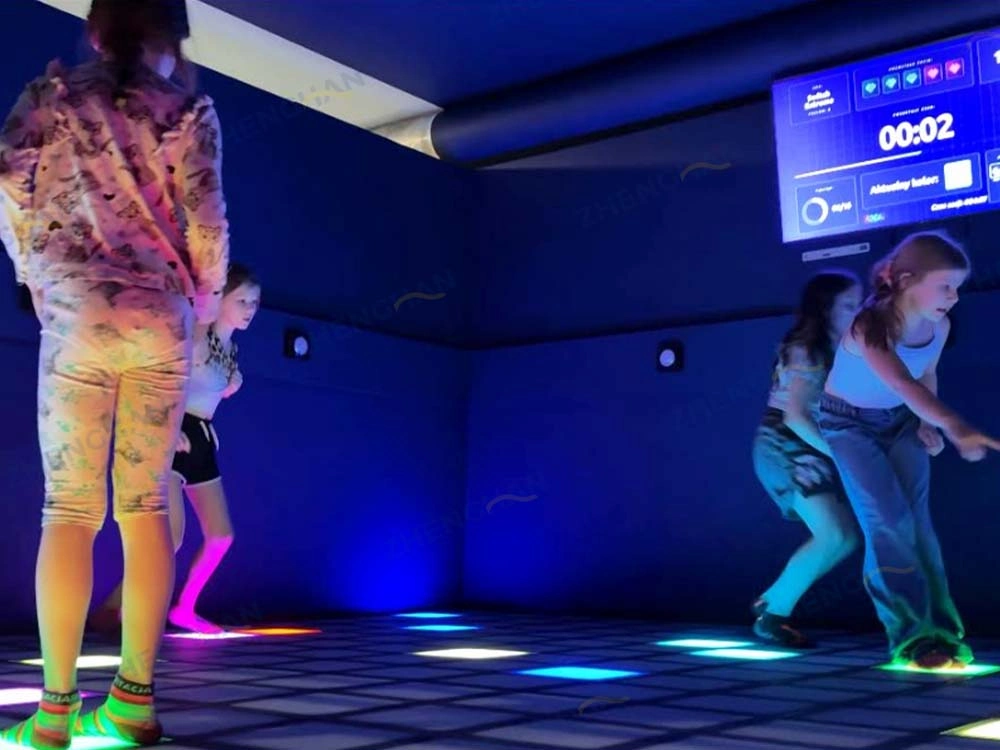
- Inflatable or powered attractions: Treat them as separate product categories requiring their own specialist documents, operating controls, and local review.
Submit a complete attraction schedule when requesting a quotation. One later addition can change clear-height needs, electrical work, rescue procedures, insurance, training, and inspection responsibility.
4. Confirm Local Classification Before Signing the Lease
The equipment standard is only one part of opening a trampoline park. Before committing to an unconditional lease, the investor should confirm how the address and business will be classified locally. Depending on the jurisdiction, the project may be treated as a recreation facility, sports facility, family entertainment center, assembly occupancy, amusement attraction, or another commercial use.
The local review should answer practical questions:
- Is indoor recreation permitted at the property?
- Does the proposed operation require a change of use or occupancy?
- What building, fit-out, fire, accessibility, and business approvals apply?
- Does the trampoline equipment require registration or third-party inspection?
- Who is the authority having jurisdiction, and when must drawings be submitted?
- What must be completed before an occupancy or opening approval is issued?
The lease should leave room for this review. A large warehouse may still be unsuitable because recreation is not permitted, exits are insufficient, fire systems require major work, or delivery access is inadequate. Resolve these issues before signing or production.
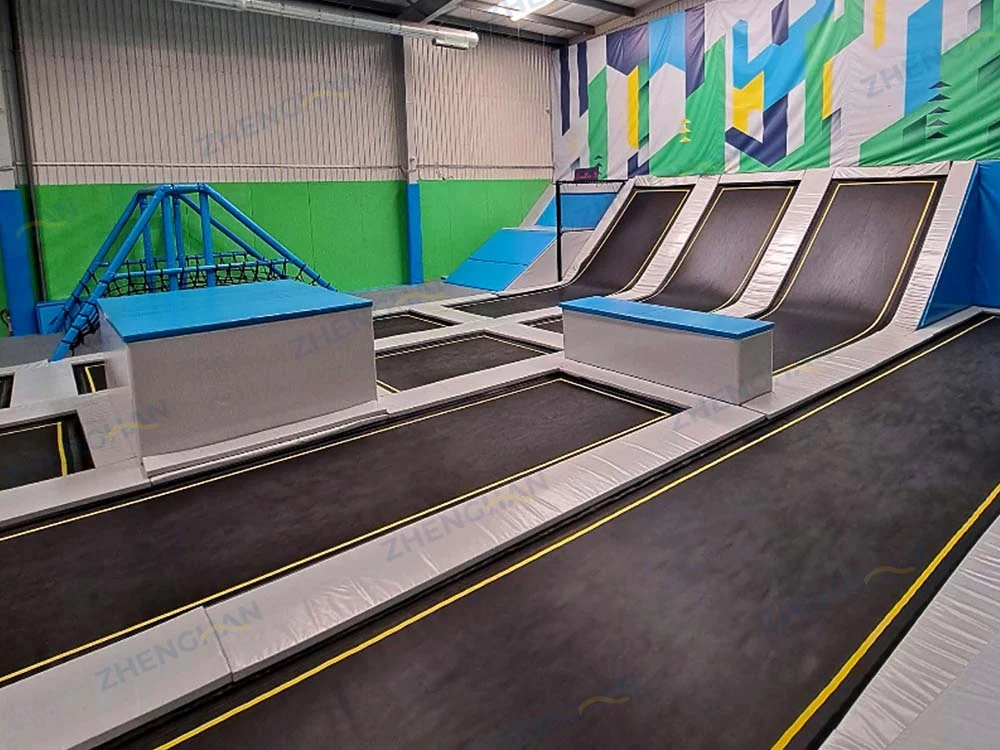
5. Match the Equipment Layout to the Building
Compliance problems often occur where equipment meets the building. If the manufacturer and architect use different footprints, conflicts with beams, ducts, lights, sprinklers, columns, exits, or circulation may appear after production begins.
Site information should record the usable height in every attraction zone, not only the highest point of the building. Drawings should show structural columns, walls, doors, fire equipment, mechanical systems, ceiling obstructions, electrical connections, and any areas that cannot be anchored or modified.
Equipment must not block exits, firefighting equipment, or required routes. Queues, storage, party rooms, cafés, seating, and reception affect circulation even though they are outside the trampoline structure. Staff need clear observation and emergency access.
Sharing accurate drawings early allows the manufacturer to provide more useful trampoline park design information. It also gives the local architect, fire consultant, and inspector a stable layout to review.
6. Build a Project-Specific Technical Document Package
Evaluate documentation as carefully as price and appearance. A generic certificate carrying a familiar standard number does not prove that it covers the final equipment.
A project-specific package should normally address:
- The final layout and complete attraction list.
- Main frames, trampoline beds, elastic components, pads, nets, platforms, and landing systems.
- Critical dimensions, clearances, equipment boundaries, and building interfaces.
- The applicable standards, test or conformity documents, editions, and product scope.
- Installation sequence, anchoring, tightening, adjustment limits, and site conditions.
- Pre-opening checks, daily inspections, periodic maintenance, and replacement criteria.
- Age, height, ability, weight, or use restrictions where applicable.
- Parts identification, packing lists, recommended spares, and wear components.
- Warranty terms, installation guidance, and after-sales communication.
Documents must match the delivered models, materials, and configuration. A report for a different product generation is not project evidence merely because its cover shows the same standard number.
When evaluating a playground supplier, ask who prepares each drawing, what the standard documents cover, how on-site changes are controlled, and what records the operator receives at handover. ZHENGHAN can provide appropriate standards-related support documents according to the product and project requirements, while local professionals remain responsible for confirming their acceptance for permits, inspections, contracts, and insurance.
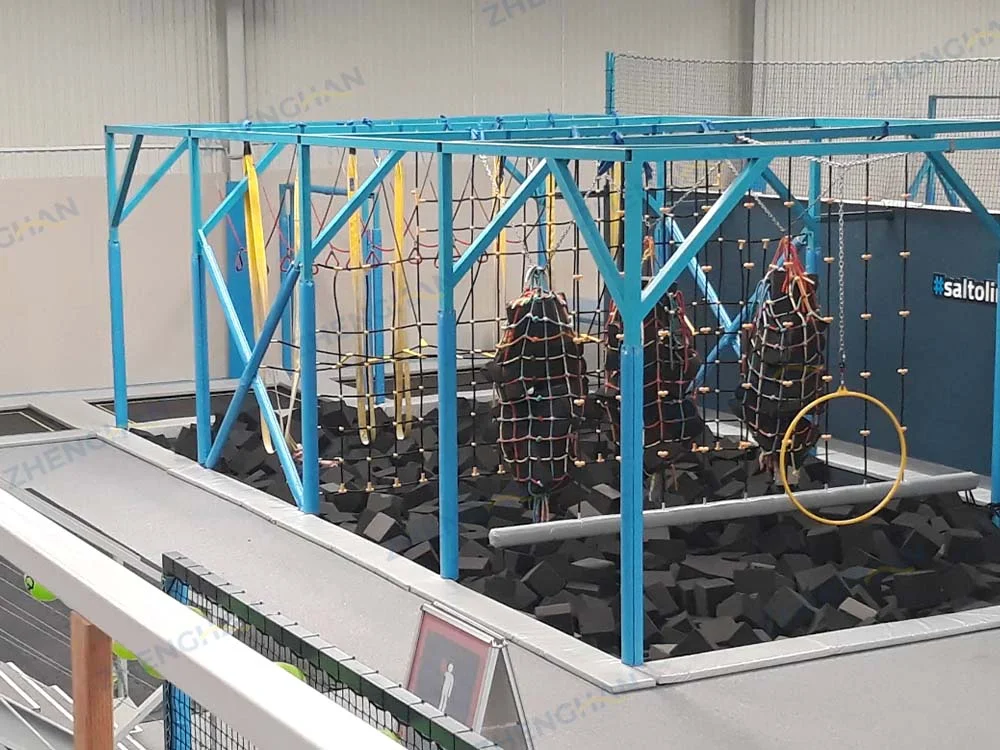
7. Assign Responsibility Before Design Is Frozen
Delays occur when the manufacturer, architect, fire consultant, installer, inspector, insurer, and local authority each assume another party is managing a missing requirement.
- Investor or operator: Select the site, define the complete attraction list, appoint local professionals, apply for approvals, arrange insurance, and establish operating procedures.
- Equipment manufacturer: Design and manufacture the contracted equipment and provide the applicable product, installation, inspection, and maintenance information.
- Local architect or engineer: Review the use, building conditions, structural interfaces, accessibility, and local code requirements, including any required signed submissions.
- Fire consultant: Coordinate exits, travel paths, alarms, sprinklers, fire access, and the effect of the equipment layout.
- Installation team: Install to the approved drawings and manufacturer’s instructions, document adjustments, and close out installation issues.
- Inspector: Conduct the review required by local rules, the contract, or the insurance program.
- Insurance advisor: Assess the full attraction mix, target users, supervision model, and policy conditions.
- Local authority: Decide classification, permits, statutory inspections, and opening conditions within its jurisdiction.
A manufacturer cannot replace a local building professional, and an inspection report cannot replace daily operational control. Record these boundaries in the schedule and contracts.
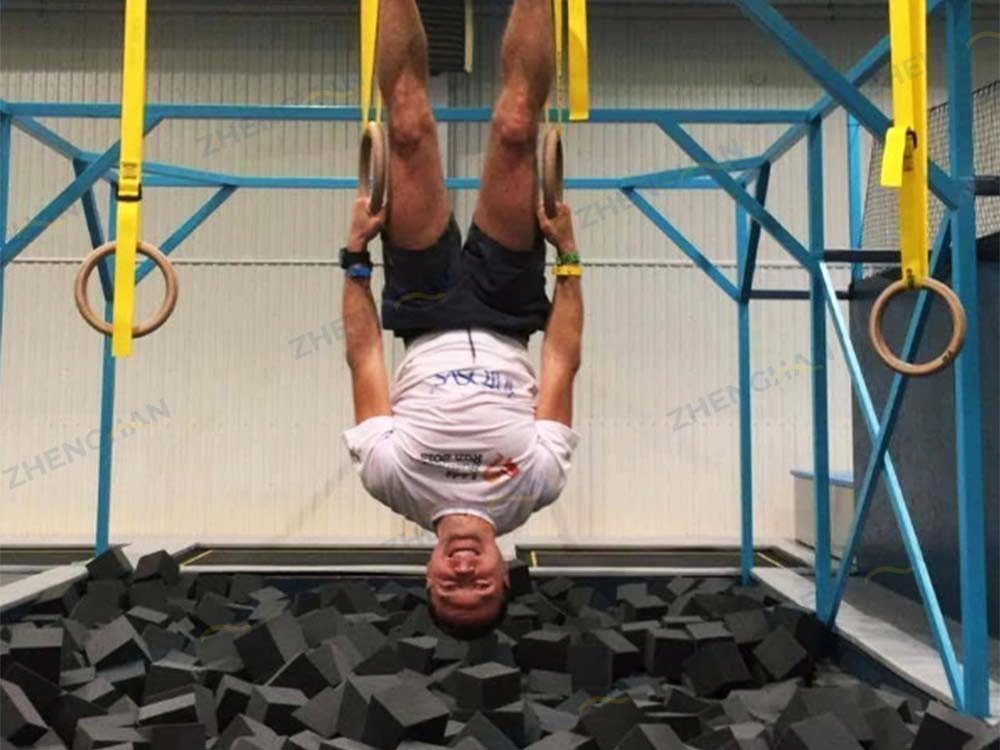
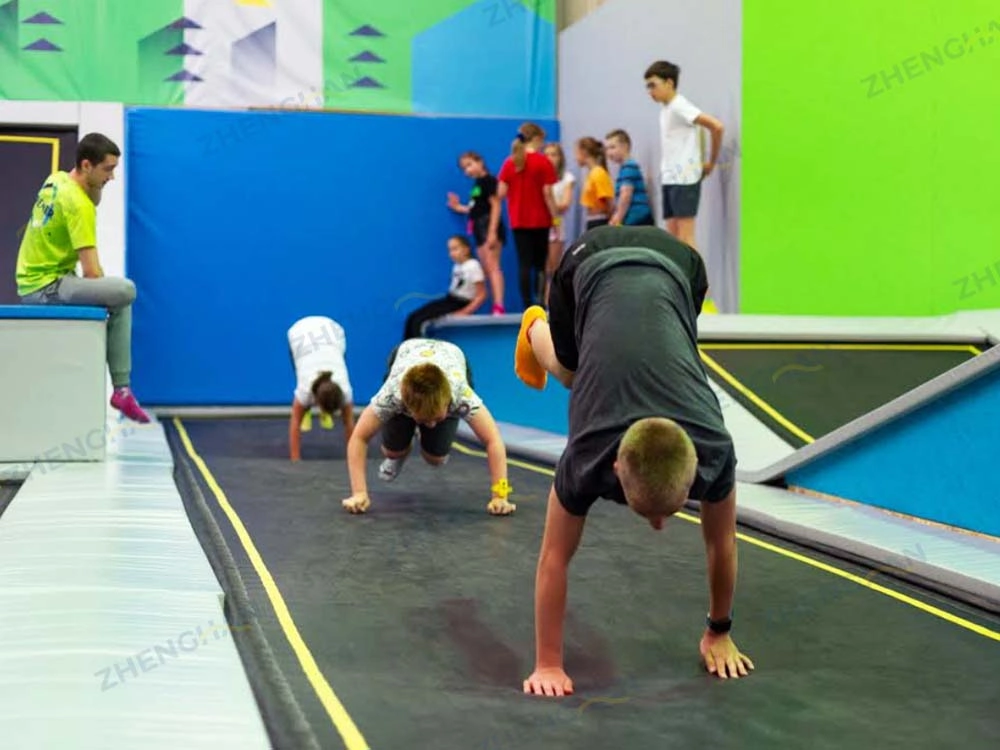
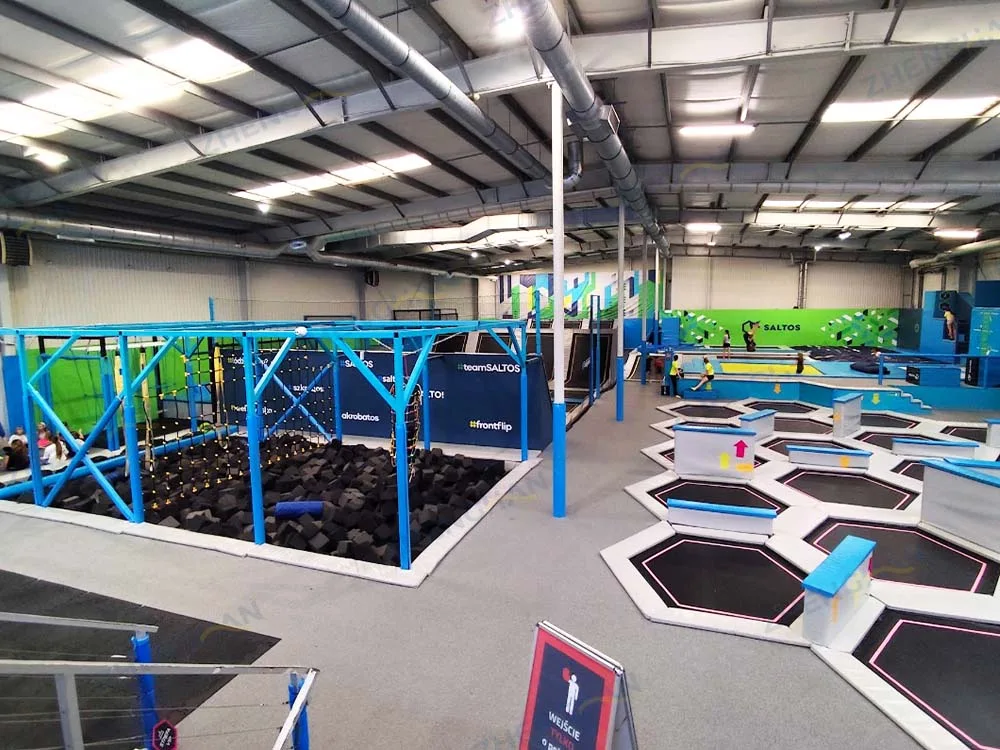
8. Poland Case: Saltos Trampoline Park
The project case used in this guide is Saltos trampoline park, located at Srebrzyńska 4, 91-074 Łódź, Poland. It illustrates why international trampoline projects must begin with the installation country and actual building rather than a compliance package copied from another market.
For a project in Poland, local professionals should confirm permitted use, occupancy conditions, escape strategy, fire systems, inspections, and operating procedures. Select technical standards according to versions adopted or accepted for the project and the expectations of inspectors, insurers, and contracts.
If a park combines trampoline courts with soft play, the two areas should be reviewed separately. The standard used for the trampoline system does not automatically cover a fully enclosed children’s play structure. The overall plan must then coordinate both equipment categories with exits, staff visibility, queues, emergency access, and customer circulation.
Plan document language, labels, packing lists, transport, unloading, storage, and installation before shipment. Delivered components must match the approved design. Record and review site changes rather than improvising them.
This case is included to explain project coordination. No unconfirmed floor area, investment amount, attraction list, construction schedule, approval result, operating data, or contractual role is attributed to Saltos trampoline park.
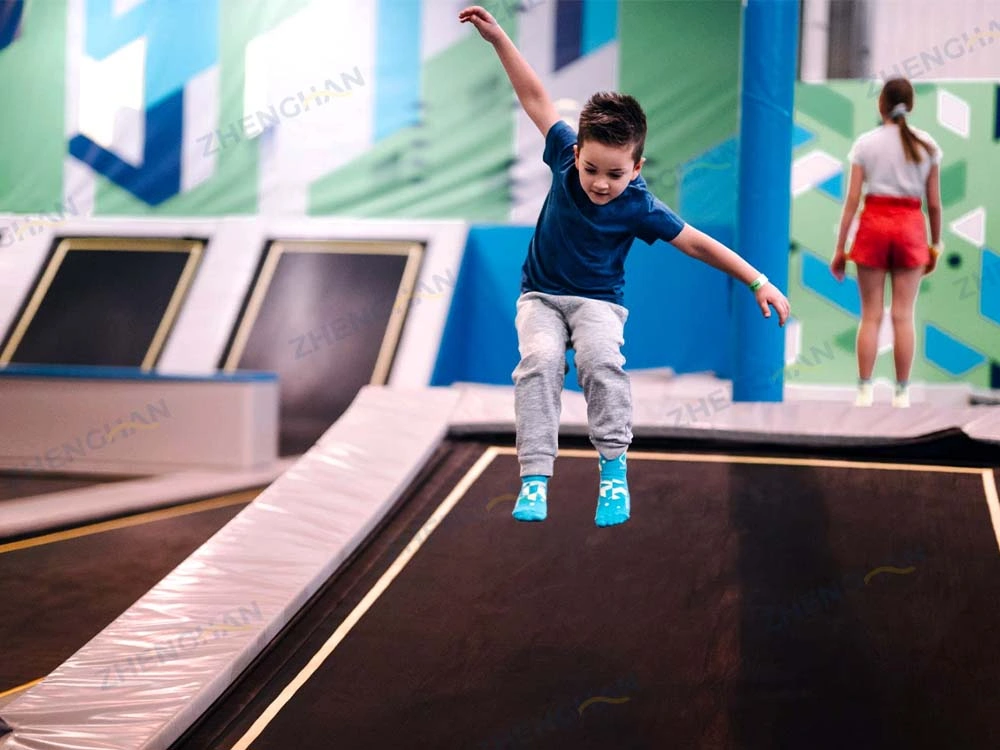
9. Follow a Controlled Approval-to-Opening Sequence
- Define the location and business model. Record the country, city, venue type, target users, and complete attraction list.
- Confirm local classification. Identify land-use, occupancy, building, fire, equipment, inspection, and business requirements.
- Pre-screen the building. Review height, structure, exits, fire systems, services, delivery access, and landlord restrictions.
- Create a concept layout. Coordinate attraction zoning, equipment boundaries, customer flow, supervision, and emergency access.
- Establish the document matrix. Identify applicable technical standards, national versions, local submissions, insurance information, and inspection records.
- Coordinate permit and equipment drawings. Resolve differences involving sprinklers, ducts, lights, columns, exits, and anchoring.
- Freeze the design. Keep the purchase order, models, drawings, materials, and supporting documents aligned before production.
- Coordinate construction and logistics. Manage production, packing, transport, import procedures, unloading, storage, and installation timing.
- Install, correct, and inspect. Preserve installation records, close outstanding issues, and complete the required equipment and building reviews.
- Insure, train, and soft-open. Test admissions, safety briefings, zoning, supervision, cleaning, inspection, and incident response with controlled attendance.
This sequence is designed to expose conflicts early. If the architect, inspector, or insurer sees the final attraction list only after manufacturing, changes become more expensive and can delay opening.
10. Compliance Continues After Opening
Opening approval does not end the operator’s responsibilities. Written procedures must cover opening checks, periodic inspections, cleaning, maintenance, replacement, and removal-from-service criteria.
Staff training should cover guest briefings, zone rules, age and ability controls, unsafe behavior, capacity management, first response, rescue, incident reporting, and attraction shutdown. If a defect may affect safety, staff must be able to isolate the area immediately and document the reason.
A waiver may help communicate risk and record guest acknowledgment, but it does not replace equipment maintenance, appropriate supervision, or emergency planning. Incident, near-miss, complaint, inspection, and repair records should work together so the operator can identify recurring problems.
Major modifications also require control. Moving courts, changing landing systems, adding an attraction, or altering the building interface may affect the applicable standard, local approval, inspection, and insurance. The revised configuration should be reviewed before it returns to service.
Frequently Asked Questions
What are the main requirements for a trampoline park?
They normally include local use and building approval, fire review, the technical standards applicable to each attraction, installation and opening inspections, insurance, staff training, operating rules, daily checks, maintenance, and incident records. The exact combination depends on the country, address, building, and attraction list.
Can one standard cover every trampoline park project?
No. A project may involve ISO, ASTM, EN, EN ISO, a national adoption, or other local requirements. Technical standards, building permits, fire approvals, and operating licenses have different functions. The relevant versions and their status must be confirmed for the installation location.
Does EN 1176 apply to trampoline parks?
EN 1176 primarily covers public playground equipment and surfacing. It is especially relevant when a venue includes fully enclosed soft play equipment, but it should not be used to describe the entire trampoline park. Trampoline courts and other attractions should be reviewed under the standards applicable to their own equipment categories.
Do climbing walls, soft play, and inflatables need separate review?
Often, yes. These attractions may fall under different standards, inspection regimes, rescue plans, training requirements, and insurance conditions. They should appear on the complete attraction schedule before design and permitting begin.
What documents should a trampoline park supplier provide?
The supplier should provide documents appropriate to the final order, including the layout, equipment and material information, applicable standard or test documents, installation requirements, inspection and maintenance instructions, operating restrictions, packing identification, spare-parts information, and warranty terms.
Plan Compliance Before Equipment Production
A reliable trampoline park project starts with the installation address, the actual building, and a complete attraction list. Once those facts are clear, the manufacturer and local professionals can identify the correct standards, approvals, documents, and responsibilities without treating any single system as a worldwide default.
Send Your Floor Plan for Project Advice
Send ZHENGHAN your project country and city, floor plan, dimensions, clear heights, columns, exits, fire-system locations, target users, and complete attraction list. We can help evaluate the equipment layout and project interfaces. Local permits, professional approvals, and statutory inspections must still be confirmed by qualified parties in the project jurisdiction.
Send Your Floor Plan for Project Advice
 English
  Spanish
  Arabic