
If you are researching adding soft play to trampoline park facilities, you are about to plug one of the biggest hidden revenue leaks in your entire business model.
I have spent 15 years manufacturing indoor playground equipment, walking factory floors, and shipping containers globally. I talk to park investors every single day. I see who builds a regional empire, and I see who struggles to break even after six months. The most common structural mistake trampoline park owners make is limiting their demographics. They cater heavily to high-energy teenagers and completely overlook the toddlers.
Big kids jump hard. They do flips. They sprint across the mats. Now, put a three-year-old toddler in that exact same jump zone. It is a major operational and liability risk. The teenager easily knocks over the toddler. The toddler gets hurt. The mother panics, rushes onto the court, and grabs her kid. She asks your front desk for a refund, leaves a negative Google review, and shares her stressful experience in her local Facebook parenting group. You lost a family’s business. More importantly, you missed out on the highly profitable, highly recurring toddler birthday party market.
You need a dedicated, physically separated toddler zone. You need commercial-grade soft play.
Here is my ultimate, no-nonsense guide on how to integrate soft play into your existing or new trampoline park. This is built purely on raw factory data, harsh operational realities, hard numbers, and 15 years of manufacturing experience.
1. The Financial Reality: Why You Need the 3-Year-Old Demographic
You might think trampolines alone will sustain your cash flow and pay your commercial lease. The data tells a different story. Families do not travel in single age groups. A mother brings her 12-year-old and her 3-year-old at the same time.
In the family entertainment center business, the youngest child often dictates the weekend plans. If your park has absolutely nothing safe or engaging for the 3-year-old, the mother stays home, or she drives down the road to your competitor who planned their floor space for all ages.
The “Dwell Time” Metric The longer a family stays inside your building, the more money they spend on your high-margin items like hot food, premium drinks, merchandise, and arcade tokens. A healthy teenager can jump for two straight hours. A toddler on an open trampoline gets exhausted or overstimulated in exactly 15 minutes. By adding a multi-level soft play structure, the toddler stays busy safely for hours. The mother sits down in your cafe. She relaxes. She opens her laptop. She buys a $5 coffee. An hour later, she buys an $8 pizza slice and a $4 juice box. Your average ticket value per family jumps by 30% to 40% instantly, simply because you gave the parents a comfortable reason to stay.
The Birthday Party Goldmine Let us look at the raw math. Trampoline birthday parties are great for the 8 to 14 age demographic. But toddler birthdays (ages 2 to 5) are highly lucrative. Parents of toddlers spend heavily on party add-ons, premium food packages, and custom room decorations. If you charge $350 for a basic jump party package, the parents of a 4-year-old will easily drop another $250 on pizzas, high-end goodie bags, and a dedicated private party host. Without a premium soft play zone, you are invisible to this high-spending demographic. You are leaving tens of thousands of dollars on the table every single month. I have seen sharp clients pay off a $30,000 commercial soft play structure in exactly 8 weeks just from the surge in toddler weekend birthday bookings.
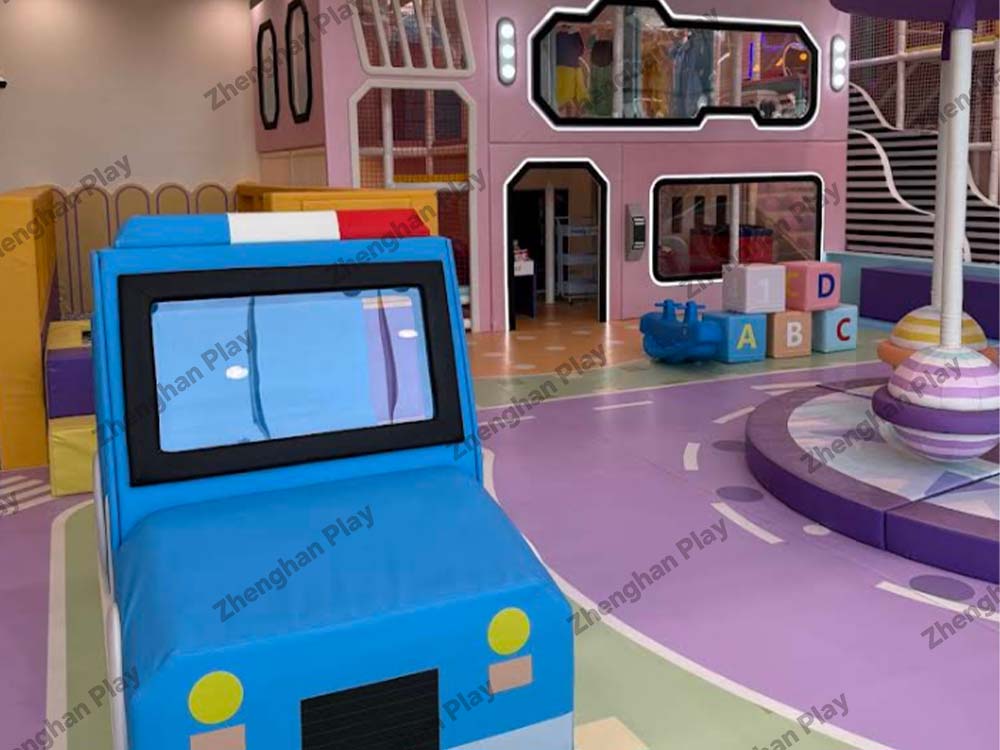
2. Space Planning: Keep the Zones Strictly Separate
I often see park owners trying to squeeze a small ball pit right next to the high-performance trampolines or the dodgeball courts to save space. This creates unnecessary risk and liability.
Create Hard Physical Barriers Your soft play area must be completely, physically separated from the main jump courts. Teenagers run fast and do not always look where they are going. If a teenager trips and falls over a low boundary into the toddler zone, a small child can get hurt. Use heavily padded half-walls, industrial heavy-duty netting, or soundproof glass partitions to block the physical traffic flow entirely.
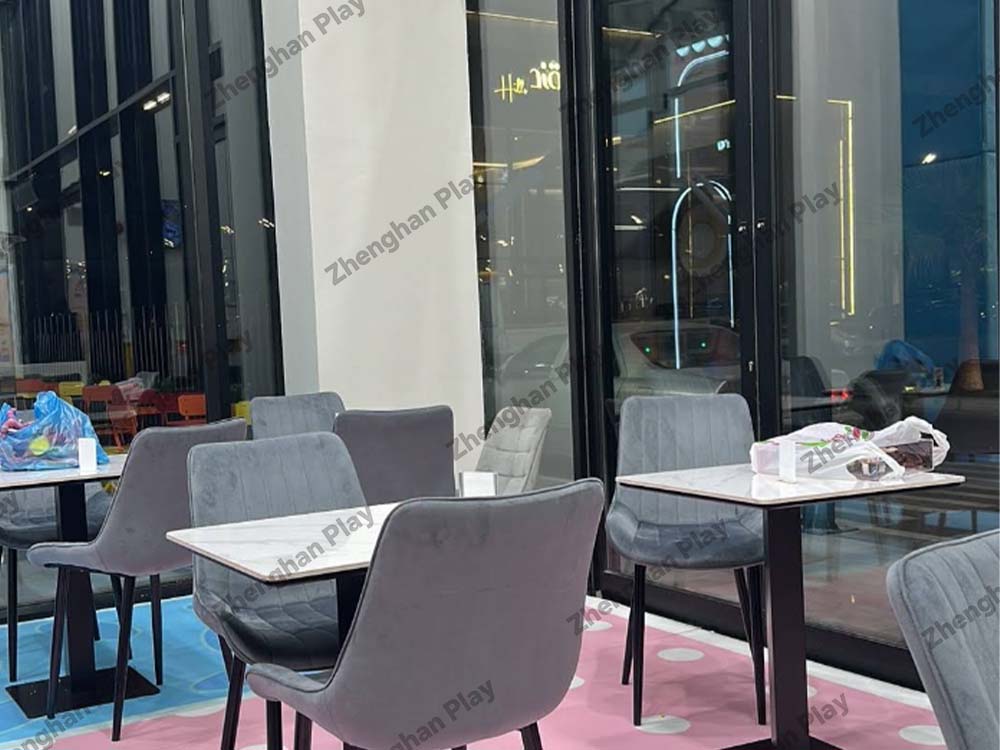
The Single Entry/Exit Point Design your soft play frame with only one way in and one way out. Why? Because mothers want to sit down and watch their kids without running around the perimeter chasing them. If the structure has three different exits, parents will constantly worry about keeping track of their child. Put your highest-margin cafe seating area directly facing this single entry point. This heavily reduces your staff overhead because parents will naturally self-police the entry area while drinking your coffee.
When planning the footprint, ensure your trampoline commercial (Jump Keyword located here in Section 2) setup does not overlap visually or physically with the toddler space. Keep the heavy bass music, the referee whistles, and the flashing strobe lights far away from the soft play corner. Toddlers get overstimulated easily by noise and chaos. Keep the lighting over the soft play bright, warm, and even.
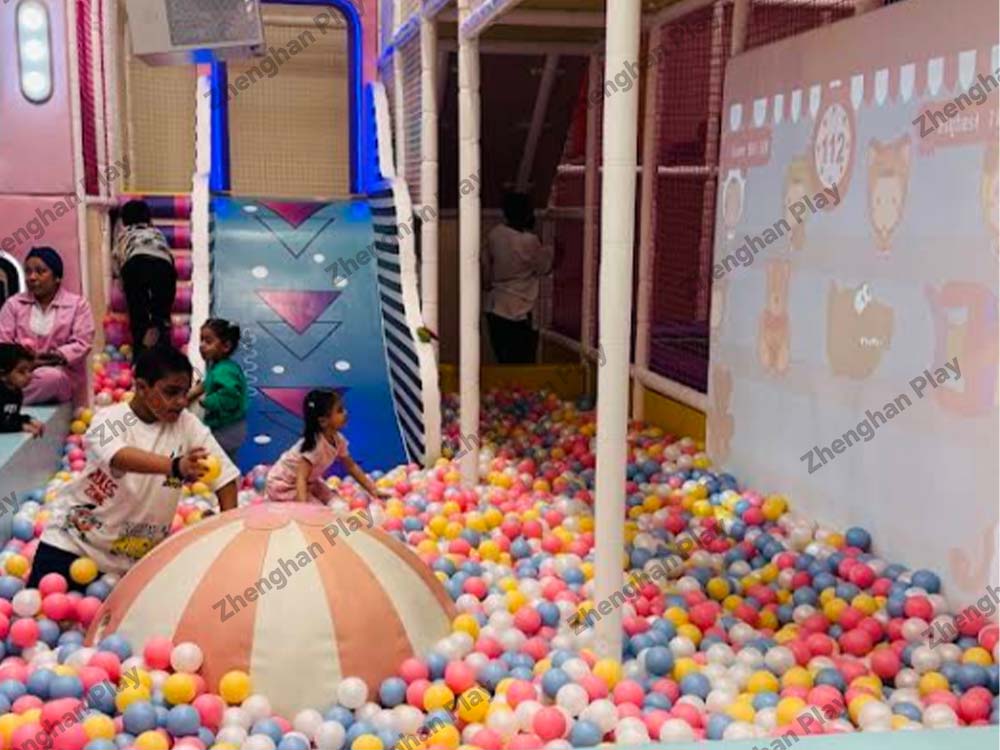
3. Sourcing Smart Equipment: Avoid Low-Quality Materials
You want to manage your capital tightly before the grand opening. I understand. But buying uncertified equipment from unreliable trading companies will cost you far more in the long run.
Fire Retardant Standards Local fire marshals enforce strict safety codes. The PVC leather and the internal EPE foam inside the soft play structure must meet mandatory fire standards (like ASTM F1918 in the US or EN1176 in Europe). If you buy materials from an unverified source, the inspector will cut a piece of foam and hold a lighter to it during the walkthrough. If it melts, drips, or catches fire, they will deny your permit. You will have to replace the entire structure. I have seen this happen to a client in Dallas, Texas. It cost him $40,000 in demolition and rush replacement costs. Demand physical SGS or TUV fire certificates from your supplier before you wire a single dollar.
PVC Leather Thickness and EPE Foam Density Standard 0.35mm PVC is insufficient for high-traffic commercial use. It wears down quickly. Kids bite it, scratch it with their fingernails, and stress the seams. You must demand 0.55mm, phthalate-free commercial-grade PVC. Inside the PVC, factories use EPE foam (pearl cotton). If the density is too low (like 15kg/cbm), the foam blocks will flatten out after a month of kids stepping on them. The padding becomes useless, and kids will feel the steel pipes underneath. Demand high-density EPE foam (minimum 20kg/cbm). It costs slightly more at the factory level, but it extends the lifespan of your park by three to five years and drastically lowers your maintenance budget.
Working directly with a verified, established playground equipment manufacturer (Jump Keyword located here in Section 3) allows you to rigidly control these raw material specs. Ask for live video tours of the factory floor. Ask to see the raw PVC rolls, the 48mm galvanized steel pipe inventory, and the CNC foam cutting machines actually operating.
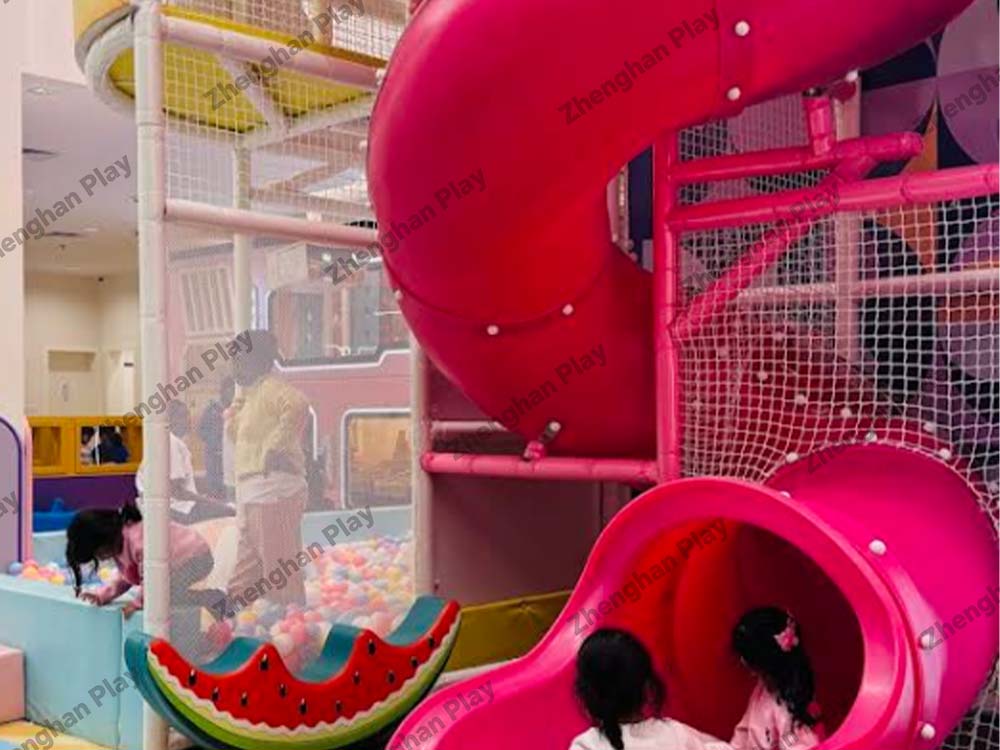
4. Customizing the Toddler Experience
Do not just place a basic steel cage with a plastic slide in the corner. That is a missed opportunity to impress your customers. You need high-value, interactive play elements that keep kids aged 2-5 engaged, challenged, and fascinated for hours.
Interactive Pneumatic Ball Pits: Connect your ball pit to a pneumatic vacuum tube system. Toddlers love feeding plastic balls into a clear suction pipe and watching them shoot up to the ceiling, traveling through clear acrylic tubes, and dropping into a dump basket. It holds their attention for hours, teaches cause and effect, and looks incredibly premium.
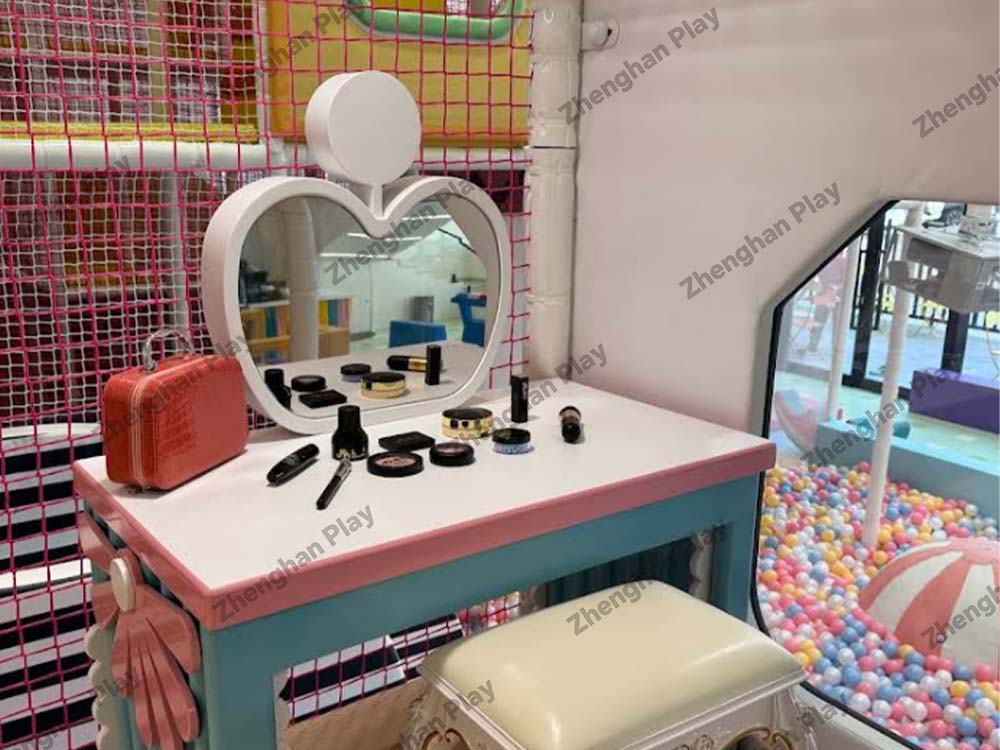
Role-Play Houses (O2O Play): Add a small mock supermarket, a mini kitchen, or a little veterinary hospital right next to the soft play frame. Toddlers engage heavily in imaginative role-play. They love to mimic adults. This requires zero electricity, has zero moving parts to break, and requires very little daily maintenance.
Sensory Walls and Busy Boards: Install heavy-duty wall panels covered with interlocking gears, spinning blocks, bead mazes, and tactile surfaces. This is critical for keeping kids engaged if they are too young to climb the padded stairs. It maximizes every square inch of your wall space.
Low-Angle Safety Slides: Avoid sheer drop slides. Use smooth fiberglass or double-lane padded PVC slides with a very gentle slope. You must include extended, double-padded run-out sections at the bottom so toddlers do not hit the floor with too much momentum.
5. Cleaning and Maintenance: Protecting Your Reputation
Trampoline mats are relatively easy to clean with standard protocols. Soft play structures, however, require dedicated hygiene systems. If a mother sees a visibly dirty ball pit or finds a sticky floor in the toddler zone, it can damage your local reputation quickly.
The Ball Pit Maintenance Ball pits naturally collect dust, lint, and spilled drinks. You cannot pay staff to wash 10,000 individual plastic balls by hand. You must invest in a commercial automatic ball cleaning machine. It sucks the balls up through a hose, washes them internally with brushes, UV light, and hospital-grade sanitizer, and spits them back out perfectly dry. Run this machine twice a week after closing. Factor this $1,500 machine into your initial capital budget.
Daily Wipe Downs The premium 0.55mm PVC leather I recommended is smooth and non-porous, making it very easy to wipe clean. Your closing staff needs to use non-toxic, hospital-grade sanitizers on it every single night without fail. Pay meticulous attention to the “bite zones”—the heavily padded barriers and step edges at toddler height where they naturally put their hands and mouths.
Zip Tie Inspections Soft play safety netting is held tightly to the steel frame by hundreds of heavy-duty nylon zip ties. Over time, kids pull and hang on the nets, which stresses the plastic. A snapped tie creates a gap in the netting. You or your manager must walk the entire structure every single morning before you unlock the front doors. Check the tension on the nets. Replace broken ties immediately. Cut the tails of the zip ties completely flush using a specialized flush-cut plier so they do not leave sharp plastic edges.
6. The Step-by-Step Installation Process
This requires professional installation. Factory soft play frames are heavily engineered to bear specific dynamic weight loads.
Level the Floor Foundation: Soft play frames use heavy galvanized steel pipes (strictly 48mm outer diameter, 2.0mm wall thickness). If your commercial concrete floor is naturally uneven, the entire steel structure will wobble, loosening the cast iron joints over time. Use steel shims under the base plates to ensure it is perfectly level.
Assemble the Steel Skeleton: Always start from the bottom up. Lock the heavy steel pipes together using the cast iron structural connectors. Tighten the hardened steel grub screws with a specialized Allen key drill bit. Do not overtighten, or you will strip the threads.
Wrap the Pipes in Armor: Every single exposed steel pipe must be wrapped tightly in high-density foam tubes, then secured wrapping round and round with industrial PVC tape. Overlap the tape tightly by at least 30%.
Install the Wooden Decks: The heavy multi-ply wooden decks drop directly into the steel frame grid. They must sit completely flush. Wrap the edges of the decks securely with padding and staple them tight underneath so absolutely no wood splinters are exposed.
Hang the Safety Nets: Stretch the safety netting extremely tight. Use one heavy-duty zip tie every 10 centimeters along the steel pipe to ensure maximum safety and a clean, professional look.
7. Sales-Grade FAQ & Objection Handling
Q: Does a soft play area require extra staff on payroll?
No. Parents supervise their own toddlers. My Experience: In our factory-run test parks and global franchise setups, we design the toddler zone with a single entry/exit point right next to the cafe. You only need one staff member monitoring the gate area to ensure older kids don’t enter the zone. That single staff member usually doubles as your cafe cashier or barista. You do not need active referees like you do on the main trampoline jump courts, which keeps your labor costs low.
Q: Will lower-cost soft play materials pass local fire inspections?
Rarely. Fire marshals will deny your permit if materials are uncertified. My Experience: I had a client in Texas try to save a portion of his budget by using uncertified foam from a secondary supplier. The fire inspector tested it on-site during the final walkthrough. It melted and produced heavy smoke. The owner had to remove the structure and order a certified replacement right before his grand opening. Always buy ASTM or EN-certified materials from a real factory source and keep the physical lab reports on site.
Q: Can I just build a small, simple ball pit to save space and money?
Only if you are comfortable with an underwhelming customer experience. A low-budget corner does not align with a premium park brand. My Experience: If you are charging $20 to $30 for a premium jump ticket, parents expect high quality across your entire facility. A few foam blocks and plastic balls in a corner do not communicate value to families. Spend the capital to build a proper, multi-level, themed structure. The ROI on a $15,000 to $25,000 toddler structure is robust, often paying for itself in just 3 to 4 months through increased cafe sales, longer dwell times, and booked-out toddler birthday packages.
Q: Do I have to close my entire trampoline park during the installation?
No. You can install soft play while the rest of the park is open and generating revenue. My Experience: Soft play installation is a clean process. It does not require heavy machinery, loud angle grinders, or welding. We advise our clients to safely cordon off the specific corner of the building with heavy, floor-to-ceiling blackout curtains. Have your dedicated installation team work overnight or during your absolute slowest operational hours. Your jump courts keep making money while the toddler zone is efficiently built.
 English
  Spanish
  Arabic