
If you are drafting an indoor playground business plan right now, you need to base your financial projections on how you actually acquire and retain paying customers, not just optimistic guesses.
I am a source factory manufacturer. For the last 15 years, I have manufactured commercial amusement equipment, managed cross-border trade, and reviewed countless pitch decks from B2B investors seeking factory-direct partnerships. I see exactly who secures commercial bank loans to build thriving family entertainment centers, and I see who struggles to get their project funded.
Many first-time investors face challenges because their plans lack operational grounding. They calculate maximum building capacity, multiply it by a standard ticket price, and present those numbers to a bank. Experienced lenders know this is an incomplete picture. A solid plan must account for real commercial lease terms, insurance premiums, practical labor costs, and the psychology of family spending.
Most importantly, successful plans do not just target one narrow age group. To maximize your return on investment, your facility must capture the entire family unit. You need the 8-year-old to be thrilled, the 3-year-old to be safe, and the parents to be comfortable enough to stay and spend money.
If you want a bank or private investor to fund your project, you must prove you have a reliable, recurring revenue model built on broad customer retention. Here is my practical, factory-level guide on how to write a bank-ready business plan that demonstrates true operational expertise.
1. The Executive Summary: Capturing the “Family Wallet”
Your executive summary is the first thing a loan officer will read. Use this space to clearly define your target demographic and explain who is actually holding the purchasing power.
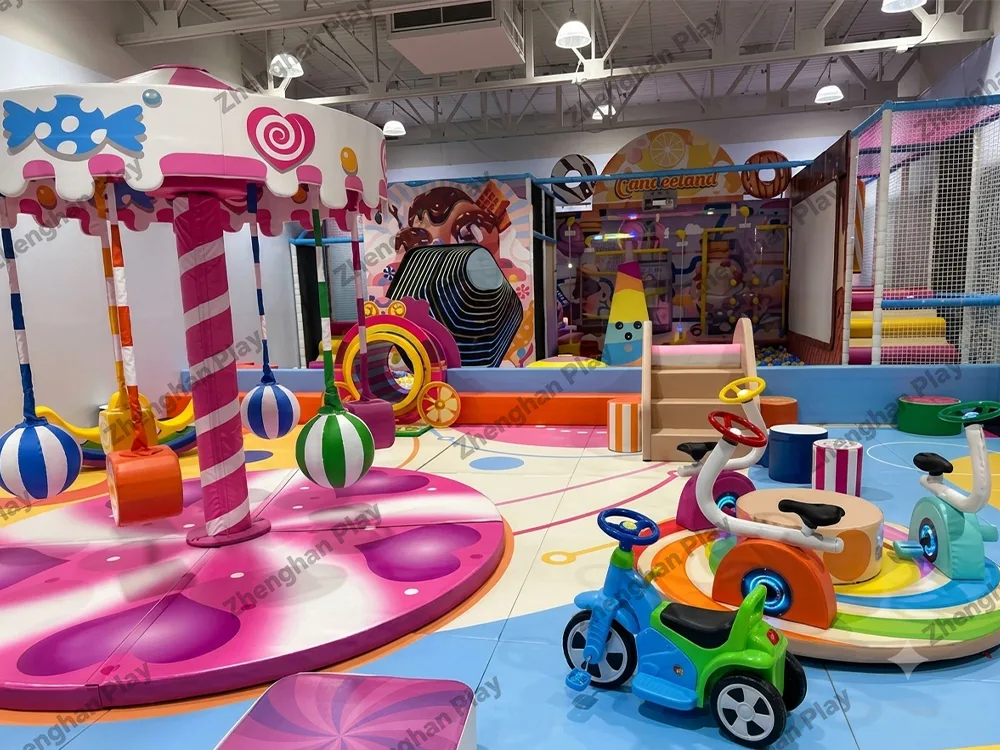
The Multi-Age Customer Strategy In your business plan, introduce the concept of the complete family dynamic. When a family decides where to spend their weekend, the venue must satisfy everyone. If a facility only caters to older kids, the younger siblings get overwhelmed. If it only caters to babies, the older siblings get bored after twenty minutes. In both scenarios, the parents leave early, and you lose revenue.
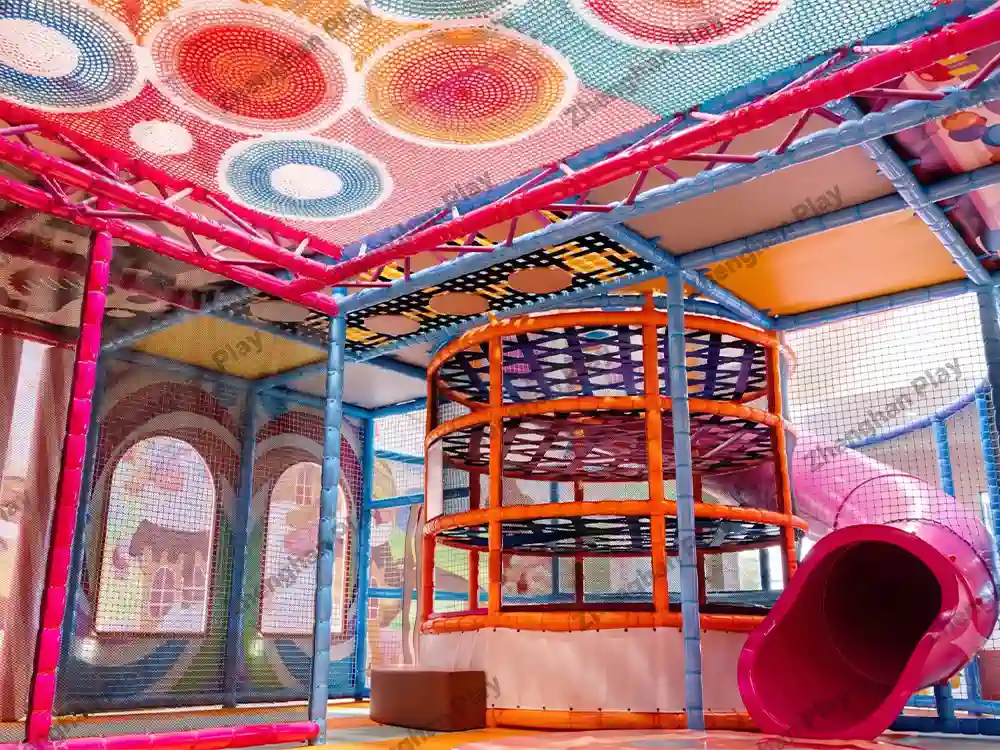
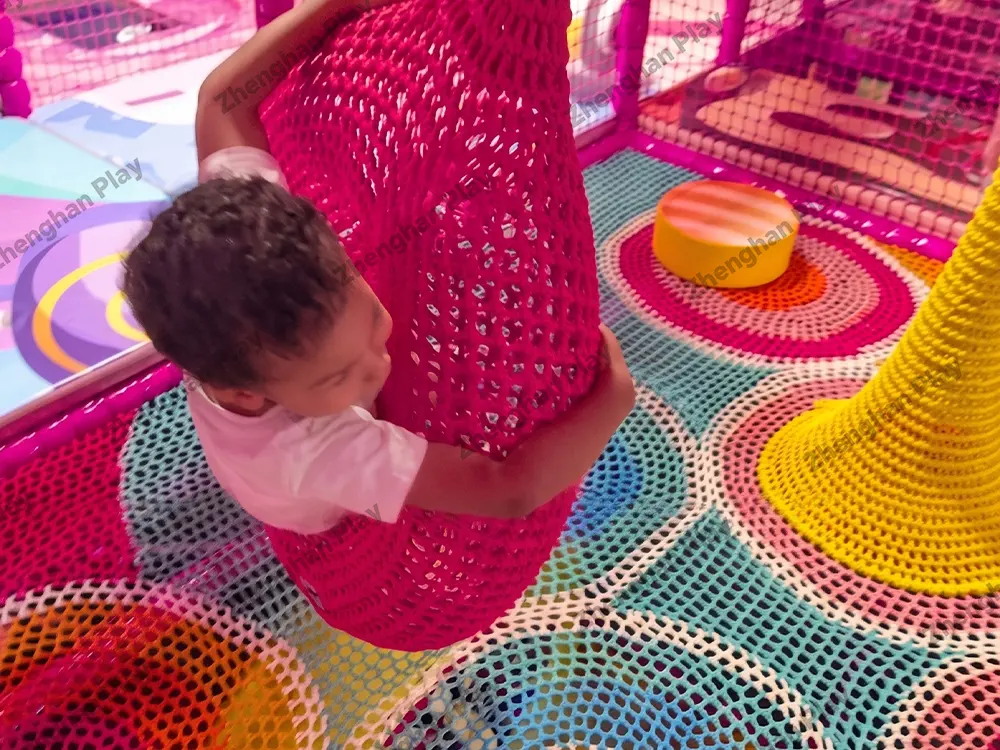
Your business plan must outline a multi-zoned approach. You need dynamic, multi-level structures for school-aged children, paired with premium, designated soft playground equipment for the younger kids. This strategic zoning ensures that families with children of varying ages can stay in your building for hours. More importantly, it keeps the parents happy. Parents value a clean, secure environment where their children are engaged, which makes them willing to spend money on food, beverages, and add-ons while they watch.
Stabilizing Weekday Revenue Capturing the weekend family crowd is only half the equation. I always tell investors: weekends pay for the equipment, but weekdays pay the rent. To impress a lender, your business plan must address the industry’s biggest cash-flow challenge: the quiet weekday mornings. Older children are in school from Monday to Friday. If your business model relies solely on them, your facility will sit empty during the day while your commercial lease expenses continue to accumulate. Stay-at-home parents, remote workers with toddlers, and local preschool groups must become your primary weekday focus. Your executive summary should highlight toddler-focused morning playgroups, local school partnerships, and parent-friendly workspaces as your primary strategies to stabilize daily cash flow.
2. Market Analysis & Competitive Advantage
Lenders want to know why your facility will succeed in your specific local market. You need to prove that you have analyzed the competition and found a profitable gap.
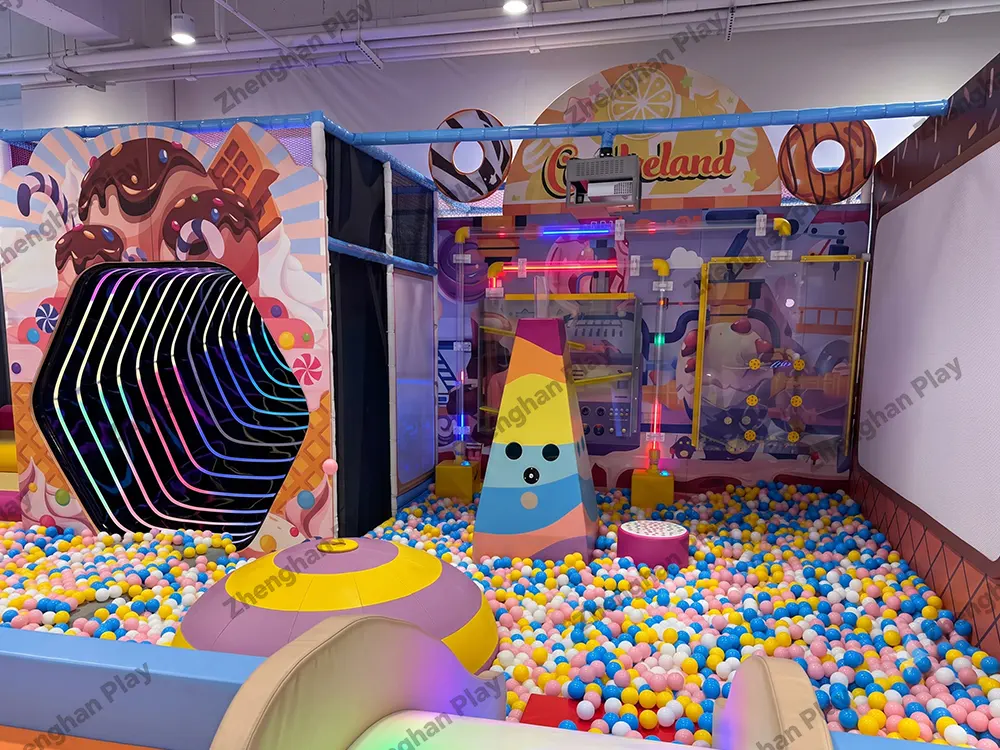
Identifying the Local Market Void Research your local competitors objectively. You will often find that existing centers are either outdated, poorly maintained, or lack a cohesive design. Explain in your business plan how your facility will bridge this gap by offering a premium, highly sanitized, aesthetically pleasing environment tailored for the modern customer. Parents today expect high-quality service, not just a room full of plastic toys.
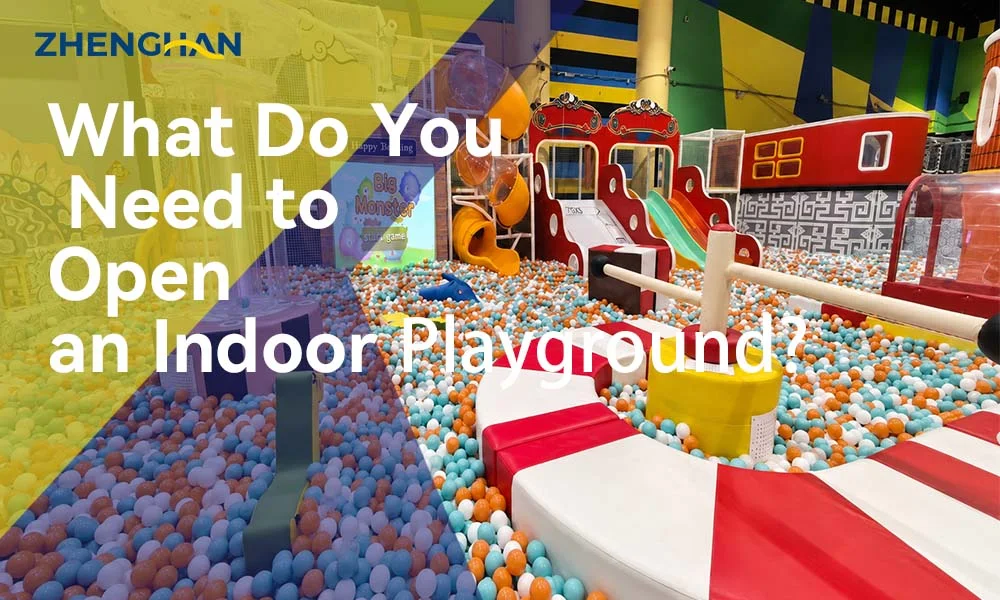
Highlighting the “Dwell Time” Metric Your business plan should heavily feature the “Dwell Time” metric. The longer a family stays comfortably inside your building, the more high-margin food and beverage items they will purchase. If a facility lacks variety, a child gets bored, and the family leaves after an hour. If you invest in a comprehensive play center with role-play houses, interactive screens, and challenging physical courses, the children play happily for hours. The parents can sit in your cafe, use the Wi-Fi, buy premium coffee, and order lunch. Your average revenue per family increases significantly simply because your environment encouraged them to stay.
3. Equipment Sourcing & Capital Expenditure (CapEx)
Financial institutions need to see a precise and sophisticated procurement strategy. Avoid using generic line items like “Playground Materials.” You must show them you know how to source commercial-grade assets efficiently.
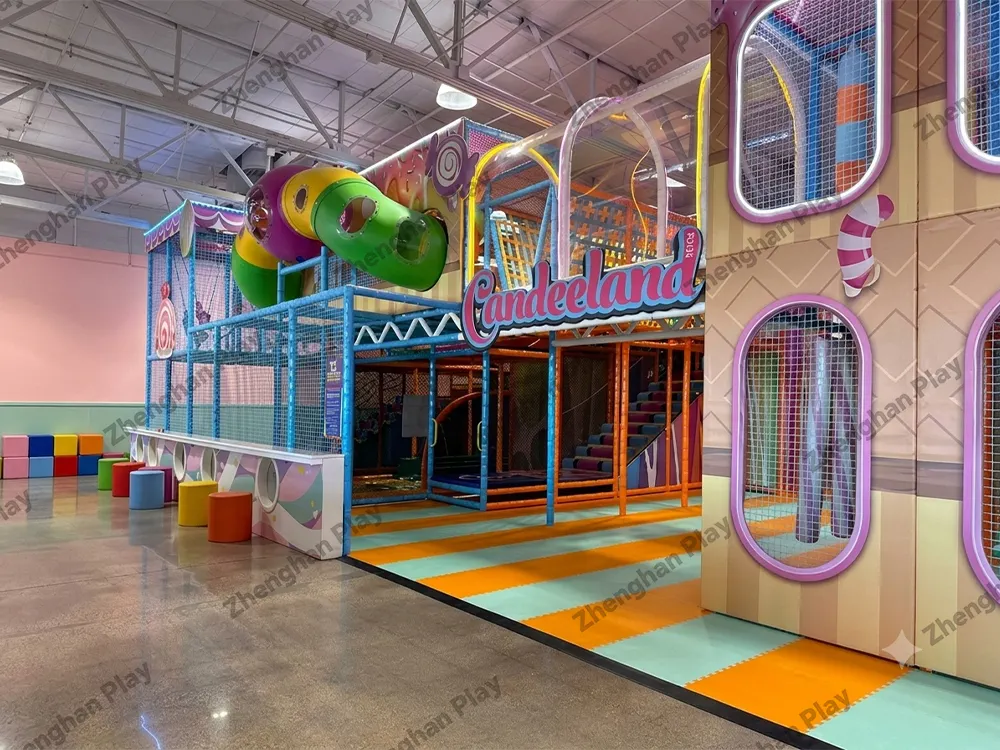
The Factory-Direct Sourcing Strategy State clearly in your plan that you will bypass local middlemen and partner directly with verified commercial playground equipment manufacturers (Jump Keyword located here in Section 3). Lenders appreciate this approach because it demonstrates supply chain efficiency. Buying factory-direct optimizes your initial capital expenditure and ensures you have direct communication regarding structural specifications, customized layouts, and warranties.
Safety Compliance as Risk Mitigation A common reason lenders hesitate to fund amusement centers is the perceived liability risk. Your CapEx section should double as a clear risk mitigation strategy. Explicitly state that you will only purchase equipment that complies with strict international safety standards, such as EN 1176 or ASTM. Detail your material requirements: the main structural frame will utilize hot-dip galvanized steel to prevent rust and ensure long-term stability. The safety padding will feature high-quality commercial foam that will not compress or flatten under daily commercial use, covered in heavy-duty, phthalate-free PVC leather. Note that you will secure physical fire-retardant certificates for all soft materials from your manufacturer. This proves to the bank that you are proactively ensuring building code compliance and protecting your core asset.
Global Logistics and Freight Planning When importing equipment, your CapEx must include a realistic budget for international ocean freight, port taxes, customs clearance, and inland trucking to your facility. Because global freight rates can fluctuate, always include a contingency buffer in your logistics budget to protect your working capital. Make sure to account for specialized unloading equipment rentals for the day your shipments arrive.
4. Revenue Streams: Diversifying Your Income
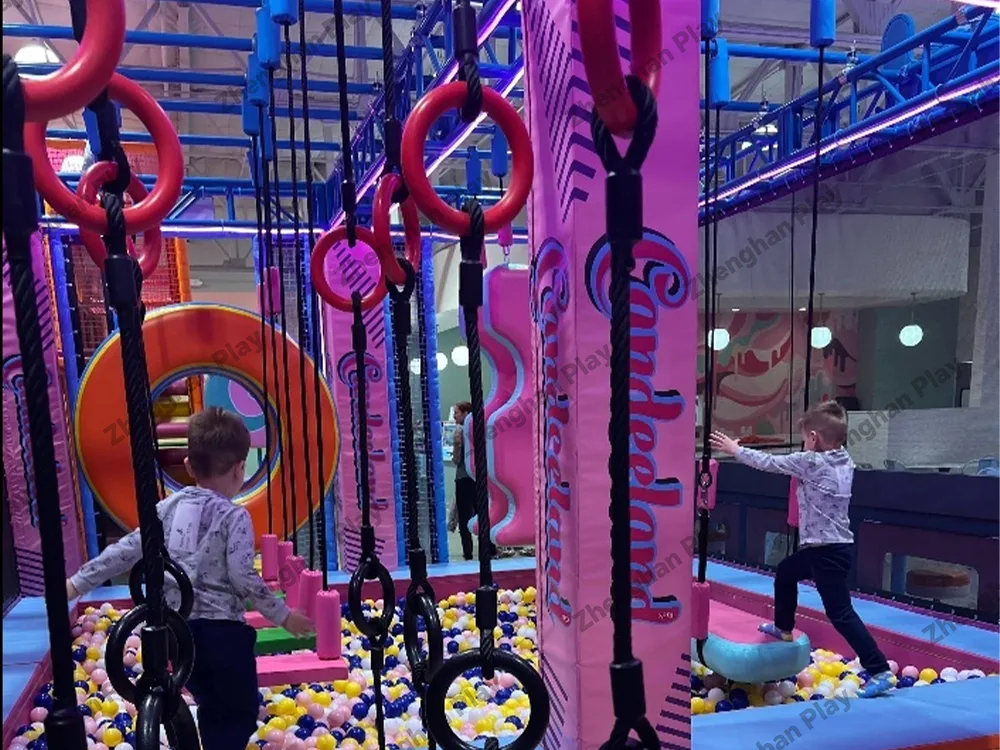
Relying solely on standard hourly admission tickets is a fragile business model. Your financial projections must show a diversified, multi-layered revenue approach to maximize customer lifetime value.
The Birthday Party Financial Engine Birthday parties are the most reliable financial engine of the family entertainment industry. Parents highly value premium, stress-free party experiences for their children and their friends. Map out the math clearly for your investors: Plan to build dedicated, private party rooms. Calculate hosting multiple parties per room, per day, every weekend. Detail a base package price (which includes the room, a dedicated party host, and basic catering). When you add up these weekend bookings, it creates a highly predictable and substantial baseline revenue. Furthermore, parents often upgrade with custom decorations, premium adult food platters, and high-end party favors, which significantly boosts your profit margins.
High-Margin Peripheral Sales
Safety Grip Socks: For safety and hygiene, commercial playgrounds require all guests to wear rubber-bottom grip socks. You can purchase customized, branded socks from your manufacturer at a very low wholesale cost and sell them at the front desk at standard retail prices. This provides a consistent, recurring profit margin on nearly every admission.
The Parent-Centric Cafe: You are hosting parents just as much as you are entertaining children. Your business plan must include a high-quality cafe build-out. Offering commercial espresso, healthy organic snacks, and high-quality fresh food options yields excellent margins. A comfortable cafe turns waiting time into spending time.
5. Operational Expenses (OpEx) & Payroll Efficiency
Labor costs can quickly consume your profits if you do not engineer your floor plan correctly from the very beginning. You must demonstrate to the bank that your facility is designed for lean, efficient operations.
Architectural Payroll Reduction Explain your floor plan strategy within your operations section. Plan to design the main play structures with highly visible entry and exit points. Position your cafe seating area so it directly faces these main gates. This layout is operationally brilliant because it naturally encourages parents to self-police the play area while they relax. They can maintain a clear line of sight to their children without needing to walk around a massive perimeter. From a payroll perspective, this means you need fewer staff members actively roaming the floor to monitor safety. This single design choice significantly lowers your annual labor costs while keeping customer satisfaction high.
Facility Hygiene and Maintenance Cleanliness is the absolute most important factor for customer retention. If a facility is perceived as dirty, local families will simply not return. In your OpEx budget, include dedicated funds for hospital-grade, non-toxic sanitizing supplies. Detail your plan to purchase a commercial automatic ball-cleaning machine. Explain to the loan officer that this machine vacuums the pit balls, scrubs them with a sanitizing solution, and dries them efficiently. It guarantees a high standard of hygiene without requiring exhaustive manual labor from your staff.

6. Risk Management & Commercial Insurance
To secure funding, you must directly address how you will manage operational risks and insurance premiums.
Securing Favorable Insurance Underwriting Commercial liability insurance will be a major fixed monthly cost. To secure favorable rates from underwriters, your business plan must outline a rigorous, proactive safety protocol.
Digital Liability Waivers: State that no customer enters the play zone without a signed digital waiver, stored securely in a cloud-based Point of Sale (POS) software system.
Daily Structural Inspections: Outline a mandatory operating procedure where your management team physically inspects the entire play structure every morning before opening. They will check the tension of the safety netting and ensure all heavy-duty zip ties are secure and cut completely flush to prevent any sharp edges.
Incident Documentation: Establish a strict protocol for logging and documenting any minor bumps or bruises, proving to your insurance provider that you run a highly monitored and professional operation.
7. Marketing and Pre-Launch Strategy
A generic marketing plan that simply lists “social media ads” is not enough. You need a targeted, hyper-local customer acquisition strategy.
Generating Revenue Before the Doors Open Your marketing efforts should begin long before your grand opening.
Local B2B Partnerships: State that you will build relationships with local elementary schools, daycares, and community centers, offering them special weekday morning rates for group field trips. This helps secure bulk weekday revenue early on.
Community Influencers: Allocate a budget to host a private pre-opening event exclusively for local parenting bloggers and community influencers. Their authentic reviews and social media sharing are highly effective for reaching local families.
Pre-Booking Events: While your equipment is being manufactured and shipped, use the 3D factory renderings to build your website. Open your booking system early to pre-sell birthday party slots and discounted annual memberships. Showing early cash flow and community interest is a great way to validate your business model to your investors.
8. Sales-Grade FAQ & Objection Handling
Q: How much of my total budget should be allocated to working capital?
Allocate at least enough to cover 6 months of fixed operating expenses. My Experience: I have seen investors spend 95% of their loan on the building renovation and the playground equipment, leaving almost nothing for the actual opening phase. It takes time for a local community to discover a new business, meaning your first few months might operate at a loss. Having six months of rent, insurance, and payroll sitting safely in a bank account ensures you do not panic or make short-term, detrimental business decisions while you build your loyal customer base.
Q: Do banks prefer franchise models over independent playground business plans?
Not necessarily, provided your independent plan proves strong operational and industry knowledge. My Experience: Franchises offer brand recognition, but they also demand hefty initial franchise fees and ongoing royalties that cut deeply into your monthly margins. A bank will gladly fund an independent playground if the business plan is meticulous. If you clearly outline your factory-direct equipment sourcing, your exact safety compliance standards, and a realistic path to profitability through parties and cafe sales, a bank will see you as a competent, lower-risk operator who keeps 100% of their profits.
Q: How often should I plan to refresh or update the play equipment in my financial forecast?
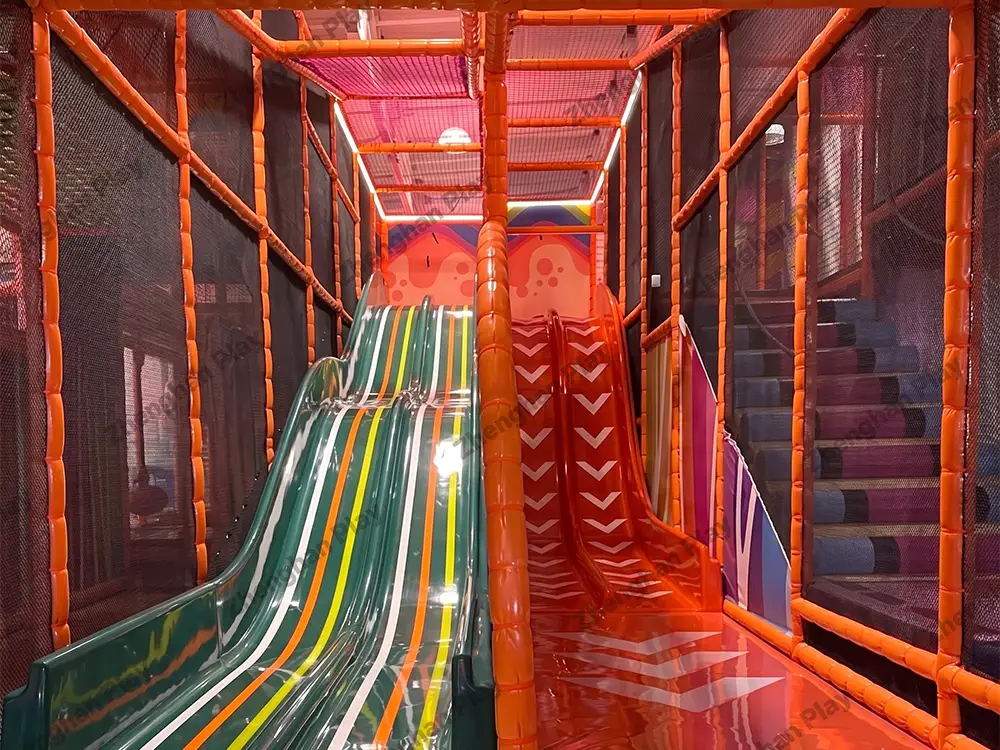
Plan for minor interactive updates every 2 to 3 years to maintain high customer retention. My Experience: A high-quality commercial steel frame and standard padding will last many years with proper maintenance. However, children crave novelty. You do not need to replace the entire structure. Instead, plan a modest CapEx budget every few years to swap out specific modular elements. For example, you can easily remove an old plastic slide and replace it with an interactive, projector-based slide, or update the sensory wall panels. These small, cost-effective updates give you a great reason to market “New Attractions” to your local community.
Q: What is the most overlooked expense in a standard indoor playground business plan?
Commercial HVAC (Heating, Ventilation, and Air Conditioning) upgrades and utilities. My Experience: Many investors find a great commercial warehouse with affordable rent, but they fail to realize the existing air conditioning was designed for storing boxes, not for highly active children and their parents. You will often need to upgrade the HVAC tonnage significantly to keep the environment comfortable and odor-free. The upfront cost to install these units, plus the ongoing monthly electricity bills for running them, are frequently underestimated in early financial drafts.
 English
  Spanish
  Arabic