
Indoor playground equipment cost is an important part of a commercial play center budget, but it is not the complete amount required to open the doors. An equipment quotation answers how much the specified play system costs to manufacture. An investor still needs to calculate freight, customs, installation, site preparation, permits, insurance, pre-opening expenses, and working capital.
The same distinction applies to return on investment. Dividing expected ticket sales by the factory equipment price does not produce a meaningful payback period. A useful financial model starts with total invested capital, separates fixed and variable operating costs, and tests whether admissions, parties, memberships, food, retail, and group bookings can support the venue throughout the year.
This guide provides a practical budgeting method for commercial indoor playgrounds worldwide. It also provides a clear early-stage equipment estimate: a conventional two-level indoor play structure can be budgeted at approximately $100–$120 per square meter before the final layout, features, theme, and delivery scope are confirmed.
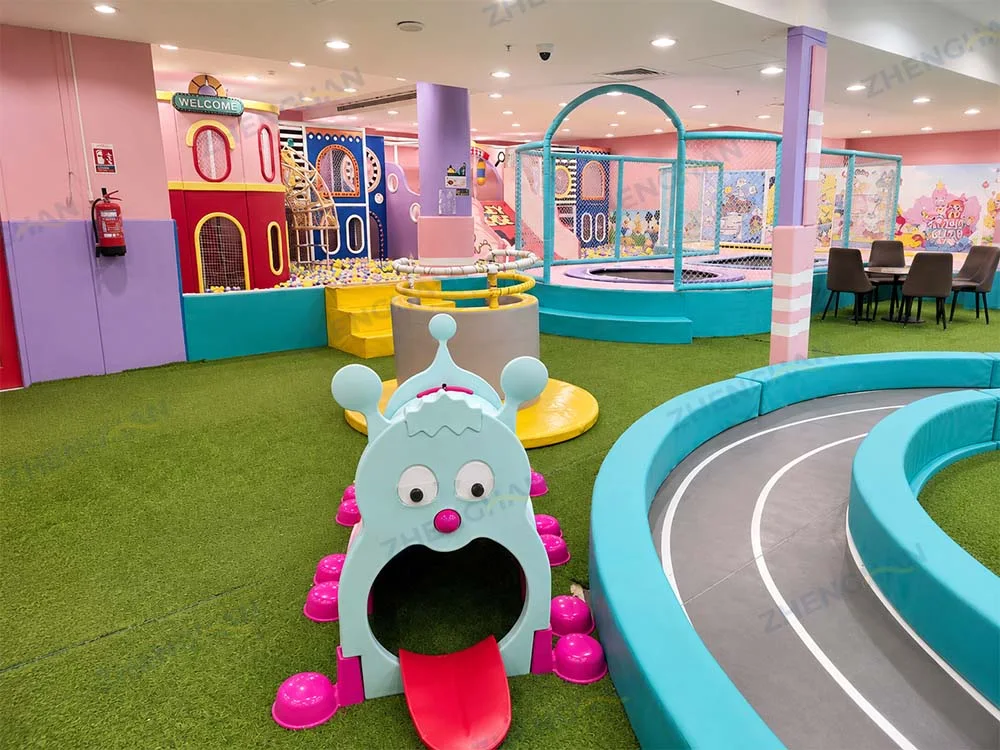
Equipment Price Is Not the Total Opening Budget
First-time investors often treat the supplier’s quotation as the project investment. This creates an artificially short payback estimate because several necessary cash requirements remain outside the calculation. Keep five figures separate from the beginning:
- Factory equipment price: the play equipment, agreed components, standard packing, and specified documents.
- Export cost: any special packing, loading, export service, or transport preparation outside the basic quotation.
- Landed equipment cost: the cost of moving the order from the factory to the project site.
- Total opening investment: equipment, site work, professional services, operating systems, installation, and pre-opening expenses.
- Working capital: cash available to pay rent, payroll, utilities, marketing, cleaning, and maintenance while sales develop.
The fourth and fifth figures are the most relevant for investment planning. A lower equipment quote does not automatically create a lower project cost. Missing parts, weak packing, unclear installation scope, or a layout that conflicts with the building can produce additional expenses later.
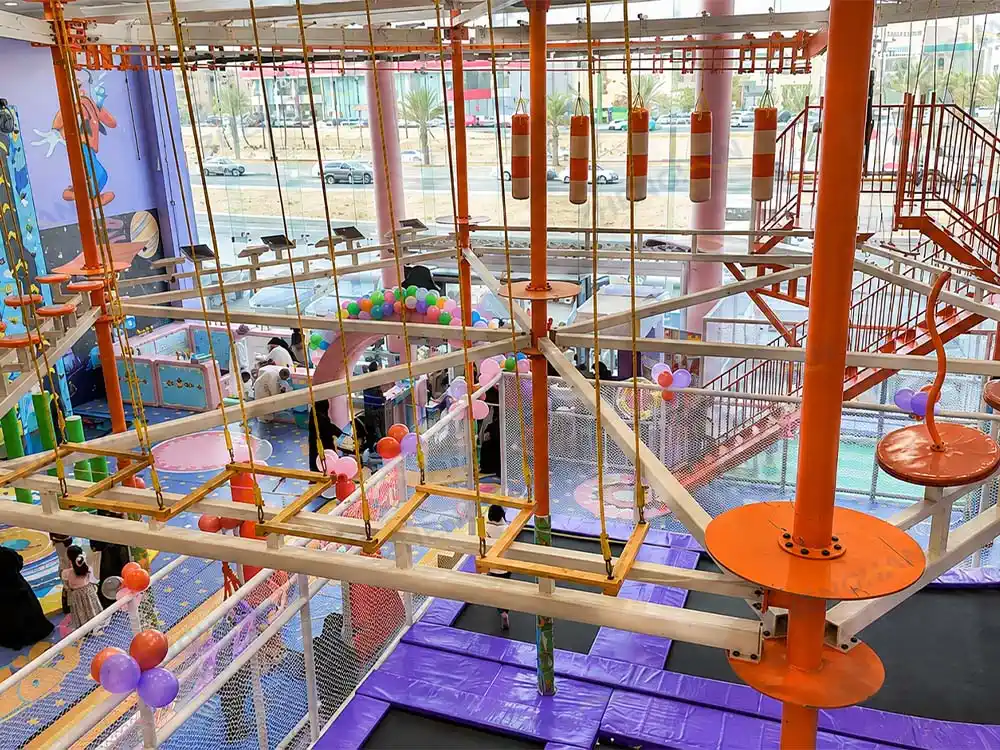
What Determines Indoor Playground Equipment Cost?
Equipment Area and Structure Height
A larger play footprint normally requires more steel, decks, padding, netting, and connecting components. However, price does not always increase in a straight line with area. Extra levels, long spans, high towers, bridges, irregular boundaries, and complex circulation can raise the cost per square meter.
Target Ages and Visitor Capacity
A toddler zone and a school-age adventure structure require different platforms, activities, sightlines, and safeguards. A commercial design must also consider how many children can use the space comfortably. Equipment area alone does not show capacity, play value, or the number of staff required to supervise the venue.
Theme and Attraction Mix
Standard colors and familiar components are easier to budget. Custom characters, sculpted entrances, themed panels, lighting, interactive effects, and detailed decorative work add design and production time. Large slides, role-play rooms, projection games, electric attractions, climbing elements, and challenge courses should be listed separately so suppliers quote the same scope.
Materials, Documents, and Service
Material specifications, padding, netting, fasteners, spare parts, technical documents, installation guidance, warranty, and after-sales support also affect price. When comparing a kids jungle indoor playground for sale, review the component list and delivery scope instead of comparing only the final number.
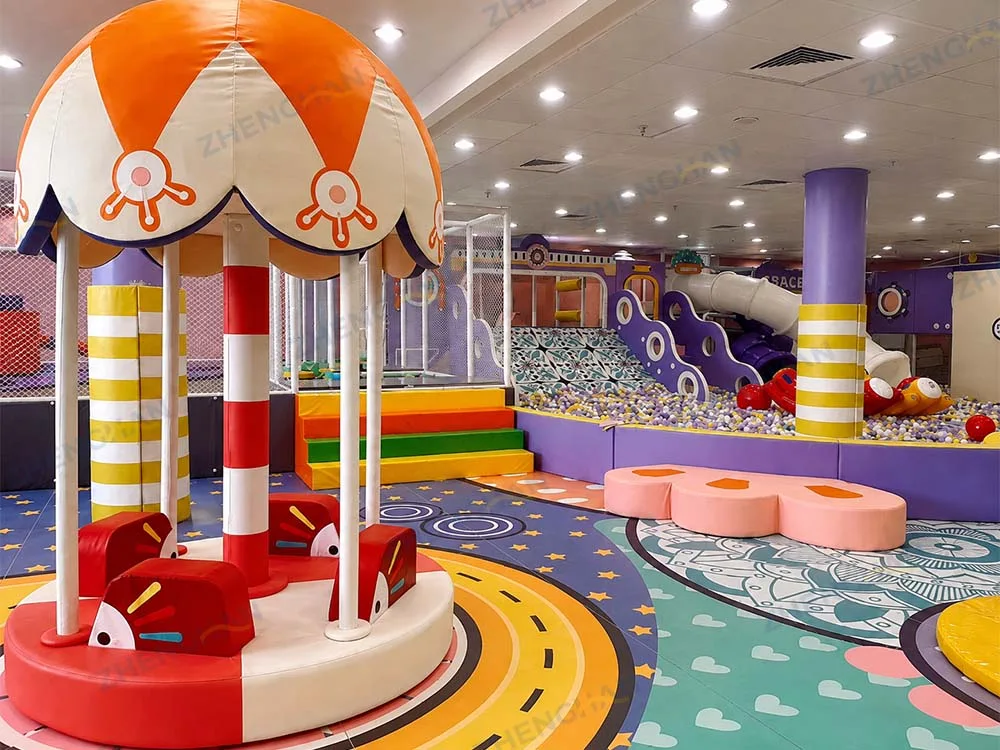
A Practical Estimate for a Two-Level Play Structure
For early planning, a conventional two-level indoor playground structure can be estimated at approximately $100–$120 per square meter. “Equipment area” means the space occupied by the play system in the supplier’s layout, not the complete leased floor area.
For a two-level structure with an equipment area of approximately 500 square meters:
- At $100 per square meter, the equipment estimate is approximately $50,000.
- At $120 per square meter, the equipment estimate is approximately $60,000.
- A midpoint of $55,000 can be used for the first project budget.
This range is suitable for preliminary planning of a conventional two-level frame. Large custom slides, elaborate theming, interactive electronics, powered attractions, role-play equipment, trampolines, climbing installations, freight, and installation should be priced according to the actual project list.
Calculate the Landed Equipment Cost
Imported equipment should be evaluated with a landed-cost formula:
Landed cost = Factory equipment price + Packing and export charges + International freight + Cargo insurance + Port charges + Customs and taxes + Inland delivery + Unloading + Installation
Each line needs a defined basis. Freight changes with the route, shipping period, destination port, and number of containers. Duties and taxes depend on the destination and local classification. Inland delivery depends on distance, vehicle restrictions, access, and unloading arrangements.
Installation also needs a written scope. Check whether the price includes labor, travel, accommodation, tools, lifting equipment, scaffolding, local transport, unloading, temporary storage, interpretation, and completion of a site issue list. If an item is excluded, move it into the owner’s budget instead of assuming that it will not occur.
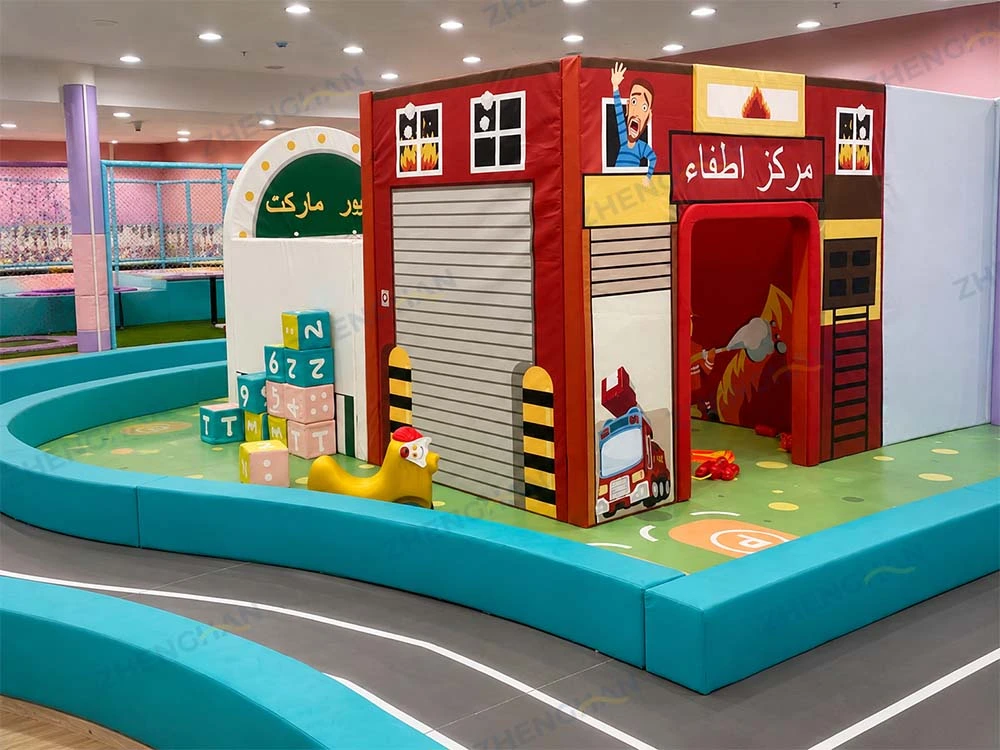
Example Budget for a 500-Square-Meter Play Structure
Using the $55,000 equipment midpoint, a 500-square-meter, two-level indoor playground can begin with the following $100,000 project estimate:
| Budget Item | Example Amount |
|---|---|
| Lease deposit and pre-opening rent | $5,000 |
| Design, consultants, and permits | $2,000 |
| Site decoration | $10,000 |
| Two-level equipment estimate | $55,000 |
| Freight, customs, and inland delivery | $8,000 |
| Unloading and equipment installation | $4,000 |
| Furniture, signage, ticketing, and operating systems | $3,000 |
| Recruitment, training, insurance, and opening marketing | $3,000 |
| Opening working capital | $8,000 |
| Project contingency | $2,000 |
| Example Total Investment | $100,000 |
In this example, the equipment represents 55% of total investment. The $100–$120-per-square-meter range gives the investor a useful starting point, while the remaining categories turn that equipment estimate into a complete project budget. Replace every line with local quotations before making the final investment decision.
Separate Fixed and Variable Operating Costs
Fixed or relatively fixed costs continue even when attendance is weak. They commonly include rent, core payroll, insurance, software, internet, accounting, loan-related expenses, base marketing, and minimum staffing. Variable costs increase as sales grow. Payment fees, party supplies, food ingredients, retail products, cleaning consumables, and some hourly labor belong in this group.
Utilities, repairs, and staffing can contain both fixed and variable portions. Separating them makes the model more useful because it shows how much contribution each additional sale creates.
Build Revenue by Channel
Do not calculate sales as maximum capacity multiplied by ticket price and opening hours. Capacity shows how many guests the venue can accommodate under defined conditions; it does not mean the playground will operate at full occupancy every hour.
Build individual forecasts for admissions, memberships, birthday parties, school or community groups, food and beverages, socks and retail, classes, camps, seasonal events, and premium attractions. Each channel needs its own quantity, selling price, discounts, refunds, and direct costs.
A base month for the $100,000 example could be structured as follows:
| Revenue Channel | Example Monthly Revenue |
|---|---|
| General admissions | $8,000 |
| Birthday parties | $3,500 |
| Memberships and multi-visit passes | $1,500 |
| Food and retail | $1,500 |
| Groups, classes, and add-on activities | $1,500 |
| Example Monthly Revenue | $16,000 |
This revenue mix does not depend on admissions alone. Parties, memberships, food, and group programs help the same space generate income at different times of the week.
Calculate the Monthly Break-Even Point
Break-even means monthly revenue covers monthly costs. It does not mean the initial investment has been recovered.
Monthly break-even revenue = Monthly fixed costs ÷ Contribution margin ratio
If fixed costs are $6,000 per month and variable costs equal 20% of sales, the contribution margin ratio is 80%:
$6,000 ÷ 80% = $7,500 monthly break-even revenue
The venue begins generating operating profit above approximately $7,500 per month under these assumptions. The owner should still test lower ticket prices, party cancellations, higher payroll, additional marketing, maintenance, and seasonal attendance.
If average spending is $15 per paying guest and the related variable cost is $3, each guest contributes $12. The fixed-cost equivalent is therefore approximately 500 paying guests per month. Because real venues combine tickets, parties, memberships, food, and groups, the complete channel model remains more accurate than a visitor-only calculation.
Understand Profit, ROI, and Payback
Operating Profit
Operating profit is revenue minus normal operating expenses. Revenue growth does not automatically create equal profit growth because higher attendance can increase staffing, supplies, cleaning, utilities, repairs, and payment fees.
Simple Annual ROI
Simple annual ROI = Annual operating profit ÷ Total invested capital × 100%
Use the same accounting basis in every scenario. Owner compensation, required marketing, maintenance reserves, and recurring operating expenses should not disappear from the calculation simply to improve the result.
Simple Payback Period
Simple payback period = Total invested capital ÷ Annual operating cash flow
Financing, interest, taxes, depreciation, and major replacement spending can change the investor-level result. The simple formula is most useful for comparing operating scenarios built on the same assumptions.
Compare Three Operating Scenarios
Using the $100,000 project budget and a 20% variable-cost ratio, three monthly scenarios show how attendance and revenue mix affect payback:
| Scenario | Monthly Revenue | Fixed Costs | Variable Costs | Operating Profit | Simple Annual ROI | Simple Payback |
|---|---|---|---|---|---|---|
| Conservative | $12,000 | $6,000 | $2,400 | $3,600 | 43.2% | About 27.8 months |
| Base | $16,000 | $6,000 | $3,200 | $6,800 | 81.6% | About 14.7 months |
| Stronger demand | $20,000 | $6,500 | $4,000 | $9,500 | 114.0% | About 10.5 months |
The stronger-demand scenario adds $500 in fixed costs to reflect additional staffing or management resources. The base payback of approximately 14.7 months depends on consistent revenue from several channels, not a permanently full playground. Before investing, test whether the local market can support the assumed ticket volume, party bookings, memberships, and secondary spending.
How Equipment Decisions Affect the Return
The lowest purchase price does not always produce the best return. Layout and equipment choices influence capacity, length of stay, repeat visits, staff efficiency, cleaning, maintenance, and downtime. Compare proposals using these questions:
- How much useful play value does each square meter provide?
- Can different age groups use the venue at the same time?
- Does the layout reduce congestion and wasted floor area?
- Can staff see and reach the primary play zones?
- Are cleaning, inspection, and common repairs practical?
- Are replacement parts available without long downtime?
- Can attractions be refreshed or expanded later?
A stronger design helps the venue earn revenue repeatedly after opening. Excessive cost cutting on materials, spare parts, or planning can create higher maintenance costs and more lost operating time.
Recalculate the Budget When Adding Premium Attractions
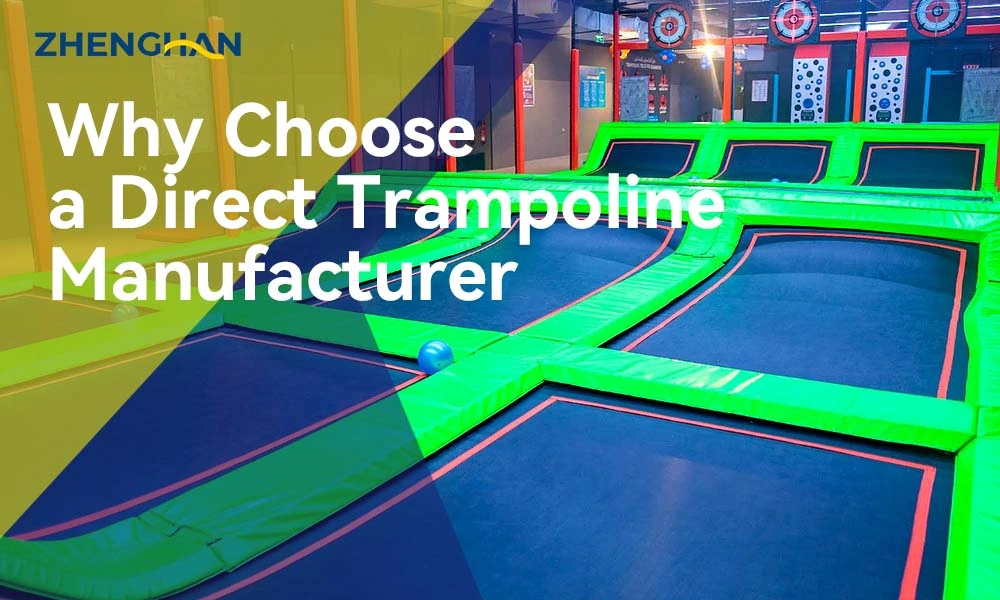
Trampolines, climbing, ninja courses, VR, interactive floors, and arcade games can extend the age range and support premium pricing. They also introduce additional equipment, height, power, insurance, supervision, inspection, maintenance, and documentation requirements.
Before contacting trampoline makers or adding another attraction category, calculate its complete incremental investment and monthly operating cost. The attraction improves ROI only when the additional contribution exceeds its capital use, staffing, energy, maintenance, and downtime cost.
Case Study: SkyKids Riyadh
SkyKids is located at Exit 28, Western Ring Road, Dhahrat Namar, Riyadh 14925, Saudi Arabia. Its public attraction mix includes children’s play areas, active games, trampolines, climbing, VR, birthday services, and a café for parents.
This mix illustrates why a family entertainment center should not be budgeted with one equipment rate. The indoor playground has its own equipment, installation, and maintenance structure. Trampolines and climbing can change supervision and inspection needs. VR introduces power, software, and technical support. Birthday parties require rooms, furniture, supplies, reservations, and service staff. The café adds equipment, ingredients, labor, and cleaning while creating another revenue channel.
Each category has a different commercial role. The operator should calculate the investment, direct revenue, staffing, energy, and maintenance for every category before combining them into one project model.
Questions to Ask Before Accepting a Quotation
- Does the quotation match the final floor plan and attraction list?
- Are theme design, documents, packing, and standard spare parts included?
- Which delivery terms apply, and who arranges freight and insurance?
- Who budgets port charges, customs, taxes, and inland delivery?
- What labor, travel, tools, lifting equipment, and site expenses are included in installation?
- Which site, fire, power, HVAC, and finish work remains the owner’s responsibility?
- Do the payment milestones match the project cash-flow plan?
- What warranty, after-sales support, and spare-part pricing are provided?
A professional equipment quotation should define the supplier’s scope clearly. The investor can then combine that quotation with local property, construction, transport, operating, and market information to build the full budget.
Send Your Floor Plan for Project Advice
Frequently Asked Questions
How Much Does Commercial Indoor Playground Equipment Cost?
A conventional two-level play structure can be estimated at approximately $100–$120 per square meter for initial planning. The final cost depends on the layout, height, target ages, capacity, theme, slides, interactive features, materials, documents, packing, and service scope.
Does the Equipment Quotation Include Shipping and Installation?
Only when the quotation states that they are included. Confirm packing, international freight, insurance, customs-related costs, inland delivery, unloading, installation labor, travel, accommodation, tools, and local lifting equipment before comparing suppliers.
How Do You Calculate Indoor Playground Break-Even Sales?
Divide monthly fixed costs by the contribution margin ratio. With $6,000 in fixed costs and an 80% contribution margin, the example break-even revenue is $7,500 per month.
What Is a Realistic ROI for an Indoor Playground?
ROI depends on total investment, rent, attendance, average spending, party sales, payroll, utilities, marketing, maintenance, competition, and seasonality. The example base scenario produces an 81.6% simple annual ROI and an approximately 14.7-month payback using its stated assumptions.
How Much Working Capital Should an Indoor Playground Keep?
Working capital should cover rent, payroll, utilities, marketing, cleaning, maintenance, and debt obligations while revenue develops. Calculate it from monthly cash needs and the expected sales ramp rather than using a single percentage for every project.
 English
 Spanish
 Arabic
