
If you are researching starting a trampoline park in Canada, the hardest part is rarely choosing colors or deciding how many trampoline beds to install. The real challenge is making the attraction classification, equipment documents, building conditions, installation method, and operating rules fit together as one project.
A soft indoor playground mainly uses static structures, padded surfaces, age zones, and routine maintenance. A commercial trampoline park introduces repeated bouncing, dynamic impact, aerial movement, and several types of landing area. Add a foam pit, airbag, basketball lane, ninja course, climbing wall, zip line, inflatable attraction, or powered device, and the requirements can change again.
Canada does not have one regulatory answer for every province and attraction. Ontario’s TSSA, Technical Safety BC, municipal building and fire departments, local engineering professionals, and insurers have different roles. The right question is not, “Which single licence does a Canadian trampoline park need?” Start with a complete attraction list, then confirm how each element is treated in the project location.
1. Why Trampoline Park Compliance Is Different
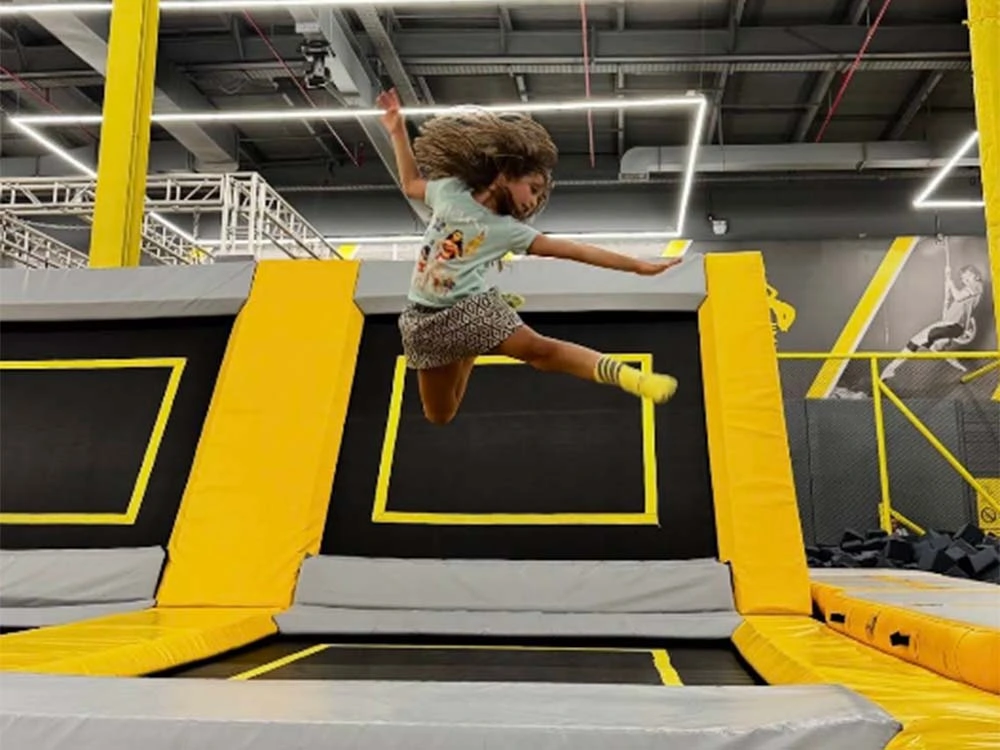
Trampoline users generate vertical and horizontal movement. Their speed, body position, and landing point constantly change. A commercial design must coordinate the bed, frame, springs or elastic elements, pads, nets, platforms, circulation routes, and adjacent activity zones. A weak transition or exposed gap can create the same hazard hundreds of times during daily use.
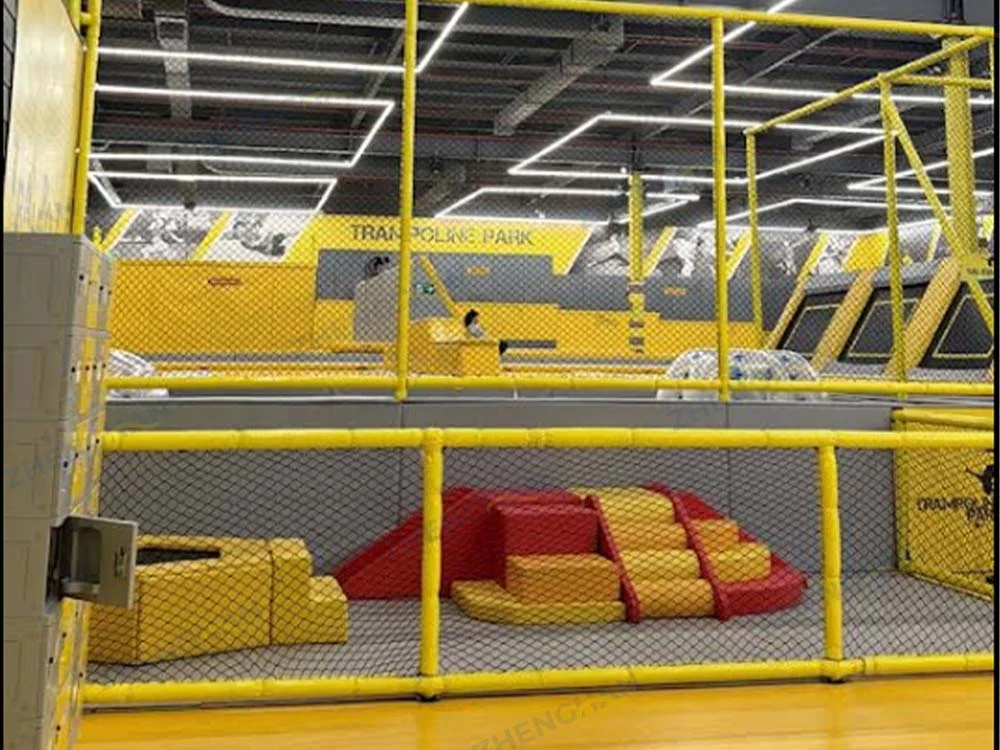
Attraction zones should not be combined only because they look exciting in a rendering. Open jump, dodgeball, and basketball involve different movement patterns and group behavior. Foam pits and airbags require their own approach, landing, exit, inspection, and maintenance logic. Ninja obstacles, climbing walls, and zip lines add height, fall protection, rescue, and user-restriction questions.
Soft play can bring younger families into the venue, but it needs a clear boundary from high-energy areas. Inflatables and powered attractions may follow a different regulatory path from an ordinary trampoline court. Every added attraction should trigger a fresh review of height, documents, insurance, staffing, and local classification.
This is the key difference between a trampoline park project and a general indoor playground guide. The core work is classifying each attraction, then carrying that classification through the drawings, building interfaces, insurance disclosure, installation checks, and operating procedures.
2. TSSA Does Not Apply Across Canada
Ontario. The Technical Standards and Safety Authority regulates amusement rides and devices in Ontario. Its published process shows that a regulated device may require an operating licence, a permit for each device, a technical dossier, and an inspection. The definition of an amusement device is broad, but exemptions also exist. A business name such as “trampoline park” is not enough to classify every attraction.
An Ontario project should list ordinary trampoline courts, mechanically assisted bounce devices, zip lines, free-fall elements, inflatables, and powered attractions separately. Contact TSSA when the classification is unclear. If an attraction falls within the regulated category, the dossier, permit, and inspection process should be included in the schedule before installation. TSSA’s current process is available through its Ontario amusement device guidance.
British Columbia. Technical Safety BC currently states that trampoline parks are not regulated as amusement devices under the Safety Standards Act and that the adopted CSA Z267 code does not address trampoline parks. That means it is inaccurate to describe “TSSA approval” as a legal requirement for a BC trampoline park. TSSA is not the BC regulator.
This classification does not remove building, fire, occupancy, insurance, maintenance, or operational responsibilities. A zip line, inflatable, or powered attraction inside the same venue may be treated differently. Regulatory status can also change, so operators should check the current Technical Safety BC classification information during planning.
Alberta and other provinces. Do not copy the Ontario or BC process into an Edmonton, Calgary, Montréal, or other Canadian project. Start with the municipality, building use, and full attraction schedule. Confirm the applicable planning, building, fire, occupational safety, insurance, and attraction-specific requirements with the responsible local and provincial parties.
3. Classify Every Attraction Before Design
Open jump, dodgeball, and basketball. These zones may share a trampoline system, but they involve different movement paths, user numbers, and adjacent risks. Drawings should define boundaries, platforms, circulation, padding, nets, operating rules, and staff sightlines. A basketball lane also needs clear-height review based on the basket position and expected movements.
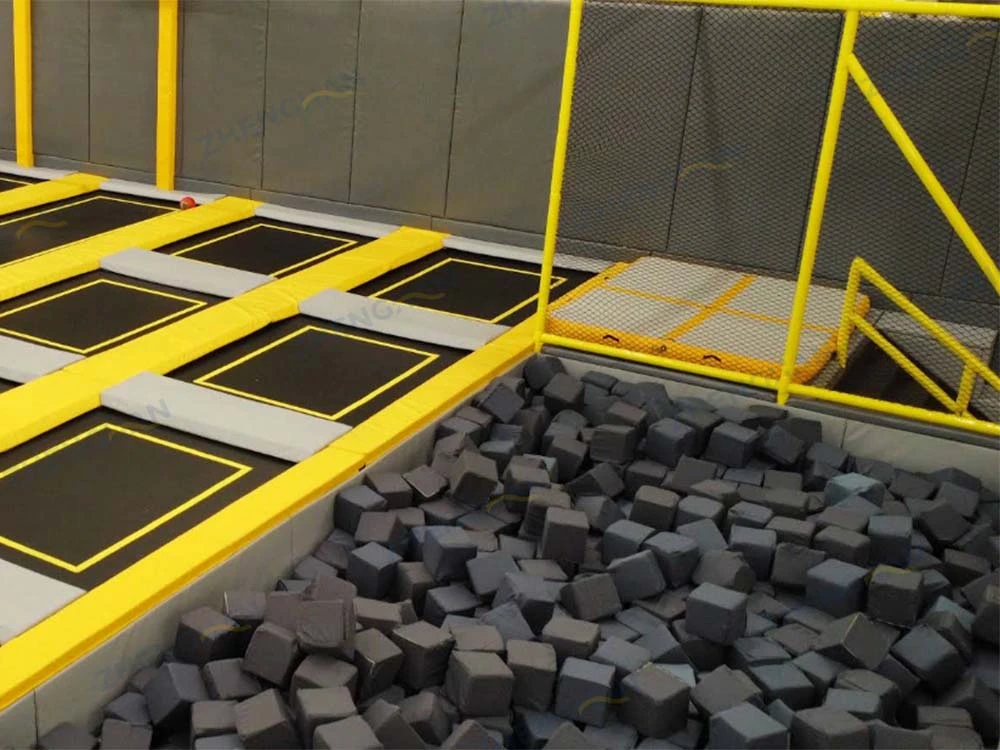
Foam pits and airbags. These are not interchangeable decorative landing areas. Their design should reflect the takeoff point, drop or jump height, intended maneuvers, edge protection, exit route, inspection method, and maintenance plan. Ask the supplier to document the system and its intended use instead of relying on a rendering.
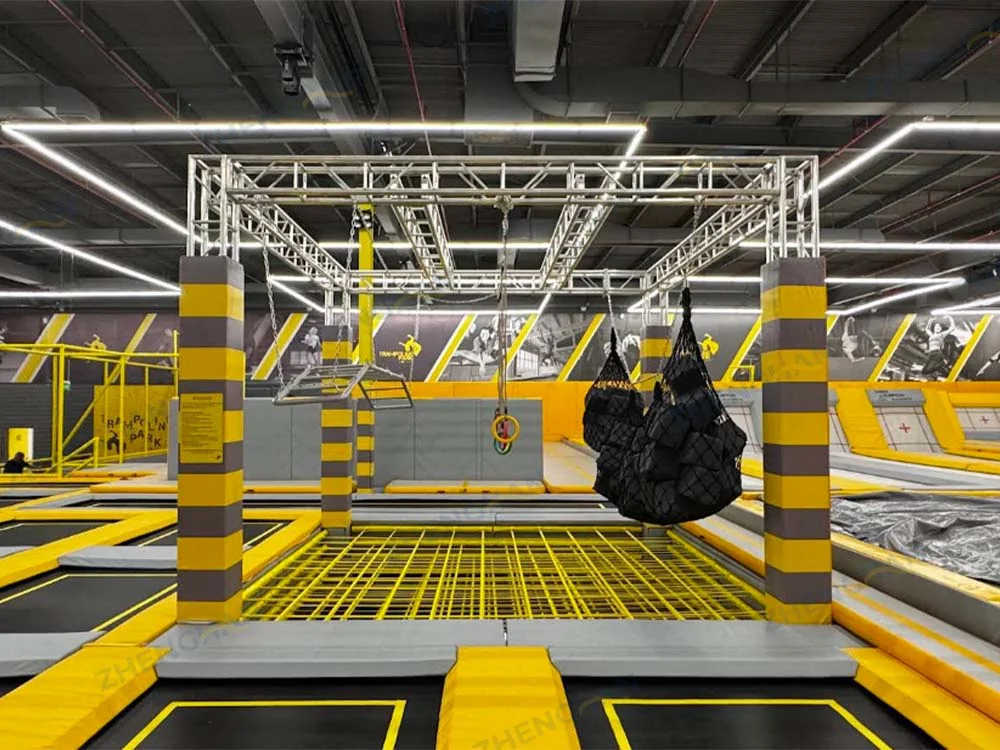
Ninja, climbing, and zip-line attractions. These elements introduce height, fall protection, landing, rescue, and user restrictions. A zip line may have a different regulatory classification from a trampoline court. Decide whether to include these attractions during concept development, not after the core equipment has entered production.
Soft play, inflatables, and powered devices. A soft-play zone expands the lower-age audience but requires independent access and age separation. Inflatable or mechanical attractions can add permits, inspections, and operating controls. Whenever a new equipment category is introduced, review the earlier building, regulatory, and insurance conclusions.
4. Build a Project-Specific Technical Document Package
For commercial trampoline equipment in Canada, ASTM F2970 is sufficient. ASTM F2970-22 covers the design, manufacture, installation, operation, maintenance, inspection, and major modification of commercial or institutional trampoline courts. It is the core equipment standard used in this guide.
Zoning, building, fire, occupancy, attraction classification, and insurance are separate venue-development and operating matters. They do not mean the trampoline equipment must follow another Canadian equipment standard. The equipment documents and local project approvals simply address different parts of the same development.
When purchasing indoor trampoline park equipment, request a document package tied to the final order. It should include:
- Site layout and attraction zoning drawings
- Structural, frame, and connection information
- Key material and component specifications
- Trampoline bed, spring or elastic element, pad, and net information
- Installation drawings, anchoring methods, and site conditions
- Product testing or conformity documentation
- Packing lists, part labels, and installation sequence
- Daily inspection, planned maintenance, and replacement guidance
- Wear parts, spare parts, warranty, and after-sales terms
ZHENGHAN can provide TÜV laboratory-issued conformity documentation for applicable trampoline products, along with layout, structural, material, installation, and maintenance information. Buyers should check the standard edition, product model, testing scope, issuing entity, and validity shown in each document. The documents must match the equipment in the final purchase order.
ASTM conformity information, TÜV documentation, local P.Eng review, building permits, attraction permits, and insurance each address a different subject. ASTM F2970 establishes the trampoline equipment standard. Local professional review and permits address the building and venue. A useful supplier connects its product files to the drawings, models, and order so every project participant can verify the same information.
5. Match Equipment Engineering to the Building
Measure usable clear height by zone. The highest ceiling number in a leasing brochure is not the design height. Measure from the finished floor to the lowest beam, HVAC duct, light, sprinkler line, or other obstruction above each activity. Open jump, basketball, climbing, and zip-line zones have different spatial needs.
Protect exits and egress. Trampoline frames, platforms, nets, queuing areas, and spectator spaces must coordinate with fire exits and circulation. Overlay the concept equipment plan on the building drawings early. Do not finalize the equipment first and expect the local design team to create egress from whatever space remains.
Define floor, anchoring, and structural interfaces. The supplier should show how the equipment is fixed, where loads occur, and what site conditions are required. Local engineering professionals review those details against the building and their scope of responsibility. Coordinates, elevations, and interface details must match across both sets of drawings.
Document electrical connections. Interactive games, lighting, sensors, displays, and control equipment need confirmed voltage, frequency, plugs, wiring, and local installation responsibilities. Clear information reduces troubleshooting time and helps the local electrical contractor price the work correctly.
Plan the delivery route. Door widths, loading areas, freight elevators, temporary storage, forklifts, and lifting requirements affect packing and installation. Large frames or components that cannot enter the building as planned create expensive modifications after production.
6. Define Who Is Responsible for What
The investor or project owner confirms the property, hires qualified local professionals, submits permits, arranges insurance, and coordinates the overall development.
The equipment manufacturer provides equipment design, product drawings, material and testing information, production, packing, and installation guidance.
The local architect or P.Eng completes the building, structural, or engineering review required for the project and accepts the related local professional responsibility.
The installation team follows the approved drawings, records field issues, completes corrections, and supports final checks.
The insurance adviser reviews the full attraction and activity list, then confirms underwriting conditions and coverage.
The authority having jurisdiction performs the classification, permitting, inspection, or enforcement work assigned by local law.
“Turnkey” should not imply that an overseas manufacturer replaces every Canadian professional or authority. A reliable project uses clear manufacturer documentation, qualified local review, and agreed responsibilities before production.
7. Canadian Project Example: Bouncy Planet
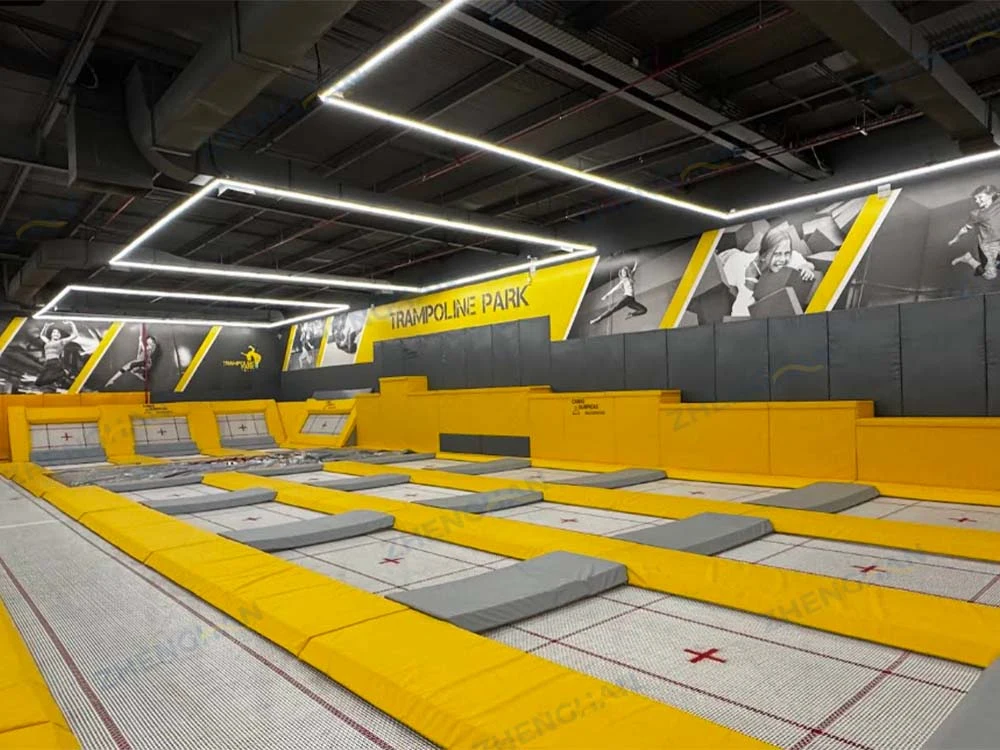
ZHENGHAN’s Canadian project experience includes Bouncy Planet, located at 5108 75 Street NW, Edmonton, Alberta T6E 6W2, Canada. The venue combines a trampoline park, indoor playground, party rooms, and food service for children and families.
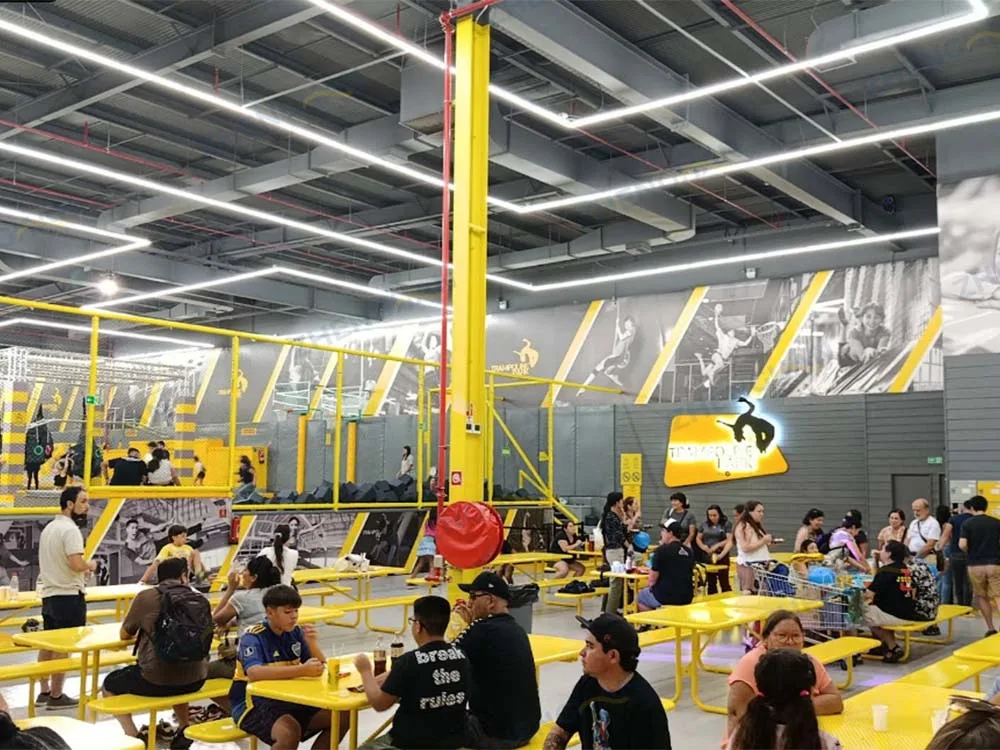
This type of hybrid venue cannot be planned only around jump capacity. High-energy trampoline areas, a lower-age play zone, parties, parent seating, and food service need clear zoning and practical circulation. Staff sightlines, entrance management, different age groups, and commercial support spaces should be considered while the equipment layout is still flexible.
For an Edmonton project—or any Canadian venue—the manufacturer needs accurate plans, clear heights, columns, entrances, fire exits, and a complete attraction schedule. Alberta and Edmonton professionals and authorities confirm the local building and regulatory requirements. Clear responsibilities allow the equipment solution to fit the property without suggesting that the manufacturer replaces the local project team.
8. Control Production, Installation, and Commissioning
Freeze the design. Before production, confirm the final layout, attraction zones, colors, drawing revisions, document list, and responsibility boundaries. Record how any later change affects structure, materials, cost, timing, and local review.
Inspect, pack, and label at the factory. Production checks should verify critical dimensions, materials, components, and documents. Packing should follow the installation sequence. Clearly label frames, pads, springs, nets, and connectors so the site team can identify parts efficiently.
Coordinate shipping and installation. Confirm importing, customs clearance, inland freight, unloading equipment, temporary storage, labor, tools, travel, and site materials. During installation, track missing parts, transit damage, field changes, and drawing differences through a written issue list.
Complete final checks and testing. Review boundaries, connections, pads, nets, platforms, circulation, attraction separation, anchoring, and housekeeping. Test interactive and electrical equipment. Complete any building, fire, occupancy, professional, or attraction inspection required by the location.
Hand over operations. Staff training should cover opening checks, user rules, age and ability limits, zone supervision, incident records, emergency response, equipment shutdown, and planned maintenance. A controlled soft opening helps test capacity, sightlines, circulation, and staff routines before the main launch.
9. Questions to Ask a Trampoline Park Supplier
When evaluating a trampoline park supplier, ask direct questions:
- Will this project be designed to ASTM F2970, and which edition will be used?
- Which testing or conformity documents cover my specific products?
- How do the drawings address clear height, columns, exits, and staff sightlines?
- What documents apply to open jump, basketball, foam pits, airbags, ninja, climbing, or zip-line zones?
- What does the manufacturer provide, and what must a Canadian architect or P.Eng complete?
- Does the quotation include packing, spare parts, installation guidance, tools, travel, and site materials?
- How are parts labelled, and how are field differences managed?
- What are the daily inspection, planned maintenance, and wear-part replacement requirements?
- What does the warranty cover, and how are replacement parts supplied?
- How will the final order be matched to the ASTM or TÜV documents?
Canadian trampoline park compliance is not one certificate or a final task completed after delivery. It is a chain connecting attraction classification, ASTM documentation, building interfaces, production, installation, inspection, insurance, and operating handover. Defining every attraction and responsibility early reduces redesign and field disputes.
If you have a potential venue, Send Your Floor Plan for Project Advice. Include the province and city, floor plan, dimensions, usable clear height by zone, columns, entrances, fire exits, and complete attraction list. ZHENGHAN can use that information to prepare an initial trampoline equipment layout and project-document direction.
FAQ
Does every Canadian trampoline park need TSSA approval?
No. TSSA is an Ontario authority; it does not regulate BC, Alberta, or the rest of Canada. An Ontario project should ask TSSA to classify its actual attractions when the answer is unclear. Technical Safety BC currently states that ordinary trampoline parks are not regulated as amusement devices under its Safety Standards Act. Other provinces and municipalities should be checked according to the project location and full attraction list. Do not apply one province’s conclusion across the country.
Is ASTM F2970 sufficient for a Canadian trampoline project?
Yes. For commercial trampoline equipment, ASTM F2970 is sufficient in Canada. It covers the design, manufacture, installation, operation, maintenance, and inspection of trampoline courts. Buyers should confirm the edition, product models, and document scope. Zoning, building, fire, occupancy, local engineering review, attraction classification, and insurance are separate venue-development and operating matters. They do not mean that the trampoline equipment must follow another Canadian equipment standard.
What project documents should the manufacturer provide?
Request the equipment layout, structural and material information, installation drawings, anchoring requirements, testing or conformity documents, packing list, part labels, installation manual, inspection and maintenance guidance, wear parts, spare parts, warranty, and after-sales terms. Every file should match the final order and product model. A generic certificate with no clear relationship to the equipment, drawings, or purchase order gives the project team little practical value during review and installation.
Who is responsible for Canadian engineering review?
The manufacturer supplies equipment and product information. A local architect, P.Eng, or other qualified professional completes the building, structural, or engineering review required for the specific project and accepts the related professional responsibility. The exact division depends on the province, municipality, building, and attraction classification. Confirm who prepares, reviews, signs, and submits each document before production so no responsibility gap appears during installation or permitting.
How should trampoline equipment be checked before opening?
Final checks should cover the frames, connections, trampoline beds, springs or elastic elements, pads, nets, platforms, circulation, attraction separation, anchoring, and site housekeeping. Interactive and electrical equipment must be tested. Complete every building, fire, occupancy, professional, or attraction inspection required for the location. Staff should also be trained on opening checks, user supervision, age and ability rules, incident response, equipment shutdown, and planned maintenance before public operation.
 English
  Spanish
  Arabic