
If you are researching trampoline park uk investment opportunities, the equipment is only one part of the decision. A viable commercial park also depends on local demand, the building, planning and fire-safety requirements, insurance, imports, installation quality and a workable operating system. Confirming any of these too late can lead to redesigns, extra costs or a delayed opening.
There is no single UK-wide licence that automatically approves every trampoline park. Planning, building control and fire-safety arrangements differ across England, Scotland, Wales and Northern Ireland. Start with the exact address, measured drawings and a complete attraction list—not a generic equipment package.
1. Define the Business Model
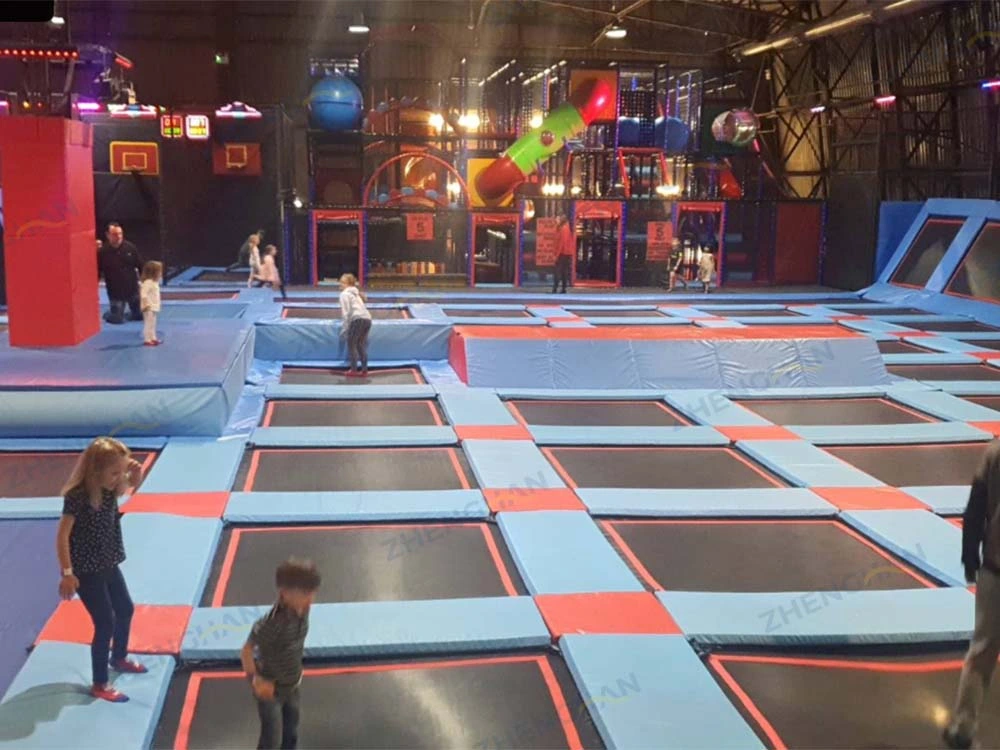
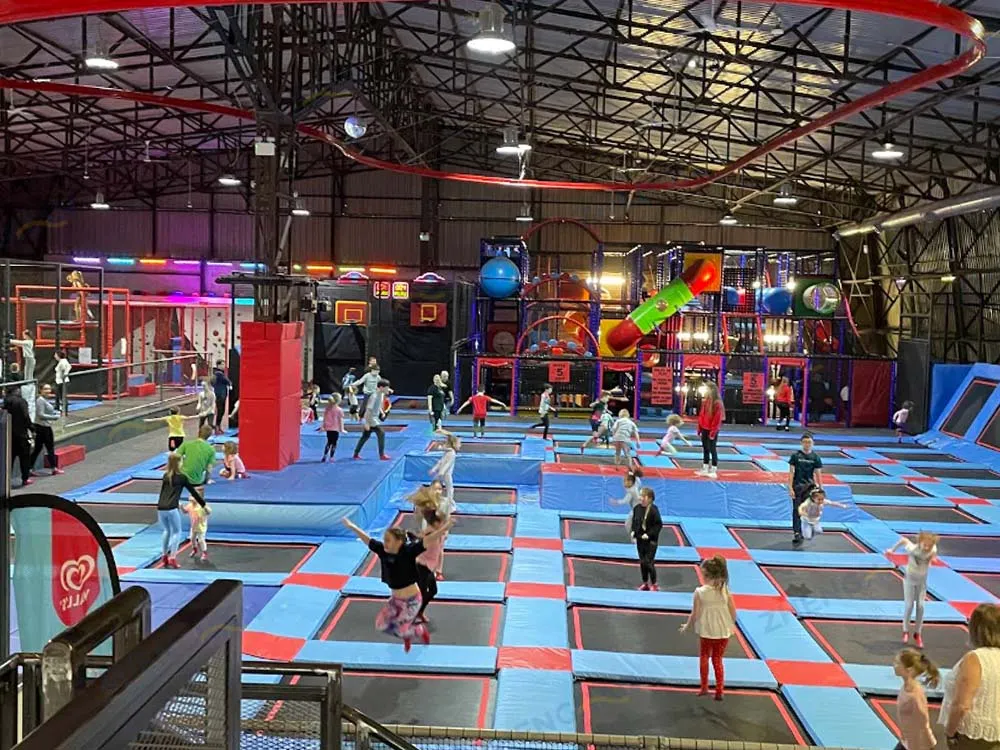
One venue may focus on open jumping, while another combines trampolines with soft play, climbing, ninja courses, aerial attractions, parties and food. A third may add a trampoline zone to an existing family entertainment centre.
Before comparing buildings or equipment quotations, decide:
- the core audience and principal revenue sources;
- whether the venue is standalone, multi-activity or an extension;
- which additional attractions will be included; and
- how ages and ability levels will be separated.
A party-led venue needs party rooms, parent seating and efficient circulation. A park for teenagers and adults may need more challenging attractions and different supervision. Until the model is clear, comparing price per square metre gives an incomplete picture.
2. Build a Complete Investment Budget
The equipment quotation is not the total opening cost. Budget from pre-lease due diligence through to the first months of operation.
- Premises: deposit, rent, legal work, surveys and lease conditions.
- Professional services: planning advice, architect, engineer, fire-risk adviser and specialist assessments.
- Fit-out: floors, partitions, toilets, accessibility, lighting, heating and ventilation, electrical work and fire-safety alterations.
- Equipment: trampoline systems, padding, netting, accessories, interactive systems and initial spare parts.
- Delivery: export packaging, sea freight, cargo insurance, customs clearance, taxes, inland transport and unloading.
- Installation and commissioning: labour, access equipment, travel, inspection and corrective work.
- Opening: insurance, recruitment, training, booking systems, signage and marketing.
- Working capital: rent, payroll, utilities, maintenance and cash reserves while attendance develops.
Put quotations on the same basis. A lower factory price may exclude shipping, installation guidance, documents, spares or support. Compare the expected landed and installed cost.
Maximum capacity is not normal attendance. Model weekdays, weekends, school holidays and quieter periods separately, then test whether conservative attendance can carry rent, payroll, insurance and energy costs. A universal “UK payback period” would be misleading because every site and attraction mix differs.
3. Screen the Building Before Signing
High ceilings do not make a building automatically suitable. Have local professionals assess the premises alongside an initial layout before committing.
Check the proposed use, change-of-use implications, floor area, columns, anchoring conditions, exits, customer access, parking and deliveries. Record each zone’s clear height after allowing for beams, lights, ducts, sprinklers and detectors.
Open courts, performance trampolines, basketball lanes, climbing walls and aerial activities need different clearances. Assess the movement and fall space for each attraction.
Confirm that delivery vehicles can reach the site and large components can enter. Consider noise, neighbours and evening trading. Where planning, landlord, building-control or fire-safety matters remain uncertain, seek suitable lease conditions.
4. Classify Every Attraction Separately
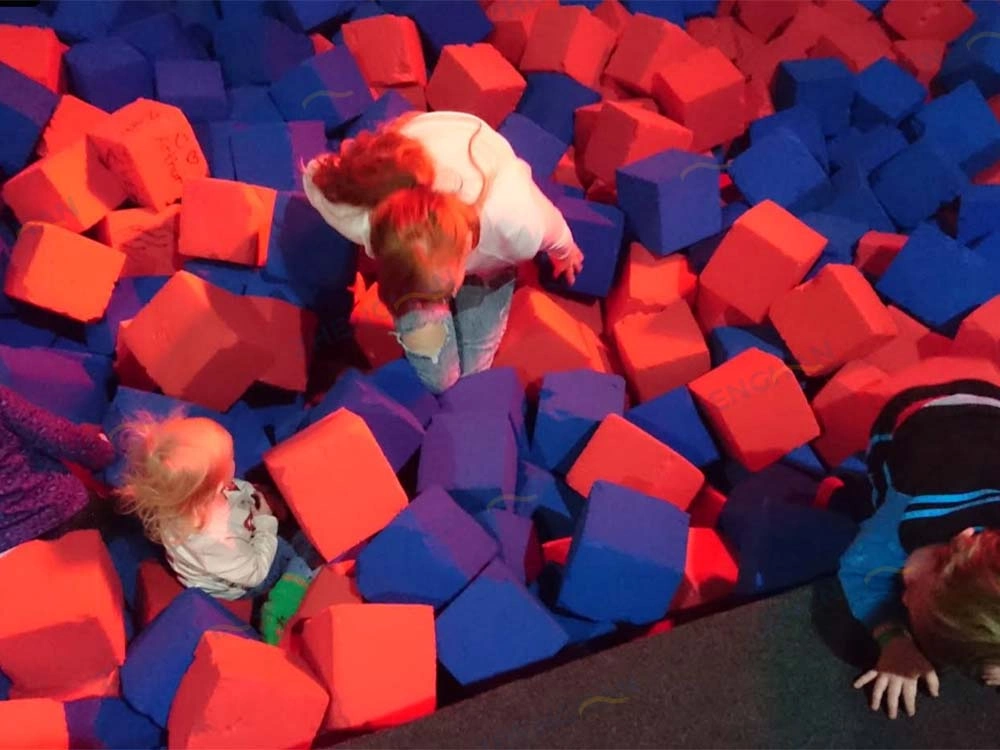
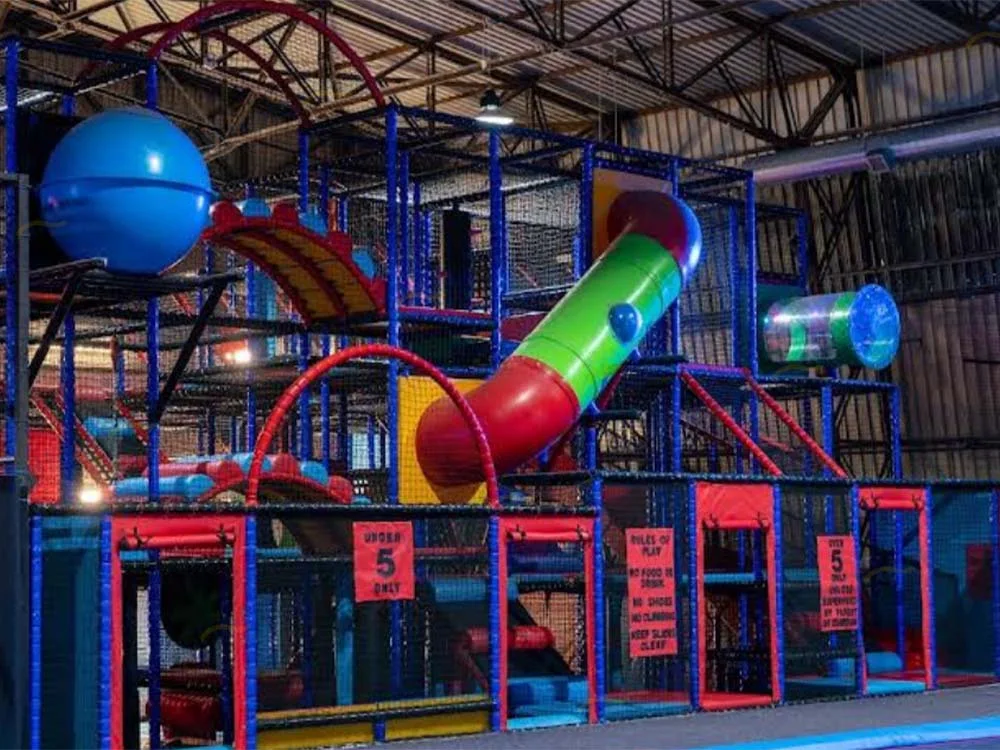
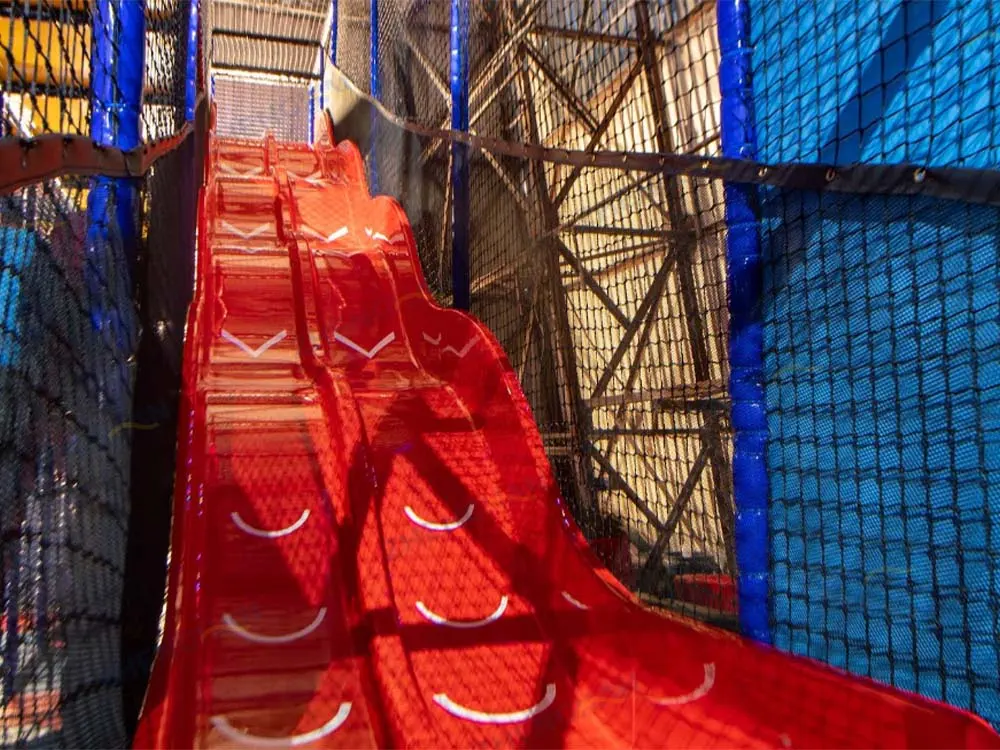
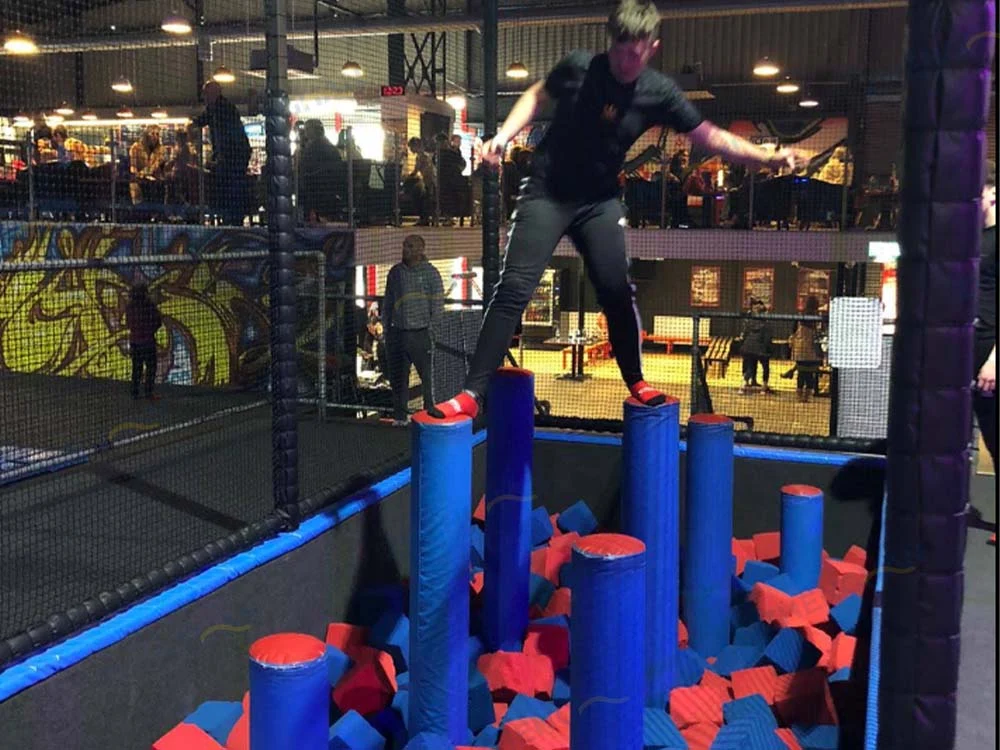
A modern park may combine open jump, dodgeball, basketball lanes, performance trampolines, airbags, foam pits, ninja courses, climbing walls, soft play and aerial or powered attractions. Sharing one building does not give them identical design, insurance, documentation and supervision requirements.
For every attraction, confirm:
- clear height and surrounding safety space;
- entry, exit and queuing arrangements;
- age, height, weight or ability restrictions;
- the required level of staff supervision;
- technical, inspection and maintenance documents;
- insurer conditions and any exclusions;
- pre-opening and periodic inspection arrangements; and
- emergency and rescue access.
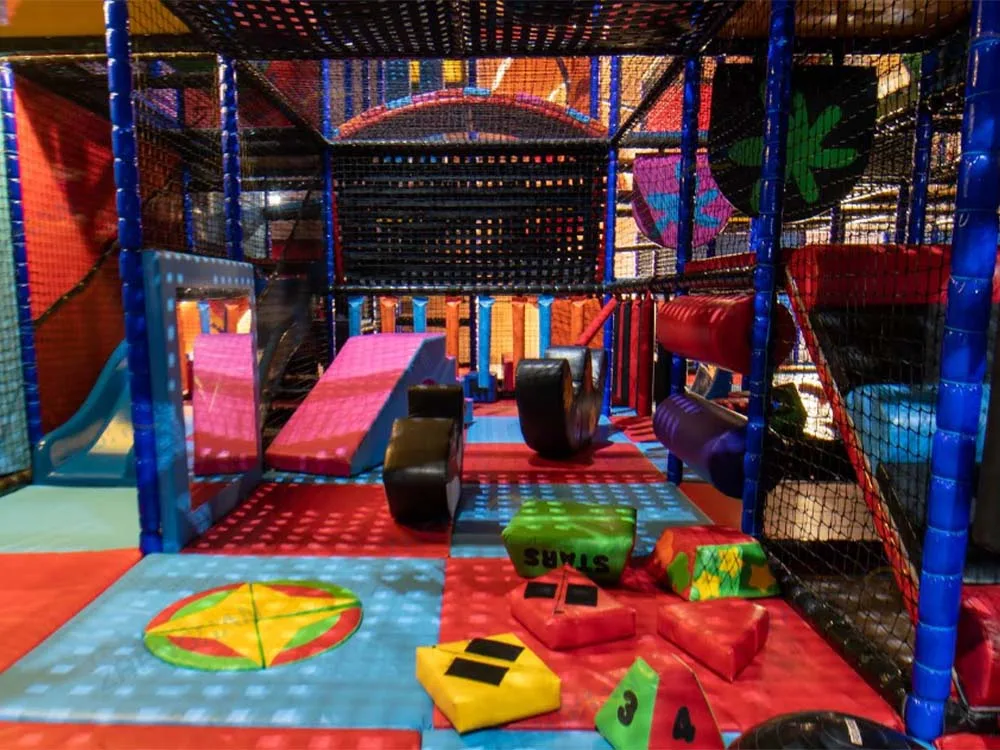
Separate toddlers from high-energy jumping. Aerial and climbing activities introduce rescue considerations, while foam pits and airbags affect cleaning, inspection and staff procedures. Share the full schedule before design freeze.
5. Use BS EN ISO 23659:2022 Correctly
The principal standard for the project discussed here is BS EN ISO 23659:2022. It addresses the design, construction, inspection and maintenance of trampoline parks and their components, as well as minimum operational requirements. Its scope includes standalone parks, trampoline areas within multi-activity venues, and landing areas such as airbags and foam pits.
Buyers should check the applicable BS EN ISO 23659 documentation and ensure that it corresponds to the final design, components and configuration. Do not treat a document title as proof that it covers every item in the order.
The standard is not a substitute for local planning, building control, fire-risk assessment, insurance or operator duties. These are separate workstreams. Complete equipment documents do not remove the operator’s local responsibilities, just as local building approval does not remove the need for suitable equipment design, installation, inspection and maintenance.
6. Agree the Technical Document Package
Agree before contract signature what documentation will be supplied, when it will be issued and what it covers.
The package may include final plans; structural and component information; bed, spring, padding and netting specifications; installation instructions; applicable BS EN ISO 23659 support documents; maintenance manuals; spare-part lists; operating guidance; and packing references.
If the design changes, confirm whether earlier documents still cover it. ZHENGHAN can provide BS EN ISO 23659-related support and corresponding documents for applicable projects and products. The wording must reflect the actual scope.
7. Integrate Fire Safety With the Layout
Fire safety is not a final check performed after installation. For premises covered by the relevant rules, the Responsible Person must arrange and regularly review a fire risk assessment, record the findings, maintain suitable precautions, plan for emergencies and provide staff information and training. The detailed legal framework differs in Scotland and Northern Ireland, so obtain advice for the project location.
The fire risk assessment should inform capacity, exits, escape routes, emergency lighting, alarms, signs and staff procedures. Check whether equipment obstructs exits, detectors, sprinklers or sightlines. Consider evacuation from multi-level structures, assistance for children and disabled visitors, and emergency access to enclosed or elevated areas.
Party rooms, cafés, queues and activity zones must still work safely when they are busy at the same time. A new attraction, revised layout or higher capacity may change the risk assessment, so treat it as a living document rather than a one-off opening certificate.
8. Assign Responsibilities
One common project failure is assuming that an equipment supplier handles every UK approval, or that a local architect automatically checks every equipment detail. Create a responsibility schedule instead.
- Investor or operator: business model, budget, lease, local advisers, insurance, permissions and operating system.
- Manufacturer: site-based equipment design, applicable product documents, production, packing and installation guidance.
- UK architect or engineer: surveys, building interfaces, local design and professional review.
- Fire-risk adviser: hazards, evacuation, precautions, emergency planning and review advice.
- Installation team: installation to final drawings, site records and corrective work.
- Inspector: applicable pre-opening and periodic equipment inspections.
- Insurance adviser: underwriting based on the complete attraction and operating plan.
When comparing trampoline park manufacturers, look for the ability to design around measured building conditions, explain document scope and keep product information consistent through production, packing and installation. Manufacturing support remains distinct from the work of UK planning, building, fire and insurance professionals.
9. Consult the Insurer Before Design Freeze
Do not leave insurance until the week before opening. Underwriters may ask about the address, building, attraction list, target ages, capacity, supervision, safety briefings, inspection system and maintenance plan. Describing the operation only as a “trampoline park” may be insufficient if it also includes climbing, aerial, inflatable or powered attractions.
Confirm which activities are covered, what restrictions apply, what pre-opening evidence is required, how inspection records must be retained and how changes should be reported. Ask about staff training and incident-reporting expectations. A customer waiver and safety video may support rule communication, but they do not replace suitable design, supervision, maintenance or risk control.
10. Coordinate Imports and Site Delivery
Manufacturing, shipping, customs and fit-out must share one programme. Equipment arriving before floors, fire work or electrical services are ready creates storage and handling risks. A completed building waiting for delayed equipment creates rent and cash-flow pressure.
Identify the importer, find the correct commodity codes, agree Incoterms, and prepare the commercial invoice, packing list and transport documents. Budget for freight insurance, customs clearance, Customs Duty, import VAT, port charges, inland transport, unloading and temporary storage.
According to the UK Government’s import guidance, businesses importing into England, Scotland or Wales generally need a GB EORI number. Movements involving Northern Ireland may require an XI EORI and different procedures. Confirm the correct route for the specific transaction with a customs professional.
“Shipping included” is not a complete delivery definition. Establish whether the quoted destination is the origin port, a UK port or the project site, and identify who pays and manages each stage. Before dispatch, recheck door sizes, unloading space, lifting equipment and the route for the largest components.
11. Case Study: Fusion Trampoline Park Carlisle
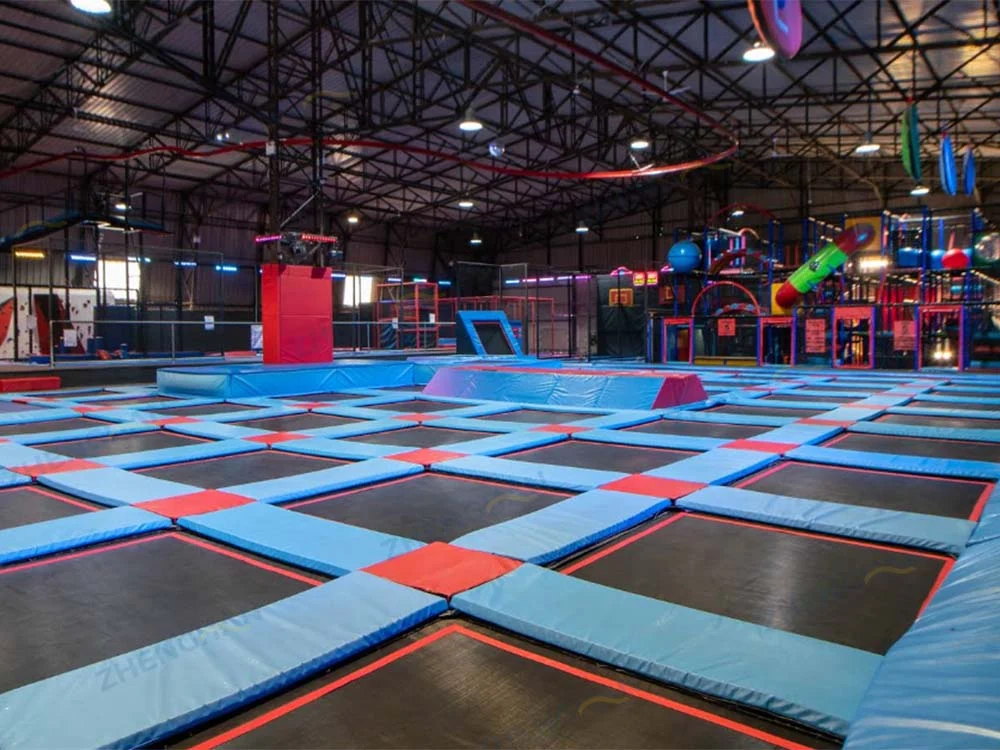
Fusion Trampoline Park Carlisle is located at 2 Millrace Rd, Carlisle CA2 5RS, UK. Its public website lists trampolining, a soft play zone, climbing wall, Skyrider, toddler and sensory sessions, parties, group events and café facilities.
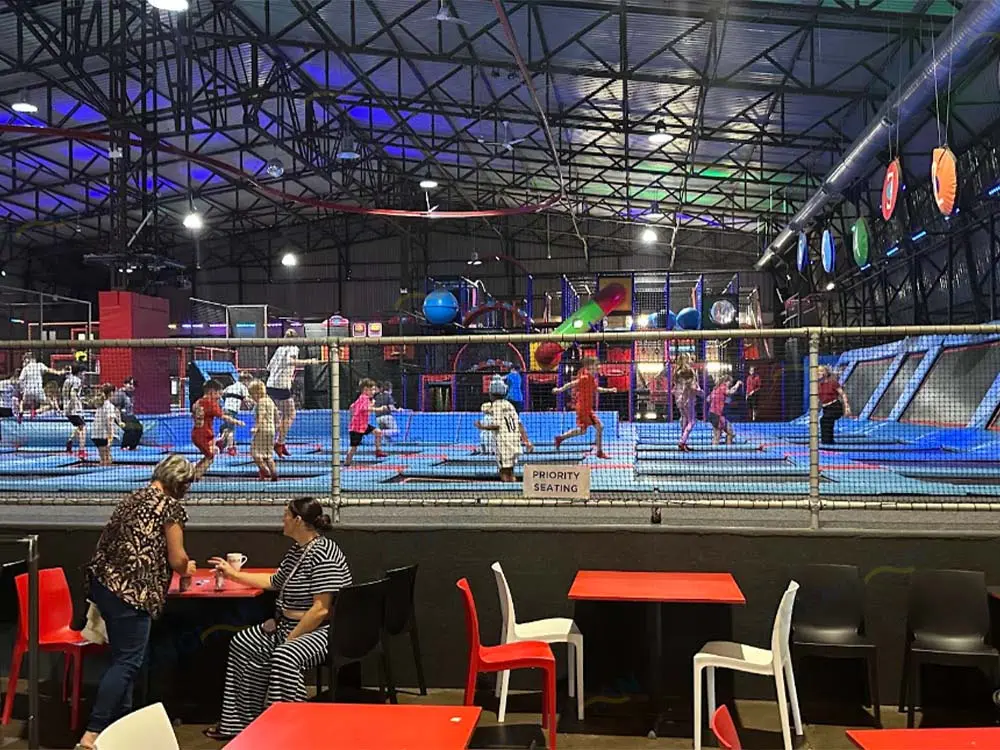
This attraction mix illustrates why a multi-activity venue cannot be planned as a trampoline court alone. Soft play for younger children must sit sensibly alongside higher-energy activities. Climbing and Skyrider introduce different space, access, supervision and rescue considerations. Reception, parties, food service and parent seating affect circulation at busy times.
Staff need sightlines to key areas, customers need clear routes, and parents need suitable waiting and viewing space. This article does not claim an unverified area, investment, performance or supply relationship for Fusion.
12. Install, Inspect and Commission the Park
Freeze measured drawings, layout, colours, components and documentation before production. If the building changes, assess the effect before installers improvise on site.
- Complete the site survey and confirm local requirements.
- Freeze the layout and full attraction schedule.
- Review building, fire and equipment interfaces.
- Agree documents and contractual delivery boundaries.
- Complete production, quality control, packing and labelling.
- Coordinate freight, customs and inland delivery.
- Verify that the site is ready for installation.
- Install to the final drawings and record site changes.
- Prepare a snagging list and close corrective actions.
- Complete applicable pre-opening inspections.
- Confirm insurance, staff training and operating records.
- Use a soft opening to test circulation and supervision.
Installation completion is not automatic project completion. Retain final drawings, installation records, variations, inspection findings and evidence that defects were corrected. Equipment that has not met its reopening conditions should remain out of service.
13. Build a Sustainable Operating System
BS EN ISO 23659 extends beyond design and construction to inspection, maintenance and minimum operational requirements. Turn those principles and the manufacturer’s instructions into daily routines.
- Record opening checks for beds, springs, padding, netting, frames and connections.
- Inspect and clean airbags, foam pits and other landing areas appropriately.
- Follow scheduled maintenance and component-replacement instructions.
- Define staff positions and sightlines for every activity zone.
- Enforce age, height, ability and simultaneous-use restrictions.
- Record incidents, near misses, customer concerns and corrective actions.
- Use a clear isolation, repair and reopening procedure.
- Train and reassess staff, retaining competence records.
- Practise fire, injury, power-failure and high-level rescue procedures.
Managers should also observe real customer behaviour. Queues may block routes, toddlers may find unintended access to high-energy areas, or staff may lose sightlines at peak times. Update risk assessments and operating rules when actual use reveals a weakness.
14. Questions to Ask a Supplier
Provide candidates with the measured plan, clear heights, columns, exits, target ages and complete attraction list. Then ask:
- Is the design based on the real building rather than a standard package?
- How does it account for columns, exits, sprinklers, ducts and lights?
- Which products and documents relate to BS EN ISO 23659?
- Do the documents cover the final models and configuration?
- Are padding, netting, spares and specialist tools included?
- How will packing references support installation?
- Who manages customs, unloading and inland delivery?
- What installation and after-sales support is included?
- How are missing parts or site discrepancies handled?
If you want to start an indoor trampoline park business, clarify the site and project boundaries before requesting final quotations. The most useful proposal is not simply the one with the lowest headline price; it is the one that clearly defines equipment, documents, transport, installation and support.
15. Recommended Opening Sequence
- Choose the target city, audience and business model.
- Research competition and build a conservative revenue model.
- Budget the premises, fit-out, equipment, imports and working capital.
- Screen the site before signing the lease.
- Confirm every trampoline and additional attraction.
- Ask the insurer to review the concept early.
- Complete the custom layout and responsibility schedule.
- Check BS EN ISO 23659-related documents against the order.
- Coordinate construction, production and shipping.
- Complete delivery, installation, snagging and inspection.
- Confirm fire arrangements, insurance and staff competence.
- Test the operation through a controlled soft opening.
The greatest project risks often arise between workstreams. The building controls the equipment layout; the attraction list changes insurance and supervision; the design affects escape and fire-safety arrangements; and shipping must match site readiness. Coordinating these decisions early reduces avoidable redesign and budget pressure.
Send Your Floor Plan for Project Advice
If you are planning a commercial trampoline park in the UK, send ZHENGHAN your project city, floor plan, dimensions, clear heights, columns, entrances, fire exits, target ages and complete attraction list. We can use this information to discuss an equipment layout and practical project-planning considerations.
Send Your Floor Plan for Project Advice
Frequently Asked Questions
How much does it cost to open a trampoline park in the UK?
There is no reliable fixed figure for every project. The total depends on the city, rent, building alterations, fire-safety work, equipment mix, freight, customs, installation, inspection, insurance and working capital. Compare full project budgets with matching scopes, not equipment prices alone.
What safety standard applies to a UK trampoline park?
BS EN ISO 23659:2022 is the principal standard discussed for UK commercial trampoline parks. It covers design, construction, inspection, maintenance and minimum operational requirements, including landing areas such as airbags and foam pits.
How much ceiling height does a trampoline park need?
There is no universal answer. Open courts, performance trampolines, basketball, climbing and aerial attractions have different requirements. Beams, lights, ducts, sprinklers and other services reduce the usable clear space and must be shown on the design drawings.
Should trampoline equipment be inspected before opening?
The operator should arrange applicable pre-opening inspection in line with the project, relevant standard, manufacturer’s requirements and insurer’s conditions, and retain installation, inspection and corrective-action records. Daily checks, periodic detailed inspections and maintenance continue after opening.
What documents should trampoline park manufacturers provide?
The project-specific package may include final layouts, structural and component information, material specifications, installation and anchoring instructions, applicable BS EN ISO 23659-related documents, inspection and maintenance manuals, spare-part lists and operating guidance. Confirm that each document covers the final products and configuration.
 English
  Spanish
  Arabic