
When defining what to wear for trampoline park entry, you are not just setting a casual dress code; you are building a strict physical barrier to protect your equipment and your profit margins. I have spent the last ten years working directly with investors to design and manufacture the exact features needed to build profitable indoor amusement parks from the ground up across the globe. Ten years in the manufacturing trenches taught me a simple truth: investors obsess over the big construction costs but completely ignore the daily damage caused by their own customers.
As experienced indoor play manufacturers, I tell my clients straight: you can buy the toughest materials in the world, but if you let kids jump in the wrong clothes, you are letting them destroy your investment. You spend hundreds of thousands of dollars on heavy-duty commercial indoor play area equipment, and a teenager with a studded denim jacket can tear a hole in your premium jumping mat on day one.
The clothing your customers wear directly impacts your insurance liability, your equipment lifespan, and most importantly, your recurring revenue. Stop treating the dress code like a polite suggestion. Make it a hard, unforgiving rule. Here is my unvarnished, factory-level breakdown of what players must wear, what you must strictly ban, and how to turn a simple dress code into a massive profit center.
1. The Grip Sock Monopoly: Your Best Revenue Stream
Let’s talk about the real money in this business. The biggest operational mistake new park owners make is letting kids jump barefoot or in regular cotton socks. This is not just a safety failure; it is a massive financial failure.
The Physics of the Jumping Mat
Our commercial trampoline mats are woven from heavy-duty PP (polypropylene) mesh. This material is incredibly strong and provides excellent bounce, but it is naturally slick. If a kid jumps in standard cotton socks, that PP mat turns into an ice rink. They will slip, they will collide with other jumpers, and they will twist their ankles.
If they jump barefoot, it is even worse. Sweat, dead skin cells, and foot oils get ground directly into the woven fibers of the mat. Within a month, your park will smell like a locker room, and you will fail a local health inspection.
The Math Behind Custom Grip Socks
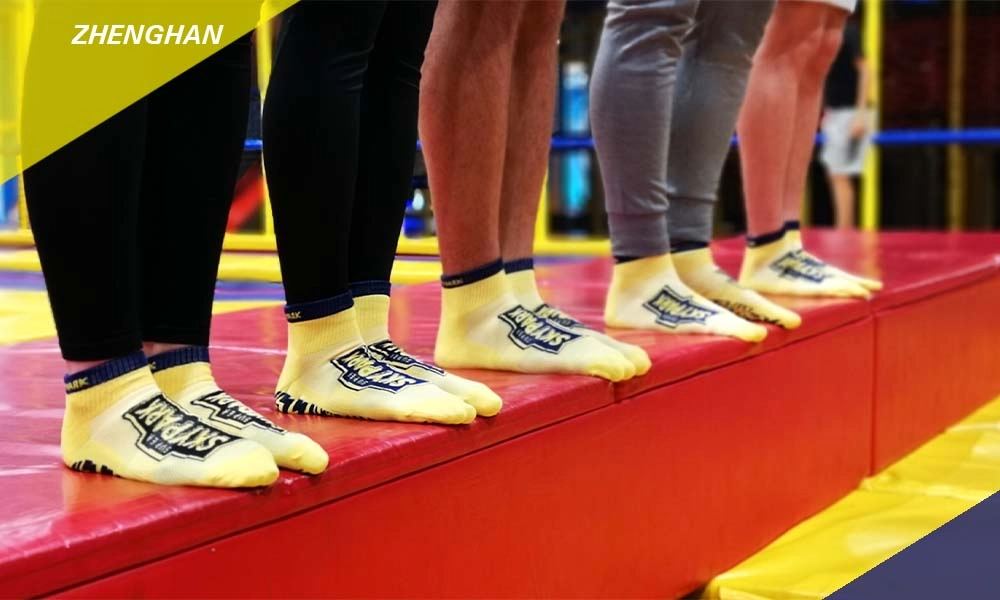
You must mandate custom grip socks equipped with rubberized silicone treads on the bottom for every single person who steps onto your courts. But here is the secret: you do not let them bring their own.
You must order custom grip socks with your park’s logo directly from the factory. Your cost is pennies on the dollar. You sell them at the front desk for $3.00 to $5.00 a pair. Let’s do the brutal math. If you have 1,500 visitors on a busy weekend, and you force every ticket buyer to purchase your socks, you just generated $4,500 to $7,500 in pure, high-margin revenue in two days.
Kids lose socks. They forget them in the car. They grow out of them. They will buy new ones almost every time they visit. That sock revenue easily covers your monthly electricity and HVAC bills.
Enforcing the “Our Socks Only” Rule
Customers will argue at the front desk. They will hold up a dirty pair of grip socks from a competitor’s park and say, “I already have these.” Your staff must be trained to say: “For insurance and safety reasons, only our park’s certified grip socks are allowed on the equipment.” Do not bend. Mandate the socks, protect the kids, and collect the cash.
2. The Absolute Ban on Denim, Zippers, and Metal Studs
I build parks using heavy-duty galvanized steel pipes, and we wrap those steel frames heavily in thick, shock-absorbing EPE foam covered by tough PVC. We build it like a tank to handle extreme dynamic weight. But PVC and jumping mats have a fatal, tiny enemy: sharp metal.
Anatomy of a Tear
You must strictly ban all jeans and denim. Denim is an inherently abrasive fabric. When kids do knee-slides across the mats in jeans, the friction acts exactly like sandpaper. Over a few months, this constant abrasive action will fray the heavy-duty stitching that connects the jumping mat to the V-rings and springs.
Worse than the fabric are the metal rivets on the pockets. Look at a standard pair of jeans. They have sharp little copper buttons. Most jackets have exposed metal zippers. When a teenager tries to do a front flip and lands hard on your safety padding, those metal studs will slice right through the PVC covers.
Once the PVC is cut, the damage accelerates rapidly. Kids sitting on the pads will pick at the exposed foam inside until a small cut turns into a massive crater. I have seen park owners forced to spend thousands of dollars replacing entire sections of padding in their second month of operation simply because they let a group of teenagers jump in studded denim jackets.
The Front Desk Confrontation
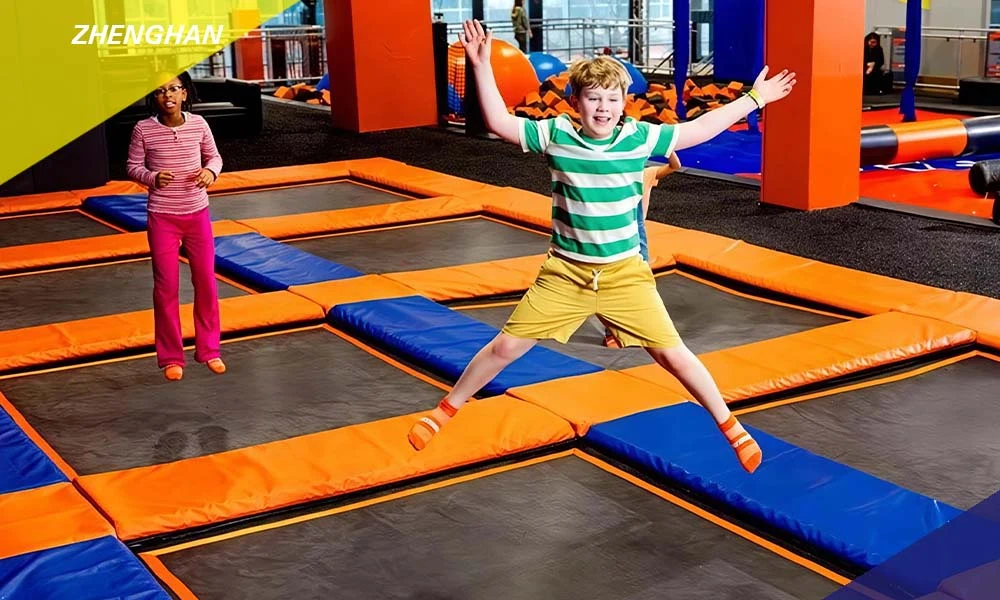
The rule must be clearly stated on your website and at your ticketing kiosk: Athletic wear only. Gym shorts, yoga pants, sweatpants, or leggings. No zippers, no metal snaps, no belt buckles, no exceptions.
If a kid shows up in jeans, your staff must stop them. You can turn this into another revenue stream by selling cheap, branded athletic shorts at the front desk for $10. “You can’t jump in jeans, but you can buy these shorts and change in the bathroom.” You protect your equipment and make another sale.
3. Climbing Walls and The Double Safety Dress Code
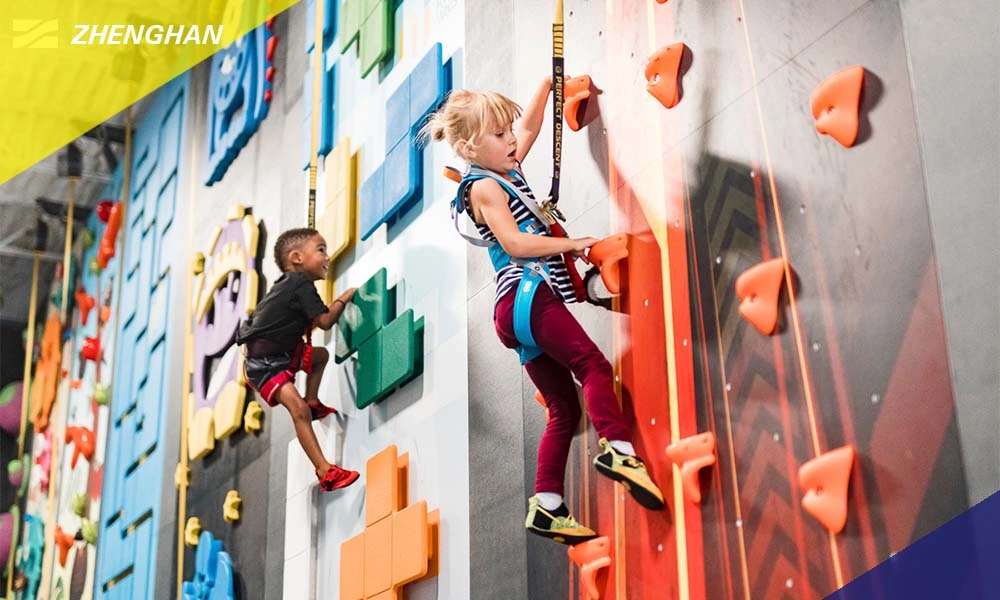
If you install climbing elements in your park, the dress code becomes a critical component of your safety infrastructure. Climbing walls utilize vertical space and offer massive play value, but they require strict clothing regulations.
Tangling Hazards with Safety Gear
We build our commercial climbing walls with a strict Double Safety Guarantee. Every player is strapped into a secure safety belt harness, and they climb directly over a soft buffer pad or a deep foam pit. This dual approach provides total protection; if they slip, the harness controls the fall, and the soft landing zone prevents any hard impact.
However, this system requires a clean fit. If a kid is wearing an oversized hoodie, a baggy winter coat, or a loose dress, that extra fabric becomes a major operational hazard. Baggy clothing makes it impossible for your staff to properly visually inspect the safety belt buckles. Even worse, loose clothing can snag on the heavy-duty resin climbing holds when the child drops onto the buffer pad.
Your front desk and floor staff must enforce tight-fitting athletic shirts. If a kid shows up in a massive, baggy sweatshirt, tell them to take it off and leave it in a locker before they approach the wall. Do not risk a snagging hazard just because your staff was too polite to enforce the dress code.
4. The Wipeout Machine and Friction Control
The mechanical Wipeout sweeper is a staple in modern parks. It acts as the ultimate crowd controller, taking eight kids off the main jump floor for five solid minutes at a time. A padded mechanical arm spins in a circle, and kids have to jump over it.
Staff Control and Clothing Impact
The key to maintaining your Wipeout machine is the heavy-duty standard motor paired with an emergency stop (E-stop) control box managed by an active staff member. If a kid hangs on the arm, the staff hits the stop button.
But what does clothing have to do with this? Everything. Kids must be wearing your grip socks and proper athletic pants to play this game. If a kid is wearing loose, baggy jeans that fall below their heels, they will trip over their own pants when trying to jump over the spinning arm. When they trip, they crash into the arm, forcing your attendant to hit the E-stop.
Furthermore, the spinning arm is wrapped in shock-absorbing foam and covered entirely in PVC with double-stitched seams. If you let a kid with heavy metal belt buckles or sharp zippers play, they will shred that PVC wrapping in one afternoon. Maintain the athletic wear rule across the entire facility.
5. Foam Pits, Airbags, and the Lost Item Crisis
When kids dive off jump towers or ninja courses, they land in deep foam pits or on custom safety airbags. The physics of a hard landing will forcefully eject anything in their pockets.
The Puncture Threat
We use highly durable PVC for our safety airbags, but they are not invincible against sharp objects. If a teenager jumps with a set of house keys or a sharp hair comb in their pocket, the impact can push that object straight through the fabric, causing a micro-leak in your airbag system.
The Cost of Lost Phones
If you allow kids to jump with phones in their pockets, you will pay for it in labor. When a smartphone falls out of a shallow pocket into a two-meter-deep foam pit, it sinks to the bottom. Your staff will spend two hours after closing pulling out hundreds of foam blocks just to find one complaining customer’s phone.
You must enforce an empty-pocket policy. Floor attendants must actively watch for kids pulling out phones to take selfies on the trampolines. Stop them immediately. No items in pockets, ever.
6. The Birthday Party Enforcement Protocol
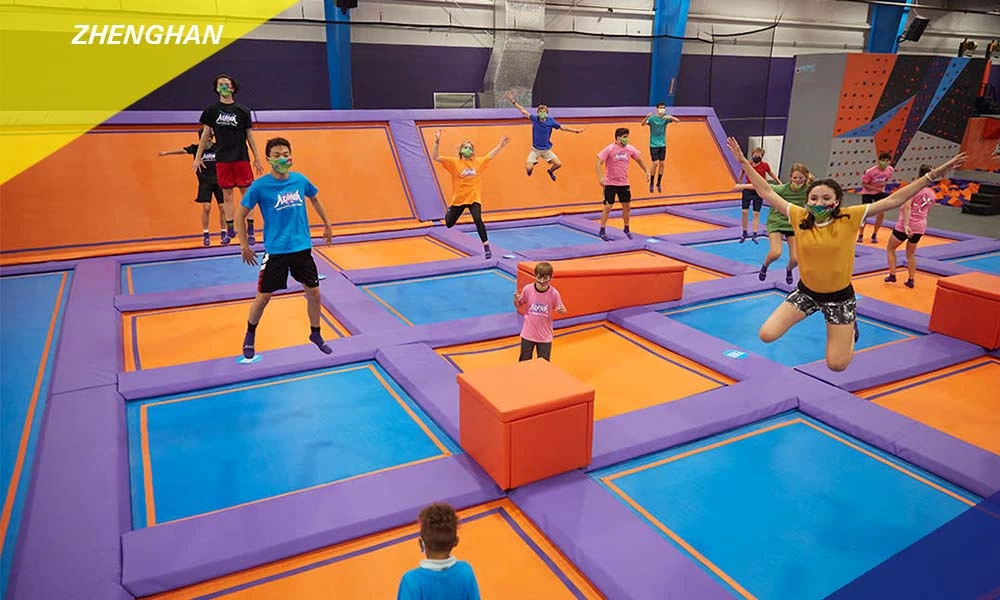
This is where park owners lose control. A mom books a 20-kid birthday party. She is paying you $500, so she thinks the rules do not apply to her group. Half the kids show up in jeans, dresses, or heavy sweaters.
The Booking Waiver
You cannot wait until they arrive to enforce the dress code. The battle is won at the booking stage. Your online booking system must require the organizer to digitally sign a waiver that explicitly states: “No denim, no zippers, no bare feet. Jumpers not in athletic wear will be denied entry without a refund.”
The Front Gate Stand
When the group arrives, your front desk staff must be ruthless but professional. If three kids are wearing jeans, pull the organizer aside immediately. “I’m sorry, as stated in the waiver, jeans will destroy our safety padding. They must buy athletic shorts here or they cannot jump.”
Do not cave to pressure. If you let one birthday party break the rules, other customers will see it and demand the same treatment. Protect your multi-million dollar equipment over a single $500 party booking.
7. Jewelry, Glasses, and The Locker Room Revenue
Your equipment handles dynamic motion. Kids will be bouncing, flipping, and falling. Hard accessories do not mix with this environment.
The Degloving Risk and Netting Tears
All rings, necklaces, bracelets, large hoop earrings, and bobby pins must be removed before entering the play area. I have read the horrific accident reports from poorly managed parks. A kid wears a metal ring, their hand slides between the pads during a heavy impact, the ring catches a steel spring underneath, and it rips their finger.
Even if they don’t get hurt, rings and watches get caught in the tightly woven safety netting surrounding your dodgeball courts. They will rip holes in your expensive nets. Ban the jewelry entirely.
The Glasses Problem
If a child must wear prescription glasses, you should mandate that they wear an athletic head strap to secure them. If glasses fly off into a foam pit, they will be crushed by the next kid jumping in. Keep cheap athletic straps at the front desk and sell them for a small markup.
Monetizing the Dress Code
If you ban heavy winter coats, jewelry, and loose items on the courts, where do people put them? Lockers.
Do not provide free cubbies where things get stolen. Install a bank of electronic, pin-code lockers. Charge $2.00 to rent a locker for the day. You enforce the dress code, the customer securely stores their prohibited items, and you generate another stream of passive, recurring revenue.
Building a park is about controlling the environment. The heavy-duty galvanized steel, the double safety climbing walls, and the PVC padding can take extreme abuse—but only if you force your customers to respect the equipment. Enforce the athletic wear rule, monopolize the grip sock sales, and your park will run like a highly profitable machine.
Investor FAQ: Factory Answers on Park Rules
Can kids jump barefoot if they forget their grip socks?
No. Bare feet are a massive hygiene hazard and a liability. My Experience: I had a client try to save face by letting a birthday party jump barefoot because the parents complained about buying socks. One kid had a foot wart, and another scraped their toe and bled on the mats. The owner had to shut down the entire court, pay for a deep biohazard clean, and refund the rest of the angry customers. Never allow bare feet. Sell the socks.
Do metal zippers really damage commercial trampoline padding?
Yes. Metal slices through heavy-duty PVC under dynamic pressure. My Experience: A teenager wearing a jacket with sharp metal zippers did a belly slide across a client’s main court. The zipper sliced a two-meter gash straight through the PVC padding. The replacement pad and shipping cost him $400. Enforce the “No Zippers” rule aggressively at the front gate.
Should I let customers bring grip socks from other parks?
No. Mandating your own custom socks is a massive profit center. My Experience: You order custom socks with your logo directly from the factory for pennies. You mandate that only your socks can be worn on your equipment for “insurance reasons.” Kids lose them constantly. It builds your brand visibility locally and easily pays for your monthly utility bills. Don’t leave that money on the table.
Can kids wear loose hoodies on the indoor climbing walls?
No. Baggy clothes interfere with the safety belts and create snag hazards. My Experience: Our Double Safety Guarantee relies on a secure harness and a clean drop onto the buffer pad. A client once allowed a kid in a massive, baggy sweater to climb. The sweater snagged heavily on a resin climbing hold as he fell. The safety belt caught him perfectly, but the snag jerked him violently. Tight athletic wear prevents these issues completely.

 English
  Spanish
  Arabic